A BLOG ABOUT COMMUNICATING COMPETITIVE ADVANTAGE
  • Brian Faulkner
  • Blog
  • CONTACT

Price! Price! Price!

2/16/2015

0 Comments

 
Picture
Tags:  Greentoe.com, Priceline, Consumer Reports, Nikon, Canon, Olympus, J. C. Penney, B&H, B&H Photo, online discount cameras, smartshop.org

Have you ever thought about the difference between price selling and selling price?


Price selling is discounting.  It’s lazy marketing.  And having sale after sale after sale not only takes a bite out of profit but could be a long-term trap (just ask J.C. Penney).

Selling price is price-as-product. 

An intriguing example of price-as-product popped up on my screen this morning: Greentoe.com.   Their ad snagged me because I’ve been fishing around online for cameras and lenses.  So I clicked through to their site, where they immediately offered “the lowest prices available” on brands like Nikon, Canon, Olympus, etc.

“People like you are saving big on photo gear,” claimed the big green headline (the shade of money).  “Set your price and save up to 20%.  Brand new products.  No grey market.  Authorized retailers.  USA warranty included.” 

Does the advent of Greentoe.com mean I’ll no longer have to contend with my local Best Buy’s lackluster camera department?  (http://tinyurl.com/nywuxcx)  Does it mean I won’t have to risk ordering my next camera from one of those slippery big city camera discounters?

Maybe …

“Greentoe.com is the first and only website that allows you to name your own price for products in five categories: photography, appliances, musical instruments, baby items, and home theater,” reports shopsmart.org, an online Consumer Reports “best deals” resource.   They’re doing for consumer products what priceline.com has done for air travel and booking hotel rooms.  And it has the same sort of intrigue.  Will they accept my bid?   Will it be soooo much lower than the price somebody else paid?

Greentoe’s process is simple: 

(1) Submit an offer, on “thousands of products” (and give them your payment info).

(2) “Hundreds of retailers” then are notified of your offer (a green, orange or yellow gauge helps you determine how likely they are to accept – similar to Priceline).

(3) The first retailer to accept gets the sale; the transaction is between buyer and seller. 

If you know precisely what item you want, Greentoe.com may be your cup of tea – that is, if their retail partners have what you’re looking for.  The site’s selection of musical instruments and pro audio equipment is far from comprehensive, but it’s not meant to be.  They know that brick-and-mortar stores always have aged merchandise or overstocks they need to sell, so greentoe.com matches them up with customers who live hundreds or thousands of miles away.   Same for TVs, appliances and other products.

Their customers don’t have to be lucky or do the legwork, the company states in its well written and informative blog
, they “just have to have a little luck to find that deal.”   Greentoe provides the luck.

There is something else.   Once you’ve punched in your payment card numbers, there’s no turning back, so if you’re at all queasy about things like that – or don’t make purchase decisions easily (like me), it might be best to buy elsewhere. 

Heretofore, the place I most likely would have picked to buy a camera is New York’s B&H Photo-Video, especially if I needed help choosing the right one.  B&H has it all:  vast selection, attentive service, technical expertise, free advice and competitive prices.  And, if you live anywhere nearby or are visiting Manhattan, you get to handle the goods before making a purchase decision.  Walking into their 70,000 square foot their store is like entering a dream world of professional photo, video and audio goodies.

You can buy cheaper than B&H, but probably not as well. 

To be sure, there are other excellent purveyors of professional photo, video and audio products – online and off, and some may have as compelling a presentation as B&H, but the positioning of that big store at 34th & 9th has always fascinated me.   They’re not only the largest independent (non-chain) photo-video retailer in America, they also communicate their competitive advantages clearly and set price accordingly -- unlike all too many businesses that only play the price card.   B&H.com appears to command a slight price premium over some other online camera sources, and if so, they more than earn their margins with their compelling added-value.

Greentoe.com’s selling proposition also is compelling, however, so I will keep them in mind when it comes time to buy whatever camera I decide on.  Who knows?  My bid price just might outweigh the loyalty I feel to B&H for sending me all those informative catalogs over the years.  But then again, during the time in my life when I sold audio equipment, it always rankled me when I helped educate a prospect only to see him buy from some discounter instead of me. 

It’s so easy to discount, which is the unfortunate first impulse of many businesses.  In most situations, price selling is mind-numbing, profit crushing and unnecessary – unless, like Greentoe.com, price is your product.

TakeAway:  Does your business or brand have competitive advantages that will attract more qualified customers and allow you to command better margins?  Or are you content to sell principally on price?

Content © by Brian E. Faulkner
0 Comments

"Cathect" Branding.

2/11/2015

0 Comments

 
PictureImage © by Brian E. Faulkner
Some years ago, another marketer and I sat looking out the window of his Lower Manhattan office while we discussed how much time it takes for a buyer to make a brand decision.

“Seven seconds,” I said.  He said much less – and today he’d be right.  In this age of massive digital impressions, deciding in favor of a brand could be nearly instantaneous, at least for brands that have successfully embedded themselves in people’s minds. Think about Fox News or The Colbert Report. Mention either brand and you get an immediate, almost visceral, reaction. The same for Coke and Pepsi (but with less intensity).  If you’re a cola fan, you’ve already got your mind made up. 

The brands have done their jobs.

However, a research brief cited today by The Center for Media Research suggests that “the average consumer spends 13 seconds purchasing a brand in-store” and 19 seconds more online.  The research originated with the Ehrenberg-Bass Institute of Marketing Science (“Shopping Takes Only Seconds”) and was commented on in the article by Randall Beard, president of Nielsen North America. Beard suggests that most consumers don’t “engage” with the vast majority of brands as much as they just buy them, giving marketing execs an “unrealistic and overly brand-centric view” of their brands’ importance in people lives – although he makes exceptions for a “limited set of high involvement categories and brands.”   Like expensive cars but maybe not soap.

“People’s lives are already full,” the article noted, “and most people simply don’t have the time or energy to engage with brands in any meaningful way. These consumers most often default to making purchase decisions based on simple habit (previous purchase or ‘instinct’)”.    

My take on this is that if marketers have done an effective job over time, a positive “thought” about their brand will have become stuck to the shopper’s mind, making the pathway to “Yes!” nearly instantaneous.  Sure, call it "instinct".

The example they used was GEICO, which is said to have good “mental availability.”   But the Energizer Bunny offers an even better example.  He lives in my mind (and no doubt other minds) with a clear connection to product benefits, unlike the GEICO gecko, who is a pitchman for the product but does not inhabit it like the Bunny does.  By the way, when was the last time you saw the energetic pink bunny “going and going” on TV compared to the nearly omnipresent green lizard?  

It may simply be that people love the Energizer Bunny but only like the GEICO gecko.  The Bunny is “invested with mental or emotional energy” (another definition of cathect) whereas the Gecko is merely entertaining.  The word cathect comes to mind (in psychoanalysis: to concentrate psychic energy on a particular person, thing, or idea).   

Apple is a great example of cathect branding because of people’s emotional or mental connection to both its products and its brand.   So is Mercedes-Benz, which occupies prime mental real estate in the luxury sedan market.  Cadillac used to be called the “Standard of the World” -- and yearns to be so again.

APCO Insight has identified eight emotions that connect people and brands.  They include understanding, approachability, relevance, admiration, curiosity, identification, empowerment and pride. 

“The best brands are those that build a strong, enduring emotional attachment with consumers,” says Byran Dumont, president of the research consultancy, “in addition to acting as a highly predictive tool for consumers’ purchase choices.”  Their findings, presented as the 100 Most Loved Companies, were gathered from surveys of more than 70,000 people over ten years about 600 of the world’s largest corporate brands in 15 international markets.  (http://tinyurl.com/madelmz)

American brands In the top 10?  

  #1 – Disney:  the brand has a strong emotional link  

  #2 – Yahoo:  despite its troubles, devotees understand the brand and find it approachable    

  #3 – Google:  people take pleasure in buying into the brand

  #4 – Sony:  respondents are curious, want to know more about the company 

  #7 – Netflix:  plays a meaningful role in people lives  

  #8 – Whole Foods:  is admired by its customers (Publix was #43, Kroger #52). 

  #9 – Apple:  shows empowerment and brand admiration). 

#10 – Lowe’s:  customers are comfortable with this home improvement store 

The Home Depot is #54.  Interestingly, Target is #21, but WalMart apparently didn’t make the cut.   Discover (#51) and CBS (#83) are the only TV channels in the Top 100.  The sole hotel chain?  Marriott.  Starbucks?  #96!

So it’s more than mere brand awareness that drives these placements – that’s all too easily stoked with media dollars.  There’s something else at work here.  These Top 100 brands are … loved!  It’s a heart thing -- people get them.  And that takes only half a microsecond.

TakeAway:  Do customers connect to your brand?  With their heads?  Or their hearts?

Content © by Brian E. Faulkner

Tags:  Fox News, The Colbert Report, Coke, Pepsi, The Center for Media Research, Ehrenberg-Bass Institute of Marketing Science, Nielsen North America, GEICO, Energizer Bunny, Apple, Mercedes-Benz, Cadillac, 100 Most Loved Companies, Disney, Yahoo, Google, Sony, Netflix, Whole Foods, Apple, Lowe’s, WalMart, Discover, CBS, Marriott, Starbucks


0 Comments

Brands Are Not Your Friends ... Sometimes.

2/10/2015

0 Comments

 
Picture
Tags:  gawker.com, Twitter, Coca-Cola, Coke, AdWeek, Pepsi, Mountain Dew, Maytag
The provocative headline “Brands Are Not Your Friends” popped up on my iPad yesterday evening.   So I had to check it out.

The gist of the article (from blog site gawker.com) was that people should not be sucked into treating brands as “Friends” on social media, because brands “exist solely to distract, deceive, and manipulate us out of our money.”

Their example was Coca-Cola’s “MakeItHappy” Twitter campaign aired during the Super Bowl.  According to AdWeek.com, the brand’s goal was to encourage Twitter users to “mark negative tweets with the #MakeItHappy hashtag. Then, Coke turned those words into cute art images using ASCII lettering code.”

All well and good … creative and harmless you might say, and very much in line with the frothy, friendly good-time image Coke likes to project.   But Gawker apparently was nearly struck dumb with the perceived idiocy of the campaign, which they presumed was designed to “trick you into buying more Coke,” although company marketers likely would not have put it that way. 

So Gawker, which appears to trade in provocative takes on celebrities and media, came up with some digital skullduggery, which I will allow AdWeek’s writer to explain out of my fear of inaccurately describing something I barely understand:

“Gawker created a Twitter bot, @MeinCoke, which tweeted (quotes from) Mein Kampf at Coca-Cola to see if the brand would turn lines from Hitler's autobiographical manifesto into art.”  It worked, and Coke quit the campaign.

“It's unfortunate that Gawker is trying to turn this campaign into something that it isn't,” a Coca-Cola spokesperson told AdWeek. “Building a bot that attempts to spread hate through #MakeItHappy is a perfect example of the pervasive online negativity Coca-Cola wanted to address with this campaign."

All this collective mindlessness got me to thinking about brands and whether they are, in fact, our friends.  And my conclusion is … sometimes.   Is Coca-Cola my friend?   Not really.  Their product does not nourish and even may be harmful, given the 800 cans of soft drinks that American males consume every year, according to recent stats.  Consumption by both males and females reportedly has been rising since the ‘70s. 

My point here is not to make trolls out of Coca-Cola or any other soft drink marketer; we are free to make, sell and consume most anything we want here in this country.   And if we consider some products to be harmful, we also are free to not consume them.

In synch with what I have termed Marketable Truth in blog posts on this site and in my consulting work, it may be useful to have consumers decide whether brands actually keep their promises.  If somebody sells you a tool and it breaks, their brand claim is not authentic – but if it lasts for 25 years like our Maytag washer did, it earns a high score.  If a retailer claims great service but doesn’t deliver, they get a low score, which may prompt them to improve. 

So why not place brands on a “promise continuum”?   Call it the Brand Performance Index (or the Real Thing Index, should you prefer) – and you be the judge.  

Products like fresh fruits and vegetables likely would score high, except maybe for broccoli if you’re under 10 or are George H. W. Bush.  Soft drinks would score low -- or would they?   They might score high if people believe they’re getting the refreshing promise they expected from their Coke or Pepsi or Mountain Dew, or even a lifestyle boost.  Same goes for my favorite single malt whiskey!

So it’s up to us to decide, not some marketer … or even Michael Bloomberg.  Brand promise is best measured by consumer experience.

TakeAway:  How would your brand score on the Real Thing Index?

Content © by Brian E. Faulkner


0 Comments

Budweiser Scores With Super Bowl Ad.

2/2/2015

0 Comments

 
I’m not one for gushy ads, so when I watched Super Bowl XLIX yesterday, I looked for spots with solid strategic bite.  Not lifestyle stuff.  Not cuddly cute.  Not outrageously obscure (there was more than a few of those). I was on the lookout for ads with a clear benefits story -- although, like most everybody else on the planet, I did enjoy watching the Budweiser puppy find his way back home.

Yeah, yeah … I know it’s all about entertainment and ego, but Tom Brady and company provided enough of that to even satisfy my dad, a dedicated Patriots fan who’s been gone nearly four years now. Wherever he’s hanging out these days, I’d bet that last minute interception by Malcom Butler raised him and inch or two off his recliner! 
I didn’t see ALL the ads, no doubt, given several beverage refill breaks and more than a few old-man visits to the smallest room in the house.  But there were several spots that caught my marketer’s eye, especially Brewed the Hard Way, one of two other Bud ads that ran during the evening.

“Brewed” popped up in the third quarter as viewers were wondering which way the Tilt-A-Whirl game was going to go.  By then, we’d been served more than our share of emotionally-saturated spots, some truly inexplicable ads and a few that tried hard to sell something it was not – that means you, Toyota Camry.  And things had pretty much come back to earth after Katy Perry’s 12-minute entertainment extravaganza.

With a hard-driving fuzz guitar underlay and shots of Bud being made -- and enjoyed, flashes of text declared Budweiser a “macho beer, not brewed to be fussed over”, a brew for “drinking, not dissecting.”  Bud, the spot declared, is for “people who like to drink beer brewed the hard way.  Let them sip their pumpkin peach ale.  We’ll be brewing us some golden suds …"

“This is an affirmation of what Budweiser is, not an attack on what it isn't,” Brian Perkins, Budweiser’s VP of Marketing, told Robert Haynes-Perkins of the NY Drink Examiner.  “We're hoping to touch a chord with the person who wants the truth about how we make Budweiser and why it's great.

“We love craft beer” (and Anheuser-Busch acquires and sells some),” Perkins told the reporter.  "I think that the prevailing dialectic is that small must be better, and big must be bad.  That's the generally accepted trend. For us, big is good. It's not arrogant, it's just saying that it's great to brew a beer that so many people enjoy … it doesn't mean there's less care, less quality or less passion from the people who make it."

That’s tapping into the brand's Marketable Truth©.  And even though it scored only 5.15 (out of 10) on USA Today’s Ad Meter, I thought the ad was a strategic touchdown with its Brewed The Hard Way tagline.

There were a few other Super Bowl ads with solid positioning (of those I actually saw). 

GM’s new Colorado truck ads scored in my book by telling a story that revealed the cool truck guy vs. the less cool compact car guy.  The benefits story was subtle, but it worked -- although it only placed #39 on USA Today’s list.

I also like Sprint’s “Apology” ad (#34) because it directly called out the other carriers for being “really expensive,” offered to cut people’s wireless rates in half compared to Verizon and AT&T and gave them a way to make that happen.  They also used a whiny goat and a braying donkey to make a visual point about their competitor’s pricing.

And then there was GoDaddy’s “Working” spot (#55), which presented a direct, no-nonsense benefits story vs. the in-your-face, sexually charged approach they’ve used in previous Super Bowl ads.  It didn’t score very well with the public, however, which no doubt would like to have gazed upon Danica Patrick one more time or scored a smooch from Bar Rafaeli.  

Clearly, the ads I appreciated for their strategic punch were not favorites in the eyes of viewers who were more interested in being entertained than being convinced on the spot to change their mind about a product or buy something on the strength of product benefits.  

Fortunately for Budweiser, the public will be seeing more of “Brewed”. 

TakeAway:  In the long run, benefits-laden, positioning-driven advertising wins over creative fluff – unless, of course, a spot has both, like Apple’s famous “1984” MacIntosh ad during Super Bowl XVIII.   Little did anyone viewing that game know how much the world was about to change.


Content © by Brian E. Faulkner              
Marketable Truth © by Brian E. Faulkner

0 Comments

A Powerful Brand Can Help Increase Your Sales.

1/30/2015

0 Comments

 
Picture
Tags:  GM, General Motors, Starbucks, Steinway, Nike, BMW
Some years ago, an auto dealer client approached my small marketing communication company with a challenging problem: how to sell more GM parts to other GM dealers.  The dealers were falling behind on repairing their customers’ cars because they couldn’t get parts from GM quickly enough.  Our client discovered that by stocking fast moving parts in depth and shipping them overnight at a slight price premium, they could beat General Motors to the punch, help dealers get their customers’ cars out the door faster and make more efficient use of their service bays. 

“You’re not selling parts to these dealers so much as you’re selling time,” we suggested.  And recommended creating a brand focused primarily on time rather than the parts themselves. 

The brand logo was designed to look like a packing crate stencil.  And it worked.  It wasn’t long before the GM zone manager told my client, “I see your Quik-Ship stickers wherever I go!”  Their powerful brand with its built-in competitive story helped them earn millions and millions of incremental dollars over the years, which is precisely what a powerful brand should do. 

Brand As Promise:

Picture
A brand is more than a catchy phrase or attractive logo. 
It may include both of these, of course, but at heart a brand is a promise.  A promise you make to your customers.

Starbucks promises a predictable mix of coffee concoctions and social context.  They're so well known that they no longer even include  "Starbucks" in their logo. 

Brand As Song:

Picture
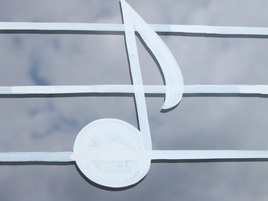
A brand is like a song.  And the marketer’s job is to create a brand with a melody the customer wants to hear -- like when some tune sticks in your mind and won’t let go.
 
The right “brand-song” helps your business, product or service stand out against other brands.  Steinway is a great example. 

Brand As Persona:

A properly positioned brand embodies the qualities and values people think of when they see or hear about your brand. 

It’s a lot like thinking about someone you like – or even how you see yourself.  A personality comes to mind, perhaps not in so many words, but (hopefully) as a good feeling.  Which is why Nike's famous "swoop" works so well.
Picture

Brand As Filter:

Picture
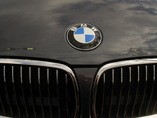
Your brand should attract qualified prospects and filter out the rest.  If I have $20,000 to spend on a new car, I won’t be showing up at the BMW store.  Their brand, which promises a blend of German engineering and exhilarating performance at a relatively high price, excludes me but attracts people who want -- and can afford -- the Ultimate Driving Machine. 

Brand As Story:

A successful brand tells a unique competitive story.  It carves out a “blue ocean” of fresh strategic mindspace, uncontested by others and unique to you.  It speaks with a clear, definitive voice, whether your business is your brand or whether you make / market / sell branded products or services.   It connects you to your customers, clients, patients, students, etc. in a personal way ... and helps make your business sing.

TakeAway:  Does your brand sing a song people want to hear?

Picture
                              Content © by Brian E. Faulkner     Photos © by Brian E. Faulkner 
                              Tags:  GM, Starbucks, Steinway, Nike, BMW

0 Comments

"Quality" Razor Doesn't QUite Cut It.

1/28/2015

0 Comments

 
Picture
I’m a sucker for quality.  A finely polished product surface will get me every time.  I love the satisfying sound a car door makes when it closes properly (and the window operators don’t rattle like they did on some older American cars).  Not to mention underwear T-shirts that don’t shrink with their first wash (even using cold water and a low dryer setting).  And razor blades that glide smoothly over your face while effortlessly removing that morning’s growth.

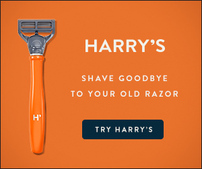
So I was pretty excited to hear about Harry’s Razors.  They’ve been around going on two years and have popped up recently online.  Read their well-crafted ad copy and you’d think you’ve found shaving Nirvana:

Like most of you, we’ve long had to choose between over-priced,
over-marketed razors that disrespect your intelligence,
and low quality, cheap razors that disrespect your face.
We knew there had to be a better way,
so we created Harry’s as a return to the essential:
a great shave at a fair price.
I wanted one - right away.  Problem is I no longer shave, thanks to a 5-year-old beard I trim once a week – if that.   But during my many decades of shaving, I mostly used the cheap blue grocery store blades that lasted about three days before they reared up and tried to bite my face off. 

So the Harry’s ad caught my eye.  It had a quality look and made quality promises:
We spent over a year meticulously crafting our first Harry’s line.
Our blades are made by German engineers with decades of experience honing high-grade steel.
Our handles were designed to blend timeless simplicity and modern ergonomics.
Our shaving cream comes from the same chemists who make creams for high-end brands.
The result: a set of modern shaving products made with respect for the tradition of a good, clean shave.
Since I was not going to try them myself, I consulted razorpedia.com for Harry’s Razor reviews.  

Some men liked them and credited Harry’s for eliminating razor burn.  Others did not like the product for reasons that ranged from “dull after three days” to rust on the blades, slippery handles and poor value compared to products available at retail – not to mention Harry’s shave cream, which nobody seemed to like.

I, too, was disappointed – that so many of the reviewers were disappointed.  Because I like Harry’s sell.  It's creative, credible and makes you want to try the product.   But as one reviewer opined, the company seems “more concerned with marketing brand association and identification than with how their razor works.”

Harry’s differentiation is threefold:  (1) a great shave, (2) a fair price, and (3) direct sales.  Unfortunately, razorpedia reviewers suggest that the product needs refinement and isn’t always the best value.  That leaves direct selling as the lead dog pulling this sled, which likely will be enough to establish a market beachhead for Harry’s while they improve the product. 

I hope so.   Because I want to see these entrepreneurs succeed.

As for me, I’m still on the lookout for an underwear T that won’t shrink with that first wash!  Don’t you just hate how they ride up on your tummy?

TakeAway:  Don’t make a quality claim unless your product absolutely, positively lives up to it.
     
Content © by Brian E. Faulkner 
 

0 Comments

Buick's Da Bomb!

1/17/2015

0 Comments

 
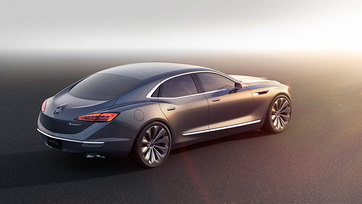
PictureBuick Avenir Concept Car (GM Image)
Two things: 

(1)  When I was a kid I thought Buicks were clunky. 
(2)  Until now, I have never once used the words “Da Bomb” in a sentence.

For some reason I most recall the ’58 Buick, a whale of a car festooned with chrome.  It wasn’t as stylish as the ’58 Chevy (my two lively great aunts drove a sleek black Impala convertible that my brothers and I lusted after).  One of our boring neighbors had a boring ’58 Buick.  So clunky seems about right.

Fast forward “many” years, where I find a dark green 2000 Buick LeSabre parked in my garage.  We inherited it from my father, who picked it out of a Florida car dealer’s reject row in 2005.  It was a low mileage car with a few scratches and minor dents and a small handful of annoying maintenance issues the dealer didn’t want to address.  That (and the price) suited Dad because he was tired of babying his near-mint, always garaged black ’78 Oldsmobile Cutlass, which had of late been demolished in an accident (not Dad’s fault).  He drove the Buick for four years, adding dents and dings of his own as his eyesight deteriorated. 

Dad was never much of a car guy, even though he worked in the business.  He never bought a new car, preferring older models with plenty of life left in them on which somebody else had assumed much of the depreciation.  Even so, he would have liked the looks of Buick’s new concept car, the Avenir, making rounds on the Internet this week.

It’s “Da bomb!” – a gorgeous, curvaceous sculpture in sheet metal if I’ve even seen one, with flowing lines reminiscent of luxury marques from the ‘30s.  It caught my eye immediately.  Even the performance-at-all-costs mavens at online auto site Jalopnik.com (a typical headline: “Watch This Screaming 911 Porsche Rally Car Demolish Mountain Roads”), acclaimed Avenir as “The Gorgeous RWD Buick We’ve Been Waiting For”.

“Buick, for once, has the hottest new car in Detroit,” headlined Yahoo Finance, despite the aggressive supercars, hefty pickups and extended range electric models that largely dominated publicity stemming from this year’s North American International Auto Show.   

“After growing Buick sales 11% in the U.S. last year, GM is trying to capitalize on the brand’s momentum,” reported CNBC auto writer Phil LeBeau, even though “momentum” is not a word that would have been used to describe Buick sales until more recent years.  The brand was all but written off by the time of GM’s 2009 bankruptcy, and speculation was that it wouldn’t be long before Buick followed the fate of sister-brand Oldsmobile, discontinued in 2004. 

If not for the Chinese, that may well have been the car’s fate.   

“General Motors isn’t thinking of the U.S. with the Avenir,” said Dave Sullivan, an analyst with AutoPacific, quoted in Rick Newman’s Yahoo article, “it’s thinking of the Chinese market.”  And placing a halo over the Buick brand -- using marketing words like this: 

“The Pinnacle of Buick Luxury, Design and Technology … a sophisticated and intuitive expression of the premium automotive experience,”
a position now largely occupied by the likes of Mercedes-Benz, BMW, Lexus and Audi.

But Buick is already Da Bomb in China, where it’s enjoyed distribution for over 100 years.  The brand is GM’s biggest seller there, accounting for around 14% of China’s new car sales.   Sullivan reports sale of 3.5 million GM-partnered automobiles in China during 2014, “where people have been salivating for a car like this,” vs. only 2.9 million GM brand cars sold in the U.S.   For this American automaker, the tail (growth of their brands in China) is wagging the dog with a proliferation of attractively styled new Buicks that appeal on both sides of the Pacific, of late even including an innovative -- and attractive --  new 2+2 convertible called the Cascada.

So what about me?

Well, I’m a lot like my Dad.  I’d be more likely to wait on the Avenir until some 3-5 year old models become available.  But then there’s that “LUXURY INTERIOR … REIMAGINED”, as Buick puts it.  To my eye, the Avenir interior looks more like some stylist’s exercise in excess than a comfy place in which to enjoy and drive the vehicle -- just the opposite of the car’s conservatively classy exterior design. 

But, as my mirror reminds me, I’m not thirty (or forty or fifty) anymore. 

So give me the concept car exterior plus the simple, analog gauge-rich interior from my dad’s LeSabre and I’ll go for it --  Lord willing, maybe somewhere around 2020.  Or, maybe I'd go for Buick's new Cascada convertible, a production model you're likely to see on the road sometime soon.  I've always loved a drop-top, and on this new Buick (their first convertible in 25 years), you can raise the top at the first hint of rain and put it back down when the sun comes out -- while traveling up to 31 mph!

TakeAway:  Your customers will tell you where your brand ultimately can go.  Listen to what they have to say and build your future on that.

Content © by Brian E. Faulkner


0 Comments

Does Coach Have An Image Problem?

1/8/2015

0 Comments

 
PictureImage © by Brian E. Faulkner
Got to thinking about Coach, Inc.’s brand image today after reading an article that questioned the company’s potential acquisition of fashion footwear brand Stuart Weitzman to complement their own nascent shoe line, reportedly the first of an array of “lifestyle” products to take them beyond handbags. 

Krystina Gustafson speculates in her CNBC.com article that, while Weitzman will add to overall Coach sales, it may not do much for the brand’s image, which needs some propping up.  She also quotes Robert Konik, an analyst with the global investment banking firm Jeffries, who suggests (in a note to investors) that Coach has, indeed, lost some of its pricing power. 

The brand may have at long last fallen out of favor with high end shoppers, Gustafson adds, because of “stale product, over-distribution and damaged brand equity from its high presence at outlet malls.”

Back in the late ‘80s, I helped their president, Lew Frankfort, with a Coach positioning speech he presented to an audience of marketing and sales reps.  Frankfort led development of the Coach business from the early ‘80s until his retirement late last year as executive chairman, during which he was instrumental in expanding the fashion leather handbag’s company’s revenue and global footprint by many orders of magnitude. 

My brief connection with him occurred during the company’s Sara Lee days, when the Chicago-based food and apparel giant was making acquisitions and launching initiatives in direct retail.  The corporation’s desire back then, via their Sara Lee Direct division, was to maximize the potential of its well-known brands, and what they discovered through research (if I recall correctly, conducted by McKinsey) was that if Coach products were sold in high end department store boutiques as well as Coach-owned retail stores, aggregate sales would increase.  That appears logical enough at first glance, but the fear was that department store sales would eat into Coach store sales – and begin eroding their price premium.  At that time, their flagship Manhattan store was said to do more sales per square foot than any other retailer in America.

But department store sales of Coach bags did not cannibalize sales in the company’s own stores.  And soon, the logic went, why not try outlet malls, since Sara Lee Direct already was knee deep in building off-price stores for its Hanes, L’eggs and Bali brands.  So Coach stores began turning up at the better outlet malls, a presence that remains today.

But there’s the rub.   Without denying the considerable growth of Coach, Inc. over the years, a portion of which clearly must have come from its outlet mall business, one does wonder whether their exalted brand name has been diminished by its continued presence in discount retail settings, where the merchandise isn’t always the same as that you’d find in New York, Beverly Hills or Tokyo.  For instance, in the third quarter of 2010, “87-percent of the merchandise at Coach outlet stores was manufactured for the outlet,” according to a 2011 article at palmbeachpost.com. “The rest was made up of items that came from the retail stores - perhaps excess inventory, or returns, or items that were no longer in season.”

“The outlet bag is just not the same quality, won't have the same details, as the one at the retail store for $1,200," noted Howard Davidowitz, chairman of national retail consulting and investment banking firm Davidowitz & Associates Inc., in the article -- although you still can cop a deal at your nearest Coach outlet store from time to time.  “A pink Mia handbag from Coach’s Madison collection was found on discount for $175 recently at the Vero Fashion Outlet," the same article noted,"plus an additional 20 percent off that was being offered on everything in the store for a final price of $140. That same handbag was available by special order at the Coach retail store in The Gardens Mall — still at the full original price of $358.”

Even so, I must admit that seeing a Coach store in an outlet mall these days rather disappoints me.   

The CNBC article notes that a pair of Stuart Weitzman pumps sell at a considerable premium over a Coach branded pair (assuming equal product style and quality, one would think).  So apparently Coach does, indeed, have some pricing headroom to make up because of the downward pull on their premium image, an opportunity that they’ve created for themselves by associating the brand with outlet settings for so many years.  

Meanwhile, I will continue to enjoy use of the Coach Bleeker Flap Briefcase I acquired back in the ‘80s.  It’s been through the wars -- including one minor flood that devastated its contents, and it still looks and performs great.  Let’s hope the company’s image does that well over the long run as Coach grows into those “lifestyle” products.

TakeAway:  If you’re marketing a premium product, stick with a price that commands -- and builds on -- your brand’s premium positioning.   

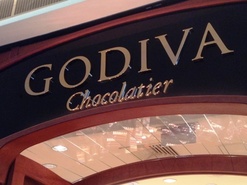
For additional discussion about sticking to premium product pricing, using Godiva chocolates as an example:  http://www.brianefaulkner.com/blog/godivas-alluring-words-enduring-promise  

Content © by Brian E. Faulkner
Sources:  http://www.cnbc.com/id/102314069
http://www.palmbeachpost.com/news/business/outlet-stores-are-you-getting-a-good-deal-or-just-/nLpgZ/


0 Comments

THe Real Thing: (not Coca-COla)

12/20/2014

0 Comments

 
PictureImage © by Brian E. Faulkner
Popped into a music store yesterday to buy a gift for my guitar-playing son and hadn’t been there more than a minute before I spied what looked at first glance like a Martin D-45 marked down to around $300.  If so, that would be the deal of the century, and should I have stumbled on such a rarity, its purchase, no doubt, would have made me feel less bummed over having sold my '63 Martin 00018 twenty years ago to buy an alternator for my old Chevy Celebrity.

The D-45, for those not acquainted with premium-quality guitars, is C. F. Martin’s flagship model, complete with abalone inlays, fancy purfling, East Indian rosewood sides and back and a sound that stands up and speaks with both sweetness and authority. 


The pretender in that guitar shop didn’t even come close, although it did have some attractive inlay work.  Apparently, a previous shop owner (now deceased) had a bunch of guitars made up in Korea to look like the best of the best American instruments and had his name put on them.  The guitar on display was one of the few would-be Martins or Gibsons or Fenders that hadn’t been sold over the years.

Guitars, like pianos, invite you to play them – or not.  It’s either a match made in heaven or a block of wood with strings on it (a guitar-shaped object, as the derision goes).   This particular guitar felt heavy, played thick and did not sing.  It was more of a decoration than a serious musical instrument – something you’d hang on the wall of a Nashville-themed restaurant.

Brands are a lot like that.  The best ones sing.  They wrap you into an experience that you look forward to – whether you buy a product for pleasure, utility or both (like the Black & Decker rechargeable lawnmower I finally bought last year).  I never have been much of a guitarist, but I always looked forward to playing my Martin.  I liked its song.  And it made me feel more accomplished than I actually was.   

I paid $300 for that guitar in 1970.  Today, it would bring around $3,000, maybe more.  A big D-45 from the same era could fetch upwards of twice that (the first one was custom made for Gene Autry in 1933).  These days, MSRP on a D-45 fresh from Nazareth is close to $11,000 -- and worth every dime.

I once had an acquaintance with a D-45 for sale.  He advertised it in the classifieds (in the part of North Carolina where a D-45 could be considered a six-string holy grail).  No takers.  So he doubled the price.

It sold lickety-split!  That guitar was the real thing – and (finally) priced accordingly.

It’s tempting to suggest that in order to sell something lickety-split it needs to sing like a Martin D-45 and be as costly, but ain't necessarily so.  A satisfying experience (like I used to get from my old Martin 00018 and still get from my lawnmower) can occur in all product categories and at all price levels. With guitars, that ranges from collector instruments on down through a student’s first guitar, which should NOT be a block of wood but have a sound that draws the ear in and strings that play with enough ease to encourage.  Too many parents make the mistake of buying a “bargain” instrument for their child to learn on and then wonder why the thing ends up stuck back in the closet after a couple of months. 

Quality, of course, can be maddeningly difficult to get a grip on.  One of my least favorite definitions is the industrial-bland “conformance to requirements.” 

Bah!

True quality should delight and amaze.  It should make you want what it’s got, whether resident in a fine guitar, a beautiful set of gears for a transmission or something as simple as a flashlight that feels good and works every time, a tool that you can use with confidence while searching for that old guitar you know must be back there in the closet somewhere …

TakeAway:  Be the real thing, the brand or product that people look forward to using (or building into the things they make) – no matter what you’re selling.

Content © by Brian E. Faulkner 

0 Comments

Taglines & Brands.

11/14/2014

0 Comments

 
PictureImage © by Brian E. Faulkner
Here are some of my most popular recent posts about brands and taglines:

A Tagline for Tomorrow: How to Win Big in 2016                                               


Subject:  10 characteristics of an effective tagline. 

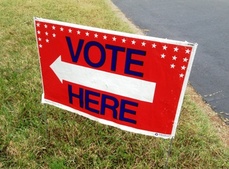
Despite its overwhelming success, the Republican 2014 midterm election campaign was a sorry example of strategic positioning.  Yes, the Republicans improved their ground game and voter motivation differed markedly than in 2010 and 2012.  And yes, there was considerable angst afoot about the president and his policies, his slide toward extra-Constitutional thinking and his enthusiasm for progressive social initiatives that cut deep into traditional American culture. 

But absent the “Nobama” ax the Republicans swung with such gusto, there was a clear lack of strategic underpinning to their midterm messaging ...

Read more here:
  www.brianefaulkner.com/blog/how-to-win-big-in-2016-a-tagline-for-tomorrow


PictureImage © by Brian E. Faulkner
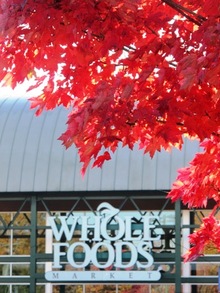
New Whole Foods Tagline Nails It!


Subject:  Your Tagline Should Tell The Truth!

Two words at the bottom of a Whole Foods sales receipt caught my eye recently:  VALUES MATTER.

“What’s up with this?” we asked?

“You know, values – the things people believe.  They matter.  That’s what Whole Foods is all about.”

Of course.  Whole Foods Market® has hung its mostly organic hat on that for years.  A tilt toward unadulterated, unmanufactured foods has been their stock in trade ever since John Mackey and his wife started their first store in 1978.  Company “values” still encompass trust and the greater good … and attract a refreshing variety of both staff and customers.

But these days, Whole Foods Market is far from alone in offering organic fare.  Even the most mundane mainstream grocer now carries some organics, and the leaders among them have gone in heavy for it – even Walmart, for heaven’s sake!   Not to mention a plethora of “natural foods” competitors out there who would like to eat WFM’s lunch. 

So Whole Foods needs a way to stand out … again.

Read more here:  www.brianefaulkner.com//blog/new-whole-foods-tagline-nails-it


Picture
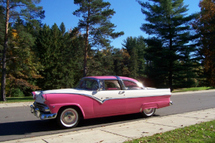
Building a Fortress Brand: Ford Possessed, Chevy Obsessed.


Subject:  Brands That Connect at the Heart.

Heard the other day about a WWII vet from New Jersey  selling his automobile collection.  Six cars, every one of them a Ford.  Not a Chevy in the bunch.  He was lifetime loyal to the Ford brand, so much so that “If you had a Chevy you didn’t come in my driveway.  You parked out on the road.”

The choice used to be that simple for those of us who came of age in the automobile saturated culture of post-war America – especially the full-bore 1950s, the decade of classic cars and classic rock (neither of which were deemed classic at the time).  Ford and Chevrolet were the butter-and-bread choices of Americans 50+ years ago, before the car market got choked up with so many different brands and models – not to mention the infinite variants of those brands and models ...

Read more here:  www.brianefaulkner.com/blog/ford-possessed-chevy-obsessed-building-a-fortress-brand


PictureImage © by Brian E. Faulkner
Godiva's Alluring Words & Enduring Promise.


Subject:  Stick to your  brand's promise.


When I traveled for business more than I do now, I’d occasionally come across a Godiva boutique and add a small purchase of their memorable chocolates to my personal expenses.  It was a pleasant surprise to turn a corner in some upscale mall or market and spot the luxurious Godiva logo.   No matter where my thoughts had been, they immediately shifted to “chocolate” and the stolen moment I was about to experience.

From way back in 1926, when chocolatier Joseph Draps first opened his Brussels shop, Godiva has been superb at crafting words to describe their “extraordinary richness and design, a collection of passion and purity” (the founder's words).  Today’s wordsmiths describe Godiva as “a sought after name with the timeless quality of passion, style, sensuality and modern boldness.”  Their corporate boilerplate proclaims GODIVA Chocolatier as a brand that “consumers universally associate with prestige, elegance and quality …”


Read More Here:  www.brianefaulkner.com/blog/godivas-alluring-words-enduring-promise


Picture
Brand as Handshake:  A New Twist on an Old Problem.


Subject:  Be authentic.

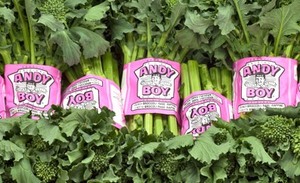
How do you brand something as ordinary as fresh vegetables?  If you’re a grower who sells veggies to grocery store produce departments, how do you make your product stand out over competitors' brands?  Oddly enough, most fresh produce remains unbranded.  But not vegetables and fruit grown by D’Arrigo Bros. Company, of California, pioneers in produce branding.

Back in 1920, two Sicilian immigrant brothers discovered the fertile land of central California and thought it would be perfect for growing broccoli ...

Read more here:  www.brianefaulkner.com/blog/brand-as-handshake-a-new-twist-on-an-old-problem 


0 Comments
<<Previous
Forward>>


    sample blog:

    This is a sample blog  for writer Brian E. Faulkner.  It presents stories about brands that do (or don't) communicate competitive advantage effectively. Stories have been gleaned from the business press, personal experience and occasional interviews. New articles are added from time to time, and every so often there will be a post of general interest -- about things like success, passion, social trends, etc. 

    Author

    Brian Faulkner is a writer and strategic communication consultant who helps business clients explain their competitive advantage in compelling and enduring ways.
     
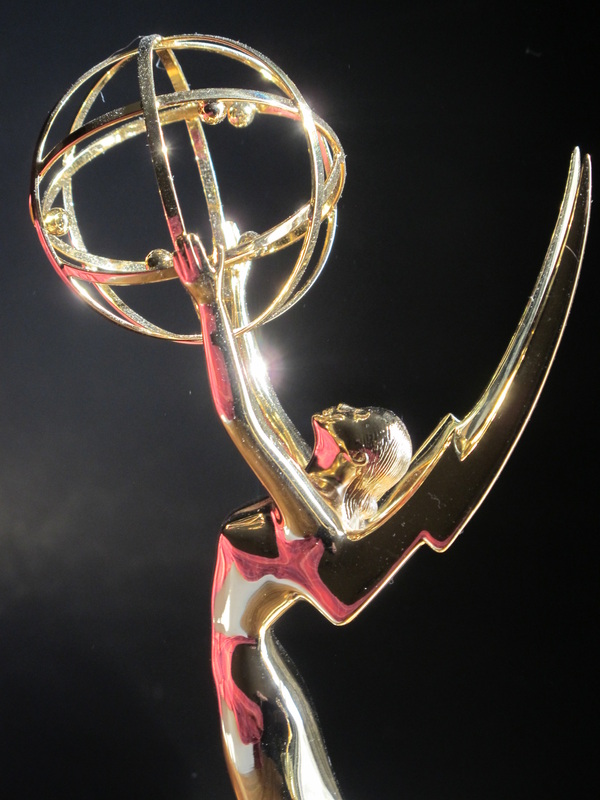
    He also is a five-time Emmy award winning Public Television writer & narrator for a highly-rated and well-loved magazine series.

    Picture
    Image © by Brian E. Faulkner

    Categories

    All
    Advertising
    Authenticity
    Brand Branding
    Brand & Branding
    Brand Names
    Business Culture
    Competitive Advantage
    Competitive Advantage
    Competitive Factors
    Content
    Creativity
    Culture
    Customer Satisfaction
    Differentiation
    Experience
    Flexibility
    Future
    Innovation
    Key Message
    Leadership
    Luxury
    Marketable Truth
    Marketing
    Passion
    Politics
    Positioning
    Price
    Quality
    Sales
    Service
    Small Business Marketing
    Story
    Strategic Thinking
    Taglines
    Team
    Technology
    Trends
    Values
    Vision

    Archives

    July 2019
    January 2019
    November 2016
    February 2016
    October 2015
    September 2015
    August 2015
    July 2015
    June 2015
    May 2015
    April 2015
    March 2015
    February 2015
    January 2015
    December 2014
    November 2014
    October 2014
    September 2014
    August 2014
    July 2014
    June 2014
    May 2014
    April 2014
    March 2014
    February 2014
    January 2014
    December 2013
    November 2013
    October 2013
    September 2012
    October 2011
    March 2011

    RSS Feed

Content © by Brian E. Faulkner.   All rights reserved.