A BLOG ABOUT COMMUNICATING COMPETITIVE ADVANTAGE
  • Brian Faulkner
  • Blog
  • CONTACT

If You Want a Great Job, Interview companies With Good VIBES.

11/17/2014

0 Comments

 
PictureImage © by Brian E. Faulkner
Have you ever noticed how some businesses just wrap themselves around you and make you feel welcome, whether you’re a customer or a new graduate looking for a job?

I have found after many years consulting to businesses of all sizes (about communicating their culture and competitive advantage) that you can walk onto a sale floor, into a company headquarters or manufacturing plant and know immediately which organizations “click” and which do not.  The businesses that connect have good vibes.  There’s positive energy.  Their leadership is genuine, sometimes even inspired.  The people are real.  They’re not just plodding along toward quitting time.  They’re into what they’re doing -- and believe in it.  The organization shares a clear purpose and vision that are not just words on some poster hung in the break room.

My son-in-law works for REI, a national retailer of recreational equipment, clothing, footwear and other attractive, well-chosen merchandise targeted to the outdoorsy crowd.  He is enthusiastic about the company, which is organized as a consumer cooperative in which members get a dividend check every year for around 10% of a generous array of eligible merchandise purchased during that year, after paying a one-time $20 membership fee (you don’t have to join to shop there).  The more members buy at REI, the better the deal – it’s built-in.  REI also offers its members occasional deals that seem unusually attractive, in addition to store-wide sales that really are sales and not just come-ons.  

The point here is that REI has both a purpose (to make the outdoor life available to more people at a good price) and values (which seem to be that people matter and the environment matters).  The company uses words like approachable, collaborative, casual and playful to describe the work experience.  Everybody with more than 20 hours a week gets health care.  My son-in-law (who’s in retail management in an Atlanta-area REI store) says that the people who ultimately “stick” with the company buy into the REI experience (not to mention their generous performance incentives and retirement plan).  They may have come in just looking for a job but end up finding a passion for work that knits comfortably into the fabric of their lives and helps assure a secure future for them and their families.

The point here is not to suggest going to work at REI, although this perennial placeholder toward the top of Fortune magazine’s Top 100 Best Companies to Work For would be a great choice.  You may find something just as rewarding in some other retail setting, in a small manufacturing plant or even a big company.  I have seen what, just for this article, might be called the “REI Effect” in all kinds of workplaces where business leadership and employees are in-synch and often unusually productive.  They know what their purpose is, how their customers benefit, where they are going, and “what’s-in-it-for-me”, which could be just as true for a non-profit -- such as a school – as for a commercial enterprise. 

So, if your goal is to find a work experience like the one exemplified by REI, try “getting a job” using a more differentiated strategy.  Check the place out if it’s a retail store.  Watch how the “team” works.  Ask challenging questions about the merchandise and see if they rise to the occasion – even if it’s almost closing time.   Ask people how they like working there.   If you want to work for ABC Corporation or XYZ Manufacturing but can’t get immediate access, vigorously research them online.  Talk to people who already work there; figure out where they go for lunch or to chat after work.  Then request an interview with a company manager you’ve targeted (by name) before you even apply for the job.  If HR gives you the stiff-arm, try calling the person directly and leave a message that inspires them to call you back.  Let them know that you're interviewing them (and others).  Talk to that manager about opportunities at the company, get other inside introductions and take a tour. If you want a sales position, ferret out some of the company’s customers and talk to them.  This approach should pay off, whether you’re just out of school looking for your first position or a work veteran who has been “right-sized” out of a job (maybe especially so if you’re that person because you can more readily perceive what you want to see and don’t want to see).

It’s also instructive to remember that the world does not owe you a job.   But you do owe yourself a good job.   You are no mere commodity, and you’re not seeking commodity-like work.  You have value, knowledge, experience and intelligence to add to the employer’s collective purpose -- and to their customers’ satisfaction.  And you have every right to enjoy your work.

Look for that “REI Effect”, perhaps in one of the other 99 companies on Fortune’s Top 100 list.   And don’t be satisfied with less.  Because you’re worth it.

TakeAway:  A job infused with passion and purpose pays big dividends.  Use a differentiated job search strategy to find one.

Content © by Brian E. Faulkner


0 Comments

How To Win BIG in 2016: A Tagline For Tomorrow. 

11/5/2014

0 Comments

 
PictureImage © by Brian E. Faulkner
Despite its overwhelming success, the Republican 2014 campaign was a sorry example of strategic positioning.  Yes, the Republicans improved their ground game and voter motivation differed markedly than in 2010 or 2012.  And yes, there was considerable angst afoot about the president and his policies, his slide toward extra-Constitutional thinking and his enthusiasm for progressive social initiatives that cut deep into traditional American culture. 

But absent the “Nobama” ax the Republicans swung with such gusto, there was a clear lack of strategic underpinning to their midterm messaging.  Instead, they allowed the president to make their case for them.  He saved the Republicans the trouble of building a brand -- a short-term plus but a long-term minus.

The Democrats had more substance to build on (they always seems to think further down the road than the Republicans), but their 2014 messaging wasn’t all that cohesive, either – at least overtly.  However, it was clear to the electorate that the Democrats mostly stood for Obama and his ways, despite some candidates who fled toward the exits in fear of even mentioning the president’s name.   Love him or loathe him, the 2014 midterm was a referendum on Mr. Obama, including his carriage, his approach to a frightful list of geopolitical and geo-economic conundrums, his penchant for  social reconstruction and his claim to “protect the middle class” – a phrase I would forever ban from all political discourse, not because it isn’t important, not because it isn’t needed or worthy or possible, but because it has been beaten into utter meaninglessness by overuse.

So, as the endless phalanx of political ads finally fades to black, leaving the talking heads to chew things over, this observer has a suggestion for both political parties as they slog toward 2016: come up with a magnetic, meaningful word picture of the years ahead.  Recast The American Story in its many manifestations, from Main Street to Wall Street to the Arab Street.  Create a message that people can get a grip on, hang their hats on -- or cast aside in favor of the other guy’s take on things.

Democrat or Republican, what’s needed is a hard-working tagline that acts as a stand-in for party "market positioning".  Which should include the following characteristics:

  1.  Simple – uses as few words as possible.
  2.  Direct – makes a strong, unambiguous declaration.
  3.  Compelling – connects to both head and heart.      
  4.  Personal – speaks to people’s wants and needs.
  5.  Strategic – sets your message (or brand) apart.
  6.  Authentic – grounded in Marketable Truth©.   
  7.  Meaningful – presents tangible benefits.   
  8.  Visual – attracts eye and ear.
  9.  Memorable – sticks in the mind.
10.  Enduring – remains true, even in the face of change.

Readers of this blog know that my subject is communicating competitive advantage.  I am no political commentator, but there clearly are parallels between positioning a business, product or brand to advantage and doing so for a political party or candidate.  If you spread out the pieces and parts of your belief on a tabletop, you should be able to re-assemble them in a more strategically useful, more refreshing and attractive way, regardless of which political party plucks your heartstrings and moves your feet toward the voting booth. 

Use the list of qualities above to guide you in creating a key message, a compact, well-crafted expression of competitive advantage that helps assure consistency in every communication you make – commonly expressed as a tagline.  Then lay out a plan to tell your American Story.  Start disseminating your message at least by November of 2015.  And stick with it.   Modify the accents, if needed, but not the core message as party and candidates move together toward November of 2016:

Short, Compelling & Strategic Tagline

- supporting initiative #1
- supporting initiative #2
- supporting initiative #3
- supporting initiative #4
- etc.

Can it be all that simple?   Seems so to me.  And it just might save us from suffering through two more years of verbal mush, the kind we’ve become all too accustomed to as our national political campaigns unfold. 

Content © by Brian E. Faulkner.    Marketable Truth © by Brian E. Faulkner  


0 Comments

Godiva's Alluring Words & Enduring Promise.

9/18/2014

0 Comments

 
Picture
Tags: Godiva chocolate, Chocolatier, Trufflelata,  Target

When I traveled for business more than I do now, I’d occasionally come across a Godiva boutique and add a small purchase of their memorable chocolates to my personal expenses. 

It was a pleasant surprise to turn a corner in some upscale mall or market and spot the luxurious Godiva logo.  No matter where my thoughts had been, they immediately shifted to “chocolate” and the stolen moment I was about to experience.

I always picked the simplest dark piece from among the tempting individual choices and array of gold boxes – nothing fancy, just the one I imagined would deliver the purest Godiva experience without complicating it with other flavors.  After enjoying one (maybe two if I wasn’t in a hurry), the rest of my purchase got packed away for the trip home. 

Now flash forward to news that Godiva has launched a temptation called Trufflelata™, a creamy soft-serve shake made right there in the boutique with your favorite truffle blended in: Chocolate Lava Cake, Salted Caramel, Strawberry Crème, Hazlenut Crunch -- even Oreo Trufflelata.   Take your delightful pick.  

The alluring Trufflelata description and photography reminds me how good Godiva is at making us crave their products (with packaging, color, lighting, visual impact, aroma) -- same for their line of GODIVA Liqueurs announced earlier this year, including a Dark Chocolate offering they describe as “a delicious full-flavored indulgence with less guilt.” 

From way back in 1926, when chocolatier Joseph Draps first opened his Brussels shop, Godiva has been superb at crafting words to describe their “extraordinary richness and design, a collection of passion and purity” (the founder's words).  Today’s wordsmiths describe Godiva as “a sought after name with the timeless quality of passion, style, sensuality and modern boldness.”  Their corporate boilerplate proclaims GODIVA Chocolatier as a brand that “consumers universally associate with prestige, elegance and quality …”

I am taken with Godiva’s consistent ability to describe itself in words that haven’t strayed far at all from their founder’s original pronouncement -- many of the same “notes” are there.  It’s a perfect example of  Marketable Truth©, the authentic difference at the core of a product or service that speaks to its enduring competitive advantage.  When you couple their words with the product experience, it’s clear their “decadent offerings” deliver.  You can taste Godiva's truth.

How well regarded is Godiva among chocolate aficionados?  Very well, you’d think.  But chocolate purists often take exception with Godiva’s vaulted reputation, and some even have been known to make unkind comments when comparing the maker to those whose chocolates they consider more sublime (and perhaps more rare).  So maybe Godiva isn’t the best chocolate in the world, but neither is it the most expensive -- by far.  But to me, Godiva is both rare and costly.  I pay for -- and thoroughly enjoy -- the Godiva experience.

After a bit of dip during the recession, Godiva Chocolatier continues its global growth.  The company now is Turkish-owned, after 40 years under the Campbell Soup corporate umbrella, and has 450 worldwide boutiques.  Their $500-million or so in sales revenue is a drop in the bucket compared to the $75-billion worth of chocolate sold globally (U.S. total chocolate sales estimates are $18-20bn, about 25% of which is the premium market).    

In researching this story, I learned that women crave chocolate more than men, which doesn't seem all that surprising to this husband and father of three daughters.  As a friend points out, all you've got to do is walk through a crowded mall with a Godiva gift bag under your arm and see how many ladies' glances you get.

These days you can buy their chocolate bars at Target for around four bucks (“Expect More. Pay Less”).  The company also has introduced a line of tiny Godiva Gems wrapped in colored paper for sale in food and drug stores.  Which makes me wonder whether making the brand so universally available in the short run risks watering it down in the long run. 

It used to be that if you couldn’t afford $20,000 for a new car you could treat yourself to 10-bucks worth of Godiva chocolate a couple of times a year if you were fortunate to find one of their boutiques or specialty retailers.  An important ingredient of their marketing success was scarcity, which made your $10 purchase seem a bit like found gold.   Today, the new car you can't afford costs around $60,000, but your Godiva treat is still within reach at $26, a high enough price to make it an investment in self-worth vs. a reflection of net worth.

So, while you’re savoring your Godiva truffle, sipping your Godiva liqueur or relaxing with a cup of Godiva coffee “inspired by our finest flavors”, think about where the brand lives in your mind these days.   Godiva has insinuated itself into your being for a long time now and is likely to stay there despite its latter-day mass market adventurism.  The brand retains its set-apart image largely because of Godiva's exclusive positioning over many years, making it a brand that “consumers universally associate with prestige, elegance and quality.”

Frankly, though, I'd hate to see Godiva become a product so common that you can find it almost anywhere.  It just doesn't seem so wickedly worth it when you buy it at Target.   

TakeAway:  If you sell a premium brand, plant its exclusivity deep in people’s minds.  And don't try to grab somebody else's customers by going down market when things get tough.  Stick with your brand promise.  Your patience will be rewarded.

Content © by Brian E. Faulkner

About Brian Faulkner:

Brian Faulkner is a content writer and Key Message expert.  He helps clients come up with words to set their businesses, brands and products apart and attract the customers they want most.  His strategic insights (and the words that go with them) have made a significant, often immediate difference for client companies over many years.  His "sweet spot" is smaller to moderate sized consumer products, retail, service and manufacturing companies that may have struggled to find just the right words to position their business, brands or products to competitive advantage:

>  blogs to establish you as the thought leader / authority in your business category
>  case stories that communicate your sales successes and invite prospect inquiry
>  testimonials that showcase customer / client satisfaction in 1-2 short sentences
>  positioning statements to guide business development & marketing
>  landing page copy to set your business or brand apart in a compelling way
>  tagline development to attract the interest of your most qualified prospects

Brian also is a three-time Emmy award-winning Public Television writer and narrator of over 100 segments for UNC-TV’s popular “Our State” magazine series, on the air since 2003.  


0 Comments

Brand As Handshake: A New Twist On An Old Problem.

9/5/2014

1 Comment

 
Picture
How do you brand something as ordinary as fresh vegetables?  If you’re a grower who sells veggies to grocery store produce departments, how do you make your product stand out over competitive brands (few) and unbranded produce (many)? 

Back in 1927, the fresh produce industry was about to take an early step toward branding.  Of course, branding had been around ever since some enterprising Neanderthal decided to claim rights to a tool he’d made with by scratching his unique mark on it. 

And these days, most everything gets branded, from cattle to cars, soap to cereal – and with the advent of social media, even ourselves.

Brand, like a trademark, is not only a symbol of a company but “a consistent pledge” from that company to its customers, a “bridge to a relationship” with them that associates that brand with “only one origin or source,” according to Robert Payne, a partner at intellectual property firm LaRiviere, Grubman & Payne, LLP of Montery, CA (quoted this month in Western Grower & Shipper magazine).

Oddly enough, however, most fresh produce remains unbranded.  But not vegetables and fruit grown by D’Arrigo Bros. Company, of California, pioneers in produce branding.

Back in 1920, two Sicilian immigrant brothers discovered the fertile land of central California and thought it would be perfect for growing broccoli.  It wasn’t long before their 28-acre crop was almost  ready for harvest.  But who would buy it?  California was still in its start-up phase, so the two looked East, where they knew they could sell that much – and a whole lot more.  So Stefano D’Arrigo filled a railroad car with broccoli and shipped it to Boston.  Eight days later, brother Andrea unloaded the crop – still fresh after 2,800 miles – and sold it at a profit.

That was the way it would go.  One brother grew the broccoli in California and the other sold it in Boston, along with an ever-increasing variety of other fresh vegetables.  As competitors caught on, it soon became necessary for the D’Arrigos to set their produce apart.  Thus was born the Andy Boy brand, a highly visible logo with pink lettering and a picture of Stefano’s then 3-year-old son Andy on it.  Their brand still leads the way today, emblazoned on bright pink skirt ties that dress their broccoli rabe for sale. 

“Shoppers have told me that Andy Boy products really stand out in the produce section,” says David Hinkle, Southwest sales manager for Package Containers, Inc., the Canby, OR company that makes the skirt ties.  “The pink tie attracts people’s attention and invites them to buy.”

Frank Ratto, VP of marketing for Ratto Bros., Inc., whose company farms more than a thousand acres of herbs, fruits and vegetables in the Central Valley, likens branding agricultural products with twist ties to a handshake.  “They’re a stand-in for you,” he says.  “They give your product an identity.  They communicate brand value -- value in the Ratto Bros. name, the knowledge that people get fresh and tasty vegetables every time.“

Picture
He says that most produce is sold ‘naked’, so when a shopper sees the Ratto Bros. logo with its distinctive horse and wagon illustration (a picture of Frank’s grandfather delivering produce back in 1905), she knows she’s chosen quality and can serve it to her family with confidence. 

“We brand 23 out of 45 products" with PCI's Identi-Ties®, he says, counting them off one by one – “from basil to watercress.  They’re an important tool in the presentation of our products -- especially in northern California, where our brand means something.”

“The produce department is one of the most demanding sections in a grocery store,” notes Package Containers’ Hinkle.  “Clerks are always having to straighten up the displays after people pick through the produce.  I’ve noticed, however, that there’s less of that with Ratto Bros. produce,” because their branded presentation works so well.  

It may sound amazing that something as simple as a branded twist tie is so effective at differentiating one produce brand from another (or from unbranded produce), but it does.  Just ask D’Arrigo Bros. Company, of California and Ratto Bros., as both third-generation companies extend the invitation for consumers to choose their branded produce, well into the 21st century. 

TakeAway:  Communicate your product’s uniqueness with a brand that’s tangibly and authentically “you.” It can make a real difference – right away and way down the road, too.

Content © by Brian E. Faulkner

Tags: D’Arrigo Bros. Company, Andy Boy brand, Package Containers, Inc., Ratto Bros., Inc., Western Grower & Shipper, LaRiviere, Grubman & Payne, LLP

About Brian Faulkner:

Brian Faulkner is a content writer and Key Message expert.  He helps clients come up with words to set their businesses, brands and products apart and attract the customers they want most.  His strategic insights (and the words that go with them) have made a significant, often immediate difference for client companies over many years.  His "sweet spot" is smaller to moderate sized consumer products, retail, service and manufacturing companies that may have struggled to find just the right words to position their business, brands or products to competitive advantage:

>  blogs to establish you as the thought leader / authority in your business category
>  case stories that communicate your sales successes and invite prospect inquiry
>  testimonials that showcase customer / client satisfaction in 1-2 short sentences
>  positioning statements to guide business development & marketing
>  landing page copy to set your business or brand apart in a compelling way
>  tagline development to attract the interest of your most qualified prospects

Brian also is a three-time Emmy award-winning Public Television writer and narrator of over 100 segments for UNC-TV’s popular "Our State" magazine series, on the air since 2003.  

1 Comment

Could This Be America's Most Satisfying Small Airport Experience?

8/28/2014

0 Comments

 
PictureImage © by Brian E. Faulkner
Now that Condé Nast Traveler readers have named America's 10 best airports, I'm glad to find one of my favorites toward the top of  their list -- Tampa International. As many times as I've flown in and out of Tampa, I've not only never had a hassle, getting in and out of the airport (easy), parking or during the departure / arrival process, but actually have found the place relaxing.

But say you ran a smaller, regional airport located between two hub-sized airports, both roughly equidistant from larger population centers with considerably more flight options?  Many fewer passengers use your airport vs. the others
. How would you convince local people to fly from your airport rather two bigger ones, each an hour or so away? 

One thing you might do is solicit traveler feedback.  Short of conducting passenger intercepts (a good idea), check out Yelp(dot)com and build your key message around the good things people are saying there.  For Piedmont Triad International Airport, which serves twelve North Carolina counties and six Virginia counties surrounding Greensboro, Winston-Salem and High Point (the world’s furniture capital), the online chatter mostly is good news. 

Passengers seem to appreciate the ease with which they fly in and out of PTIA, despite the occasional complaint about not having a Starbucks to hang out in.

      “In and out quickly.  You can close the door to your car and be at your gate in under 12 minutes.”

                                                                             local passenger

         “An awesome airport … one of my favorites.”


                                                                             Hollywood, CA passenger

“I have been so overwhelmed by my experience at Greensboro airport that I feel like I needed to write about it,” posts a traveler from New Jersey.   “Every single employee of the airport or any of the vendors is ecstatic that you chose to fly out of ‘their’ airport.  They are constantly thanking you and going out of their way to help you.  It is the same every time - car rental, ticket agents, TSA, gate agents, security, vendors - they all have that same attitude.  Fly out of this airport if you have the chance!!”

There seem to be two kinds of people who love to “Fly PTI.”  One is the local passenger willing to pay a small premium for their ticket to avoid driving either to Charlotte or Raleigh-Durham -- if you drive to Charlotte from the Triad and dare count on I-85 or I-77 during certain morning or afternoon hours you could easily miss your flight.  The second kind of PTIA passenger (mark me among them) revels in the experience of a less-than-bustling terminal, short wait times and efficient service.  For people like us, an investment in avoiding the inevitability of parking hassles, long lines and general uncertainty is an easy choice.  Some PTIA passengers do quibble about the lack of restaurant options, but they love the convenient rental car location just steps outside baggage claim.  Some also snicker at the “International” in PTIA but love easy connection to the big hubs – while appreciating the ease of getting in and out of this airport. 

Management, of course, would like to see an increase in hustle and bustle because that means more paying customers.  But here of late they also seem to be embracing – and crowing about – the many pluses of their situation while working diligently to offer “the best passenger experience we can.”

“It’s hard running an airport,” says Kevin Baker, PTIA’s executive director, “because everybody’s goal is to leave the building.  So while they’re with us, our goal is to make them as comfortable as possible.

“We want it to be a hard decision for people to leave our airport” in favor of one of the others. “Parking is cheaper, and easier.  Every seat in the ticketing area and in both concourses has power available to passengers – plus the ability to charge your iPad or other device.  And there’s free WiFi.”

The 4.5 million people living within 90 minutes of PTIA will be glad to learn that the difference in fares between GSO, CLT and RDU has been reduced, according to the airport’s marketing and customer relations manager, Stephanie Freeman. 

“Lower fares used to be the key driver of leakage to the other airports,” Freeman says, “and the perception still lingers.  We have found that people will choose to fly from here for as much as $150 difference compared to Charlotte and $100-$150 compared to Raleigh-Durham, and that difference is increasing.”

Baker acknowledges that while PTIA’s fares are “coming more in line,” there will always be some passenger leakage, particularly in light of Charlotte’s position as a hub with 140 destinations vs. PTIA’s 16.  (PTIA was 91st in passenger enplanements among U.S. airports during CY2013, according to the FAA. Charlotte was #8 and Raleigh-Durham #39.) “We can’t change that,” he says, “but we can make the first step in connecting to more than 200 worldwide destinations easier.”  Currently, there are 53 direct flights out of PTIA to 14 destinations served by American/U.S. Airways, Delta, United, Frontier and Allegiant.

PTIA has added a variety of passenger-pleasing amenities over the past four years.  In addition to the personal connectivity features mentioned above, they’ve refreshed the terminal and concourses, updated flight information displays and, most recently, have added charging stations for electric vehicles – the first airport to do so in North Carolina. Fifty Airport Ambassadors also add a personal touch to airport service, a team of 50 volunteers who “do our best to transform your traveling stress into southern-style comfort.”

Baker points out that in addition to its many passenger delights, Piedmont Triad International Airport is transforming its 4,000 acre campus into an “aerotropolis,” with hopes of becoming the Wichita of the East.  Called “The best landing field in the south" during its early days, PTIA now is the third busiest airport in North Carolina -- and the state’s largest aerospace employer.   Tenants include:
  • Honda Aircraft Company, which employs 650 people (at last count) and plans to introduce their innovative Honda Jet – designed and manufactured at PTIA -- into service next year;
  • maintenance, repair and overhaul giant TIMCO Aviation Services, which alone has 705,000 square feet of hanger space at GSO, 1,500 local employees and attracts business from all over the world, in part because the airport’s two parallel main runways can comfortably handle the world’s largest planes;
  • and Cessna Aircraft, with a 45,000 square foot service center for its Citation business jets.

The FedEx mid-Atlantic air hub is here, in the company of firms like GE Aviation and B/E Aerospace.  And according to Executive Director Baker, there’s plenty room for more. The (self-supporting) airport authority has approved a 10-year, $350 million development program to acquire and prepare some 600 acres of land nearby.  Down-the-road benefits?  Some 18-thousand potential new jobs and perhaps $3.2 billion of business impact.

A wealth of aviation-based training already is in place to help assure the region’s economic success.  Guilford Community College’s aviation training center and other nearby schools offer aviation- and aerospace-related programs.  The new T.H. Davis Aviation Center, which partners with Embry-Riddle Aeronautical University, is considered one of the best-equipped aviation maintenance training facilities in the Southeast.

However, daily evidence of this airport’s success is reflected in the experiences of its passengers, people who choose to fly in and out of PTIA despite the looming reality of two hub-sized airports only an hour-and-a-half away.   

Could Piedmont Triad International Airport be America's Most Satisfying Small Airport?  

You’d think so to read what a strong plurality of PTIA travelers have to say – and as anyone who flies commercial these days well knows, airline passengers will complain at the drop of a boarding pass should something go awry but are less likely to pay a compliment.

PictureImage © by Brian E. Faulkner
“PTI has such an awesome hometown feel to it,” writes a passenger from Chicago.  “It is so simple and straightforward.  No hassle, just a bunch of common sense - the way it should be!”

“Piedmont Triad International Airport is an awesome little airport!” writes another passenger. “And while it does not have the breadth of dining and shopping options of other airports, it has its own small airport charm!”

 “It’s ‘Home Sweet Home’,” says a third, “compared to huge, chaotic airports.”

All is not perfection at PTIA – some passengers do have minor gripes.  But for a smaller airport caught between two much larger ones, the good news is very good indeed.

The tagline says it all.  Fly easy.  Fly PTI.  

TakeAway:  Communicate your competitive advantage based on what your most satisfied customers have to say about your product or service.  Because that’s the truth!

Content © by Brian E. Faulkner

Tags:  PTIA, Piedmont Triad International Airport, Greensboro, Winston-Salem, High Point, Starbucks, GSO, CLT, RDU, American / U.S. Airways, Delta, United, Frontier, Allegiant, aerotropolis, Honda Jet, TIMCO, Cessna Aircraft, GE Aviation, FedEx, B/E Aerospace, Guilford Community College, Embry-Riddle Aeronautical University, Yelp.com

About Brian Faulkner:

Brian Faulkner is a content and strategic communiction writer.  He helps clients come up with words to set their businesses, brands and products apart and attract the customers they want most.  His strategic insights, and the words that go with them, have made a significant, often immediate difference for client companies over many years.  His "sweet spot" is smaller to moderate sized consumer products, retail, service and manufacturing companies that may have struggled to find just the right words to position their business, brands or products to competitive advantage:

>  blogs to establish you as the thought leader / authority in your business category
>  case stories that communicate your sales successes and invite prospect inquiry
>  testimonials that showcase customer / client satisfaction in 1-2 short sentences
>  positioning statements to guide business development & marketing
>  landing page copy to set your business or brand apart in a compelling way
>  tagline development to attract the interest of your most qualified prospects

Brian also is a five-time Emmy award-winning Public Television writer / narrator.  He is principal writer and narrator of UNC-TV’s popular "Our State" magazine series, on the air since 2003.  His distinctive sound has been heard on many hundreds of radio spots and client videos since the 1970s.  People say he has a “Mercedes voice” and sounds a bit like Charles Kuralt, which Brian considers a welcome ... but happy ... illusion.


0 Comments

A New Tagline For OJ?

8/22/2014

0 Comments

 
PictureImage © by Brian E. Faulkner
Keywords:  tagline, taglines, orange juice, OJ, soft drinks, carbonated soft drinks, cola, soda, competitive advantage, brand story

I
t’s hard to imagine.  Americans are turning away from orange juice!  Not in huge quantities, mind you, but the trend definitely is down, according to a FoxBusiness story online. August sales data from Nielsen and the Florida Department of Citrus revealed a drop in volume of 9.2% (gallons) vs. a year ago.  Dollar sales were down 5.4%.

What’s that all about?


Cost is one factor.  A gallon of OJ ($6.44 average retail, up 4.1% over last year) now costs almost twice as much as a gallon of gas ($3.45 according to AAA).  A bacterial disease also is making the revered breakfast staple more expensive by reducing fruit production, says Florida Department of Citrus spokesperson David Steele, III. 

But one of the biggest factors in diminished sales seems to be that old bugaboo, sugar.  Another may be misplaced attention. 

“Nutritional experts have been advising against the sugary fruit drink,” reveals Gabrielle Karol in her FOXbusiness story. She cites Alissa Rumsey, a registered dietician and spokesperson for the Academy of Nutrition and Dietetics, writing that she’s “definitely heard people say it’s affecting their decision whether to buy orange juice or not.”

Okay … but shame on the sugar police for picking on our orange juice!  As a friend said in discussing this story, “It ain’t exactly soda.”

True.  A 12-oz. soft cola soft drink has close to 40 grams of sugar.  A glass of orange juice (presumably 8-oz.) has about 21 grams of the sweet stuff -- not added sugar, mind you (like high fructose corn syrup), but the natural occurring variety.  If my math is right, a 12-oz. glass of OJ would have approximately 31 grams of sugar.  A small cup of Greek yogurt in my fridge has 14.  A tablespoon of my favorite Morello Cherry “fruit spread” has 8g.  A dollop of ketchup, 4.  And an 8-oz. serving of apple cider (no added sugar) has 31g. 

So a breakfast-sized serving of OJ (probably more like 4-oz) compares favorably with other sweetish fare – and it’s good for you to boot -- especially compared to the real dietary demon: soft drinks, which are sugar bombs with zero nutritional value.   

It could be that OJ simply has lost its cool - if it ever had any (I thought OJ was great when I was eight). But carbonated soft drinks have been the beneficiaries of billions of dollars worth of artificially maintained cool over the years.  And today we consume soft drinks in shamefully large annual quantities as part of the "American lifestyle”. 

So maybe what OJ needs (the carbonated beverage, not the celebrity criminal) is an attractive new tagline – not to mention some relief from dieticians who appear to have nothing better to do than pick on a true-love product like orange juice.  (To be fair, the dietician quoted in this story recommends eating whole oranges instead of drinking orange juice, for the fiber content and because the sugar is less concentrated.) 

As for OJ's new tagline, I thought immediately of The Un-Soda.  But that’s too 7-Uppy sounding.  So what about these possibilities:

Orange Juice:  The Anytime Sunshine Drink.
Orange Juice:  Made by the Sun, Enjoyed by You.
Orange Juice:  The Best Way Start to Your Day … Under the Sun.

No doubt other good ideas will pop into readers’ minds.   Meanwhile, OJ:  Don’t let the bullies get you down.

TakeAway:  The OJ trial taglines above reveal key ingredients to be considered in giving birth to a tagline that clearly communicates competitive advantage, invites people into the brand story and makes future customers want what you have – without wasting a word.  A tagline must be:

  1.  Simple.   
  2.  Direct.
  3.  Compelling.   
  4.  Authentic.  
  5.  Strategic.
  6.  Personal.
  7.  Meaningful.  
  8.  Visual.
  9.  Memorable.
10.  Enduring.

Notice I didn’t include “creative.”  There are too many clever -- but empty -- taglines already out there. 

Content © by Brian E. Faulkner

About Brian Faulkner:

Brian Faulkner is a content writer and Key Message expert.  He helps clients come up with words to set their businesses, brands and products apart and attract the customers they want most.  His strategic insights, and the words that go with them, have made a significant, often immediate difference for client companies over many years.  His "sweet spot" is smaller to moderate sized consumer products, retail, service and manufacturing companies that may have struggled to find just the right words to position their business, brands or products to competitive advantage:

>  blogs to establish you as the thought leader / authority in your business category
>  case stories that communicate your sales successes and invite prospect inquiry
>  testimonials that showcase customer / client satisfaction in 1-2 short sentences
>  positioning statements to guide business development & marketing
>  landing page copy to set your business or brand apart in a compelling way
>  tagline development to attract the interest of your most qualified prospects

Brian also is a three-time Emmy award-winning Public Television writer and narrator of over 100 segments for UNC-TV’s popular Our State magazine series, on the air since 2003.  

0 Comments

People Power as a Competitive Advantage.

8/14/2014

2 Comments

 
PictureImage © by Brian E. Faulkner
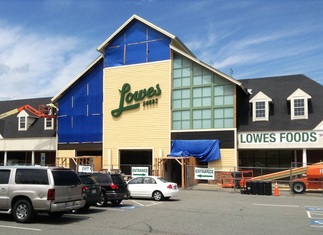
Lowes Foods, a 60-year-old, 100+ store grocery chain based in North Carolina, has made a gutsy move:  they’ve put the future of their business in the hands of their people.  Their team.  Their hosts -- the honorific says it all.  

The moment you walk in one of their rebranded, re-cultured stores, you can feel the difference.  Smiles seem to arise naturally.  Employees greet you and offer their help – and seem to mean it.  There’s a refreshing hustle about the place.  More spontaneity. Lowes Foods leadership has managed somehow to meld procedure and belief and make it work.  
 

“Cultural branding is really at the core, at the heart of what we’re trying to do,” says the company’s enthusiastic CMO, Michael Moore, a veteran of 28-years in the grocery business.  “And what I’ve experienced a lot as I’ve gone to retailers, both in the States and overseas, is that there’s so much emphasis placed on the visual side of the equation, prettying up the store, making it a little bit more shoppable, so on and so forth, but yet there’s nothing that’s done with what we call our hosts.”

Although stores like Publix (1077 stores in six southeastern states), Wegmans (84 stores in the Northeast), Whole Foods Market (371 stores nationally) and Nugget Markets (9 stores in California) are known for getting the cultural piece right.  And each rises continuously on FORTUNE’s list of the 100 Best Companies to Work For*. 

Nugget Markets claims that their “positive attitude and love of people” sets their associates apart, which – in turn -- sets them apart in the marketplace.

“Our associates are the difference maker,” says Chris Carpenter, their COO and Vice President, “and it is they who separate us from our competition.  We believe that when our associates are having fun and feeling valued, there is an energy and enthusiasm that is created—and it transcends right through the guest.”

Lowes Foods’ management gets that.  My recent conversation with CMO Moore in one of the company’s stores was interrupted several times by cheers from people in the Chicken Kitchen celebrating completion of another batch of “chicken you’d cross the road for.”  

Who wouldn’t rather shop at a store where people are enthusiastic about their work – as long as quality and selection are up to par?  Personal experience is just one of a dozen or so competitive factors that set any business apart – along with service, convenience, innovation, etc.  Even grocers who sell primarily on price often have other competitive factors in their favor.  Aldi for example, is known for its limited inventory, quality merchandise plus low price.

But the people part likely does as much, or more, to attract and hold customers than any other single competitive factor.  It’s also the most challenging to make happen -- and sustain -- in the me-saturated American culture.   Disney has proven the value (and endurance) of people power for decades.  

“The Disney operating style has greatly influenced our training program,” says Moore.  “We believe in one of the core Disney concepts in particular, which is when we’re on the floor we’re onstage, and we want the people onstage to be delightful.  We want our hosts to be rabid fans, working for Lowes, and we want our guests to feel that love – and feel that commitment and support.”

Even when my local Lowes Foods store was only halfway through its renovation, the cultural transformation already had begun taking hold.  I was pleasantly surprised when a man in the produce department engaged me in conversation about the mushrooms I was buying.  (see http://theproducemerchant.com/produce-stand-outs/ for more about him)

Customer satisfaction is relatively easy to achieve, because it’s … relative.  Creating delight, however, is quite something else and may not even be measurable except by collecting personal anecdotes and tracking repeat business. The man in produce delighted me by offering suggestions on how to store and prepare my mushrooms.  A month or so later, a young woman roaming the store with crisp watermelon samples intercepted me in the cereal aisle.  Her smile alone was enough to delight.  And had I not been a long-time Lowes Foods customer, either "host" would have more than counterbalanced my experience a few weeks prior with the only rude clerk I’ve ever encountered at that store (a memorable example of how not to treat a customer).

“Culture is the driver in our company in all departments,” says Lowes Foods VP of Fresh Sales Chris Van Parys.  “While the bricks and mortar have all evolved, of course, the take-away we have the most pride in is our people or hosts.  The main focus is taking care of our guests in new and unexpected ways.”

And not everybody fits. 

“There’s a certain profile we look for as we think about new hire strategy,” says Moore, “people comfortable with that kind of interaction.  The folks who are not, there’s tons of great backstage kind of work that fits better for them.  And we really make sure that’s front and center as people are making applications for jobs.”

The new people who have appeared in my local Lowes Foods store recently seem to embody that spirit more readily than the old crew (although there are a few choice holdovers).  Even the young workers who stock the shelves have sprouted an upbeat, helpful attitude.  You find much the same at Publix, where employees also are owners.


PictureImage © by Brian E. Faulkner
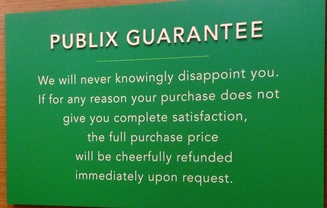
“Providing premier service and a pleasurable shopping experience is what we hang our hat on,” says Kimberly Reynolds, media and community relations manager in their Charlotte, N.C. division, who noted that as far back as 1930, their founder proclaimed that “we shall treat our customers like kings and queens.”  Today, how the Publix brand promise plays out in the stores remains their “secret sauce,” as an associate in Fort Mill, S.C. proved to me recently by not only being above-and-beyond helpful concerning a product they did not carry but personable to boot.  She personified founder George W. Jenkins' belief that "Publix will be a little better place — or not quite as good — because of you."

Max De Pree, in his seminal little book, “Leadership Is an Art”, talks about covenantal leadership, which I have seen at work in only a small handful of client organizations over the years – from small businesses to billion-dollar consumer products companies and their business units.  The culture of a national apparel manufacturer/marketer I consulted to revolved around a passionate leader who created the future, invested the team in it and sponsored their success.  But the company's culture proved tenuous.  When the leader moved on (or in another case  I recall, when corporate ownership changed), the cultural focus and inspired energy dissipated.

Lowes Foods, like Publix, appears to understand that in order to survive, qualities like “team” and “passion” and “commitment” can’t be pasted on.  They have to be planted deep and lived out in the attitudes and actions of people who believe they are contributing to a larger cause.  Only then can business culture become an enduring – rather than momentary – source of competitive advantage.  It’s not something you can fake.

Publix hires people with “a servant’s” heart, which CEO Ed Crenshaw appears to epitomize.  Lowes Foods hires people who understand the concept of “host” from the heart out, and their senior management team is quick to credit one another with the early success they’ve achieved in rebranding the chain and building a new culture.  That suggests stability in an era when grocery shoppers will change stores on a dime just to get a good price.   

Stability alone is no guarantor of success, of course, although stability based on a culture of believers with a can-do attitude can work wonders in attracting and keeping customers – and perhaps even help make a buck or two more than the competitor down the block. 

Publix and Lowes Foods are destined to compete more directly in the near future as the Florida chain moves deeper into North Carolina. Customers are sure to respond positively to both stores’ people-powered presentations and reward them with increased business and greater loyalty.

TakeAway: People power can be a powerful source of competitive advantage. How does your culture stack up?

Content © by Brian E. Faulkner   *FORTUNE and FORTUNE 100 Best Companies to Work For are registered trademarks of Time Inc.

Tags:  Lowes Foods, Publix, cultural branding, Wegmans, Whole Foods Market, Nugget Markets, ALDI


About Brian Faulkner:

Brian Faulkner is a content writer and Key Message expert.  He helps clients come up with words to set their businesses, brands and products apart and attract the customers they want most.  His strategic insights, and the words that go with them, have made a significant, often immediate difference for client companies over many years.  His "sweet spot" is smaller to moderate sized consumer products, retail, service and manufacturing companies that may have struggled to find just the right words to position their business, brands or products to competitive advantage:

>  blogs to establish you as the thought leader / authority in your business category
>  case stories that communicate your sales successes and invite prospect inquiry
>  testimonials that showcase customer / client satisfaction in 1-2 short sentences
>  positioning statements to guide business development & marketing
>  landing page copy to set your business or brand apart in a compelling way
>  tagline development to attract the interest of your most qualified prospects

Brian also is a three-time Emmy award-winning Public Television writer and narrator of over 100 segments for UNC-TV’s popular Our State magazine series, on the air since 2003.  


2 Comments

TaglineS, Positioning and the Aflac Duck.

8/8/2014

0 Comments

 
Picture
Is the Aflac Duck still a marketing asset, or has the brand icon become so silly that he deflects attention from the company’s message?

I loved the Duck at first.   His arrival back in 2000 was a hoot.  You’ve got to hand that to talking ducks, especially ones that can almost pronounce the company name.  He was fresh, he was cute.  He quacked me up -- and was destined for advertising stardom.

But has he finally lost his duck go-power?   Partially.

The Duck reminds me of Joe Namath, the New York Jets star quarterback who Hanes Hosiery hired to do a TV spot for a new product called Beautymist 40 years ago.   

The camera panned along a pair of slender legs sheathed in the product while a perky woman who sounded like she was about to break into laughter talked about how Beautymist makes any legs look like a million dollars.  Then we see it’s really Joe.  The commercial was hugely successful.   Recall was out of this world – for Joe Namath.   Hardly anybody remembered the product.  

In contrast, the Duck worked for Aflac right out of the box.  People associated the brand with him immediately.  But even as the Duck worked his creative magic, it was hard to discern from the commercials what Aflac actually did – at least for me.  Even today, I had to go to Wikipedia to remind myself that Aflac sells different types of insurance and is best known for the supplemental kind offered through employers – insurance that pays expenses not covered by existing major medical coverage. 

Interestingly, their Web site wasn’t much help until I ventured well beyond the landing page.
It’s astonishing how little product positioning Aflac appears to have included in their spots over the years, as if curiosity alone will drive prospects to inquire -- even though the Duck supposedly has been quacking about product since 2009.  A strategically focused, well-stated tagline could have knocked it out of the park for Aflac and put a productive coda on the Duck’s antics long ago.   Viewers would have “got” Aflac’s strong benefits and unique distribution channel (although many people probably Googled the name and figured that out for themselves).

In a recent MediaPost article, columnist Steve Smith seems to disagree with me -- I think. 

He cites a TV spot about quick claim resolution in which the Duck “highlights the competency of the brand by contrasting it with the duck’s ineptitude in all other endeavors.”  In other words, the Duck acts the fool to introduce an Aflac product feature, like “a near-silent comedian trading on a string of sight gags.” 

Smith then recommends “leveraging the duck more effectively” on Vine and Instagram.  In other words, export the silliness to social media where it can be broken into bits and enjoyed ad nauseum.  Thus, the writer (who also is a digital media critic and a columnist for Mobile Marketing Daily) presumes that the Duck remains effective in a slapstick, “idiot savant” sort of way. 

There clearly is a market for silliness or there wouldn’t be so many cat videos on YouTube.  But as a brand spokes-icon, the Duck seems to have lost his way.  He’s gotten sillier and sillier, taking more and more attention away from the product in a situation where the brand desperately needs to communicate a key message.  The Duck’s original mission was elegantly simple: create awareness of the brand name.  But now it seems that he has almost become the message.

The Duck is no more Aflac’s message than Joe Namath was Beautymist’s message, although the Duck and the brand are now practically indistinguishable.  His function should be to lay out the welcome mat for the message but not overwhelm it.  He should make his entrance, do his bit and exit stage right.

Even so, the Duck clearly has produced results for Aflac – in a let’s “run the damned idea into the ground until every blessed soul in America is familiar with an otherwise obscure personal insurance product” sort of way, as Smith puts it.  “Sometimes frequency trumps creative cleverness,” he concludes -- although the Energizer Bunny might not agree.

But think how much more effective (and less dependent on frequency) Aflac's advertising would have been had the Duck set the stage for a powerful tagline that amplified their brand message and prompted even more qualified prospects to inquire about their product.  

“It all seems to be a slightly tortured road to underscore the brand’s point,” Smith writes, commenting on the most recent Aflac spot, in which the character does poorly at Yoga.  I couldn’t agree more.  But then he stretches that point by suggesting that the Duck’s antics force the viewer to “make some sense of the online slapstick and engage more deeply in order to make the tiny logical hop to the brand message.”

I don't quite buy that.
  Aflac needs to crank the Duck back and focus more on brand positioning and product benefits.

TakeAway:  Clever is never enough.

Content © by Brian E. Faulkner
Tags:  tagline, key message, Aflac, Aflac Duck, Hanes Hosiery, Beautymist, Joe Namath, Energizer Bunny, YouTube, cat videos

AbouT Brian Faulkner:

Brian Faulkner is a content writer and Key Message expert.  He helps clients come up with words to set their businesses, brands and products apart and attract the customers they want most.  His strategic insights, and the words that go with them, have made a significant, often immediate difference for client companies over many years.  His "sweet spot" is smaller to moderate sized consumer products, retail, service and manufacturing companies that may have struggled to find just the right words to position their business, brands or products to competitive advantage:

>  blogs to establish you as the thought leader / authority in your business category
>  case stories that communicate your sales successes and invite prospect inquiry
>  testimonials that showcase customer / client satisfaction in 1-2 short sentences
>  positioning statements to guide business development & marketing
>  landing page copy to set your business or brand apart in a compelling way
>  tagline development to attract the interest of your most qualified prospects

Brian also is a three-time Emmy award-winning Public Television writer / narrator.  He is principal writer and narrator of UNC-TV’s popular "Our State" magazine series, on the air since 2003.  His distinctive sound has been heard on many hundreds of radio spots and client videos since the 1970s.  People say he has a “Mercedes voice” and sounds a bit like Charles Kuralt, which Brian considers a welcome ... but happy ... illusion.


0 Comments

10 Ways Southwest Airlines Just Stepped In It in Dallas.

7/24/2014

1 Comment

 
Picture
A Southwest Airlines gate agent apparently has transformed a customer service opportunity into a social-media fueled pie-in-the-face moment, according to a WCCO (Minneapolis) story.

The incident reportedly happened in Dallas when a passenger attempted to board his flight early (as was his privilege as an A-List Southwest flyer), only with his two young children in tow.  The gate agent wouldn’t allow the children to board with him, saying they’d have to wait and board later.

Step 1:  The gate agent could have instantly created a happy customer by allowing the trio to board early, thus upholding Southwest Airlines’ reputation for first class customer service.  I can’t imagine Southwest people being that rule bound.

Step 2:  The passenger threatened to Tweet about the “rude” agent, which he did after eventually boarding the plane with his two kids. 

Step 3:  The situation then went from bad to worse after the agent saw the Tweet: the Airline then threatened to remove the family from the plane.   

Step 4:  The person who asked them to get off the plane (presumably the gate agent) threatened to call the cops. 

Step 5:  The children began crying, and the family left the plane.

Step 6:  The Airline said they could get back on the plane if the passenger deleted his Tweet.

Step 7:  He did.  And they flew on to Minneapolis along with the other passengers, who must have wondered what bad stuff had come down around a dad and his two kids.

Step 8:   Back home, the passenger contacted WCCO, where an Emmy-winning reporter knew a good story when she heard one and ran with it.

Step 9:  Southwest apologized to the passenger via email and gave him three $50 vouchers for future flights, which likely never will be redeemed because he says he won’t fly Southwest again.

Step 10:  Some number of other would-be passengers also will decide not to fly Southwest because bad news always travels faster and farther than good news.

It may be that the gate agent was tired and hassled at the moment she made her choice to bar the children from boarding early.  But then she compounded her poor decision by making further unwise demands of the A-List passenger and his children.  So be it.   But, as those of us who fly with any regularity know, the moment airlines should be prepared to shine most is when the going gets tough. 

Because anybody can come up a smile on a blue-sky day.

TakeAway:  No matter how diligently a business works to create (and communicate) competitive advantage based on superior service, it all can come crashing down in a moment if your people don’t live that truth every day.

Tags:  Southwest Airlines, customer service, WCCO

Content © by Brian E. Faulkner

About Brian Faulkner:

Brian Faulkner is a content writer and Key Message expert.  He helps clients come up with words to set their businesses, brands and products apart and attract the customers they want most.  His strategic insights, and the words that go with them, have made a significant, often immediate difference for client companies over many years.  His "sweet spot" is smaller to moderate sized consumer products, retail, service and manufacturing companies that may have struggled to find just the right words to position their business, brands or products to competitive advantage:

>  blogs to establish you as the knowledge source / authority in your business category
>  case stories that communicate your sales successes and invite prospect inquiry
>  testimonials that showcase customer / client satisfaction in 1-2 short sentences
>  positioning statements to guide business development & marketing
>  landing page copy to set your business or brand apart in a compelling way
>  tagline development to attract the interest of your most qualified prospects

Brian also is a three-time Emmy award-winning Public Television writer / narrator and is principal writer and narrator of UNC-TV’s popular "Our State" magazine series, on the air since 2003.  His distinctive sound has been heard on many hundreds of radio spots and client videos since the 1970s.  People say he has a “Mercedes voice” and sounds a bit like Charles Kuralt, which Brian considers a welcome ... but happy ... illusion.

1 Comment

Mission: The Hole in the Donut.

7/21/2014

0 Comments

 
PictureImage © by Brian E. Faulkner
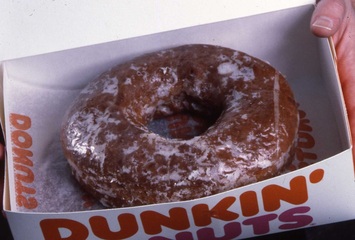
Without its hole, a donut is an undifferentiated mass of dough (limiting discussion, of course, to the ring-shaped donut variety). Likewise, without meaningful values and clear purpose at its center, a company can be an undifferentiated mass of people working for no clear purpose.  It may even be undifferentiated from its competitors.

Values and purpose combine to create mission.  Values are the common beliefs that knit a culture together, whether country, church, non-profit, or business – the U.S. Marines are a fabulous example.  Purpose is the “product” people create together plus the difference it makes in the marketplace (or on the battlefield).  

People Make The Difference.

One of business leadership’s key challenges today is to increase the productivity of its human resources, to give people a new vision of themselves -- and their potential -- while maximizing their combined contribution.  Values are the qualities that meld people into a team.  They help make success happen.  It’s the cultural part of “work” that gets folks up in the morning and charges their batteries.

As Adam Smith suggested over 200 years ago, it is the participation of individuals working in their own and the collective self-interest that makes capitalism work so well.  At its best, capitalism creates personal freedom as well as profits and seems to work most effectively for both people and businesses when there is a comfortable convergence of personal and business goals.  What gives meaning to forging tools or making T-shirts?  Or to a non-profit cause?  Realization that the collective purpose is worthwhile.  Herbert Hoover called it a “lifting purpose.”  

Most people don’t want to just work.  They want to contribute; they want to be part of something.  It’s eye-opening to realize, even today, that work often has nothing to do with “real” life.  All too many of us live for the weekend and count the days ‘til vacation time rolls around.

If the unproductive and uninspired workers in our country -- never mind an unfortunate percentage of students in our schools -- could be given hope, could be empowered to contribute beyond the ordinary, beyond the constraints of their “jobs”, the productivity transformation within America could be incredible.

I have seen companies with strong, can-do manufacturing cultures and weak management but seldom the reverse.   I have seen retailers selling great brands who have created (or allowed) a depressing, discouraging atmosphere for their people to work in but also great cultures where people have worked together to transform a good brand into a great one.  

I also have seen retailers who sell essentially the same mix of products as their competitors but set themselves apart by hiring people who care, aren’t shy about showing it and who are given the freedom to make service decisions at the customer contact level.   Robin, the young woman who used to answer the phone for one of my clients years ago, always made a positive impression.  Her upbeat attitude and willingness to serve reflected the attitude of her company's management, their manufacturing excellence and their product superiority. In contrast, companies that choose to have a machine answer their phone communicate the opposite message:  “We don’t care enough to put our very best people on the business end of your inquiry, so your call is not really all that important to us.”

In conclusion, values and purpose are intimately connected in an organization’s mission.   Values is the why part, the reason people come to work charged up about their potential contribution.  Purpose is the product part, whether a manufactured item, a variety of essentially off-the-shelf components integrated into something new or selling things like smart phones or cars, groceries, medical supplies or personal services.  It includes everything that makes success happen, from strategy to marketing to customer /client contact to manufacturing and those all-important support functions that keep things running smoothly. 

People who are energized about coming to work every day create great products and provide great service, competitive qualities your present and future customers or clients won’t be able to find anywhere else.

TakeAway:  Take a look at your mission through the business donut hole.  Do you see a team looking back at you that cares deeply about your products and customers and has the freedom and energy to help you create a future charged with success?

Content © by Brian E. Faulkner

0 Comments
<<Previous
Forward>>


    sample blog:

    This is a sample blog  for writer Brian E. Faulkner.  It presents stories about brands that do (or don't) communicate competitive advantage effectively. Stories have been gleaned from the business press, personal experience and occasional interviews. New articles are added from time to time, and every so often there will be a post of general interest -- about things like success, passion, social trends, etc. 

    Author

    Brian Faulkner is a writer and strategic communication consultant who helps business clients explain their competitive advantage in compelling and enduring ways.
     
    He also is a five-time Emmy award winning Public Television writer & narrator for a highly-rated and well-loved magazine series.

    Picture
    Image © by Brian E. Faulkner

    Categories

    All
    Advertising
    Authenticity
    Brand Branding
    Brand & Branding
    Brand Names
    Business Culture
    Competitive Advantage
    Competitive Advantage
    Competitive Factors
    Content
    Creativity
    Culture
    Customer Satisfaction
    Differentiation
    Experience
    Flexibility
    Future
    Innovation
    Key Message
    Leadership
    Luxury
    Marketable Truth
    Marketing
    Passion
    Politics
    Positioning
    Price
    Quality
    Sales
    Service
    Small Business Marketing
    Story
    Strategic Thinking
    Taglines
    Team
    Technology
    Trends
    Values
    Vision

    Archives

    July 2019
    January 2019
    November 2016
    February 2016
    October 2015
    September 2015
    August 2015
    July 2015
    June 2015
    May 2015
    April 2015
    March 2015
    February 2015
    January 2015
    December 2014
    November 2014
    October 2014
    September 2014
    August 2014
    July 2014
    June 2014
    May 2014
    April 2014
    March 2014
    February 2014
    January 2014
    December 2013
    November 2013
    October 2013
    September 2012
    October 2011
    March 2011

    RSS Feed

Content © by Brian E. Faulkner.   All rights reserved.