A BLOG ABOUT COMMUNICATING COMPETITIVE ADVANTAGE
  • Brian Faulkner
  • Blog
  • CONTACT

Could This Be America's Most Satisfying Small Airport Experience?

8/28/2014

0 Comments

 
PictureImage © by Brian E. Faulkner
Now that Condé Nast Traveler readers have named America's 10 best airports, I'm glad to find one of my favorites toward the top of  their list -- Tampa International. As many times as I've flown in and out of Tampa, I've not only never had a hassle, getting in and out of the airport (easy), parking or during the departure / arrival process, but actually have found the place relaxing.

But say you ran a smaller, regional airport located between two hub-sized airports, both roughly equidistant from larger population centers with considerably more flight options?  Many fewer passengers use your airport vs. the others
. How would you convince local people to fly from your airport rather two bigger ones, each an hour or so away? 

One thing you might do is solicit traveler feedback.  Short of conducting passenger intercepts (a good idea), check out Yelp(dot)com and build your key message around the good things people are saying there.  For Piedmont Triad International Airport, which serves twelve North Carolina counties and six Virginia counties surrounding Greensboro, Winston-Salem and High Point (the world’s furniture capital), the online chatter mostly is good news. 

Passengers seem to appreciate the ease with which they fly in and out of PTIA, despite the occasional complaint about not having a Starbucks to hang out in.

      “In and out quickly.  You can close the door to your car and be at your gate in under 12 minutes.”

                                                                             local passenger

         “An awesome airport … one of my favorites.”


                                                                             Hollywood, CA passenger

“I have been so overwhelmed by my experience at Greensboro airport that I feel like I needed to write about it,” posts a traveler from New Jersey.   “Every single employee of the airport or any of the vendors is ecstatic that you chose to fly out of ‘their’ airport.  They are constantly thanking you and going out of their way to help you.  It is the same every time - car rental, ticket agents, TSA, gate agents, security, vendors - they all have that same attitude.  Fly out of this airport if you have the chance!!”

There seem to be two kinds of people who love to “Fly PTI.”  One is the local passenger willing to pay a small premium for their ticket to avoid driving either to Charlotte or Raleigh-Durham -- if you drive to Charlotte from the Triad and dare count on I-85 or I-77 during certain morning or afternoon hours you could easily miss your flight.  The second kind of PTIA passenger (mark me among them) revels in the experience of a less-than-bustling terminal, short wait times and efficient service.  For people like us, an investment in avoiding the inevitability of parking hassles, long lines and general uncertainty is an easy choice.  Some PTIA passengers do quibble about the lack of restaurant options, but they love the convenient rental car location just steps outside baggage claim.  Some also snicker at the “International” in PTIA but love easy connection to the big hubs – while appreciating the ease of getting in and out of this airport. 

Management, of course, would like to see an increase in hustle and bustle because that means more paying customers.  But here of late they also seem to be embracing – and crowing about – the many pluses of their situation while working diligently to offer “the best passenger experience we can.”

“It’s hard running an airport,” says Kevin Baker, PTIA’s executive director, “because everybody’s goal is to leave the building.  So while they’re with us, our goal is to make them as comfortable as possible.

“We want it to be a hard decision for people to leave our airport” in favor of one of the others. “Parking is cheaper, and easier.  Every seat in the ticketing area and in both concourses has power available to passengers – plus the ability to charge your iPad or other device.  And there’s free WiFi.”

The 4.5 million people living within 90 minutes of PTIA will be glad to learn that the difference in fares between GSO, CLT and RDU has been reduced, according to the airport’s marketing and customer relations manager, Stephanie Freeman. 

“Lower fares used to be the key driver of leakage to the other airports,” Freeman says, “and the perception still lingers.  We have found that people will choose to fly from here for as much as $150 difference compared to Charlotte and $100-$150 compared to Raleigh-Durham, and that difference is increasing.”

Baker acknowledges that while PTIA’s fares are “coming more in line,” there will always be some passenger leakage, particularly in light of Charlotte’s position as a hub with 140 destinations vs. PTIA’s 16.  (PTIA was 91st in passenger enplanements among U.S. airports during CY2013, according to the FAA. Charlotte was #8 and Raleigh-Durham #39.) “We can’t change that,” he says, “but we can make the first step in connecting to more than 200 worldwide destinations easier.”  Currently, there are 53 direct flights out of PTIA to 14 destinations served by American/U.S. Airways, Delta, United, Frontier and Allegiant.

PTIA has added a variety of passenger-pleasing amenities over the past four years.  In addition to the personal connectivity features mentioned above, they’ve refreshed the terminal and concourses, updated flight information displays and, most recently, have added charging stations for electric vehicles – the first airport to do so in North Carolina. Fifty Airport Ambassadors also add a personal touch to airport service, a team of 50 volunteers who “do our best to transform your traveling stress into southern-style comfort.”

Baker points out that in addition to its many passenger delights, Piedmont Triad International Airport is transforming its 4,000 acre campus into an “aerotropolis,” with hopes of becoming the Wichita of the East.  Called “The best landing field in the south" during its early days, PTIA now is the third busiest airport in North Carolina -- and the state’s largest aerospace employer.   Tenants include:
  • Honda Aircraft Company, which employs 650 people (at last count) and plans to introduce their innovative Honda Jet – designed and manufactured at PTIA -- into service next year;
  • maintenance, repair and overhaul giant TIMCO Aviation Services, which alone has 705,000 square feet of hanger space at GSO, 1,500 local employees and attracts business from all over the world, in part because the airport’s two parallel main runways can comfortably handle the world’s largest planes;
  • and Cessna Aircraft, with a 45,000 square foot service center for its Citation business jets.

The FedEx mid-Atlantic air hub is here, in the company of firms like GE Aviation and B/E Aerospace.  And according to Executive Director Baker, there’s plenty room for more. The (self-supporting) airport authority has approved a 10-year, $350 million development program to acquire and prepare some 600 acres of land nearby.  Down-the-road benefits?  Some 18-thousand potential new jobs and perhaps $3.2 billion of business impact.

A wealth of aviation-based training already is in place to help assure the region’s economic success.  Guilford Community College’s aviation training center and other nearby schools offer aviation- and aerospace-related programs.  The new T.H. Davis Aviation Center, which partners with Embry-Riddle Aeronautical University, is considered one of the best-equipped aviation maintenance training facilities in the Southeast.

However, daily evidence of this airport’s success is reflected in the experiences of its passengers, people who choose to fly in and out of PTIA despite the looming reality of two hub-sized airports only an hour-and-a-half away.   

Could Piedmont Triad International Airport be America's Most Satisfying Small Airport?  

You’d think so to read what a strong plurality of PTIA travelers have to say – and as anyone who flies commercial these days well knows, airline passengers will complain at the drop of a boarding pass should something go awry but are less likely to pay a compliment.

PictureImage © by Brian E. Faulkner
“PTI has such an awesome hometown feel to it,” writes a passenger from Chicago.  “It is so simple and straightforward.  No hassle, just a bunch of common sense - the way it should be!”

“Piedmont Triad International Airport is an awesome little airport!” writes another passenger. “And while it does not have the breadth of dining and shopping options of other airports, it has its own small airport charm!”

 “It’s ‘Home Sweet Home’,” says a third, “compared to huge, chaotic airports.”

All is not perfection at PTIA – some passengers do have minor gripes.  But for a smaller airport caught between two much larger ones, the good news is very good indeed.

The tagline says it all.  Fly easy.  Fly PTI.  

TakeAway:  Communicate your competitive advantage based on what your most satisfied customers have to say about your product or service.  Because that’s the truth!

Content © by Brian E. Faulkner

Tags:  PTIA, Piedmont Triad International Airport, Greensboro, Winston-Salem, High Point, Starbucks, GSO, CLT, RDU, American / U.S. Airways, Delta, United, Frontier, Allegiant, aerotropolis, Honda Jet, TIMCO, Cessna Aircraft, GE Aviation, FedEx, B/E Aerospace, Guilford Community College, Embry-Riddle Aeronautical University, Yelp.com

About Brian Faulkner:

Brian Faulkner is a content and strategic communiction writer.  He helps clients come up with words to set their businesses, brands and products apart and attract the customers they want most.  His strategic insights, and the words that go with them, have made a significant, often immediate difference for client companies over many years.  His "sweet spot" is smaller to moderate sized consumer products, retail, service and manufacturing companies that may have struggled to find just the right words to position their business, brands or products to competitive advantage:

>  blogs to establish you as the thought leader / authority in your business category
>  case stories that communicate your sales successes and invite prospect inquiry
>  testimonials that showcase customer / client satisfaction in 1-2 short sentences
>  positioning statements to guide business development & marketing
>  landing page copy to set your business or brand apart in a compelling way
>  tagline development to attract the interest of your most qualified prospects

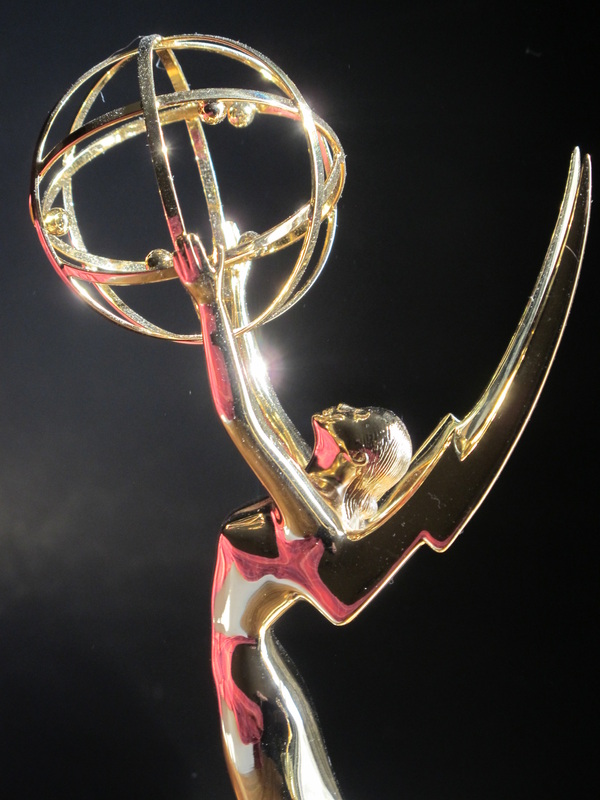
Brian also is a five-time Emmy award-winning Public Television writer / narrator.  He is principal writer and narrator of UNC-TV’s popular "Our State" magazine series, on the air since 2003.  His distinctive sound has been heard on many hundreds of radio spots and client videos since the 1970s.  People say he has a “Mercedes voice” and sounds a bit like Charles Kuralt, which Brian considers a welcome ... but happy ... illusion.

0 Comments

Microsoft Edges Closer to Cool.

5/27/2014

0 Comments

 
Picture
Read the other day about Microsoft’s new retail store opening at New Jersey’s Garden State Plaza.  Like happens during the opening of new Apple stores, people lined up to be first on the scene – some even camping out in front of the place overnight.  

What attracted these ersatz Microsoft aficionados?

Was it Microsoft’s new Surface 3 tablet, nicknamed the laptop killer?  Surface is a powerful and versatile piece of gear for sure – and one I’ve thought seriously about buying.  But with only a 2% share of the tablet market, which is dominated by Apple’s iPad, it hardly has the makings of a tech celebrity.  

Or was it something else that attracted folks?  Could it have been a performance by rapper Macklemore and pal Ryan Lewis?   Could it have been the DJ on hand spinning the hits?  Or the prizes?  Or the million dollars worth of product donated to local charities?

It had to be the Surface!   Or the slick new Microsoft store!   Maybe even the magnetic attraction of the Microsoft name!

Now here’s a real surprise:  It probably was all those things.  

Microsoft gets credit for ginning up a successful event, but they’ve also upped the ante lately among tech buyers for having become “more trusted and essential across multiple generations,” according to Tracy Stokes of Forrester Research, as reported earlier this year by GeekWire.  “The very ubiquity that perhaps renders it uncool turns out to also be its strength,” he says in the article (Study Shows Microsoft Outpacing Apple in Battle for Tech Consumer Mindshare), in which Forrester called the company a “trailblazer” in building its consumer brand. 

Yes, Microsoft seems guilty of cranking up some artificial cool for their new store, the latest of 90 Microsoft retail outlets in operation – compared to around 250 U.S. stores for Apple and many more overseas.  But at the same time, the Microsoft brand seems to have risen to greater prominence recently than I’d ever imagined –  edging ever closer to cool, at least compared to the stodgy old Microsoft that’s been living inside my head.

Frankly, I thought the cool train had left the station for Microsoft and even snickered a bit to think that Microsoft had to resort to paying entertainers to draw a crowd.  I was mostly wrong. 

“An increased tablet presence would add to Microsoft's hip brand factor,” claimed the CNBC article about the store opening, “which often can be associated with Microsoft Xboxes.”

COmmunicate Your Cool.

Despite this potential – and despite the accolades that have come Microsoft’s way recently (http://www.geekwire.com/2014/study-microsoft-outpaces-apple-battle-mindshare/), consider how the company describes itself in the “boilerplate” copy at the bottom of their press releases.  This example is from publicity announcing the launch of Microsoft retail stores for the 2012 Christmas selling season: 

The worldwide leader in software, services and solutions that help people and businesses realize their full potential.   I’d call that “corporate relaxed.”

In contrast, here’s Apple’s boilerplate: 

Apple designs Macs, the best personal computers in the world, along with OS X, iLife, iWork and professional software.  Apple leads the digital music revolution with its iPods and iTunes online store.  Apple has reinvented the mobile phone with its revolutionary iPhone and App Store, and is defining the future of mobile media and computing devices with iPad.  


Apple's boilerplate is much longer, but it’s also filled to overflowing with what I call Marketable Truth©.

Time and again Apple has rocked the world with its innovative products.  And while many Windows-based devices may be equally as capable (in a different way), Apple has owned the mindshare with their Macs, iPhones and iPads.  But that’s changing … which is increasingly good news for Microsoft.

The truth is out there.  Now all they’ve got to do is claim it.

TakeAway:   When cool comes your way, communicate it for all you’re worth – in the context of product benefits, of course.

Tags:  Microsoft, Surface, Surface 3, Windows, Apple, Apple store, iPad, Mac, iPhone

Content © by Brian E. Faulkner.   Marketable Truth © by Brian E. Faulkner

About Brian Faulkner:

Brian Faulkner is a Key Message expert.  He helps clients come up with words to set their businesses, brands and products apart and attract the customers they want most.  His strategic insights, and the words that go with them, have made a significant, often immediate difference for client companies over many years.  He thrives on strategic communication problem solving, complex subjects, new ideas, concepts-as-products, challenging marketing situations and demanding deadlines.  His "sweet spot" is smaller to moderate sized consumer products, retail, service and manufacturing companies that may have struggled to find just the right words to position their business, brands or products to competitive advantage.

Brian also is a three-time Emmy award winning Public Television writer and narrator of UNC-TV’s popular Our State magazine series, on the air since 2003.  

0 Comments

Strong Content Gets LINKEDIN Attention for Entrepreneur.

5/9/2014

1 Comment

 
PictureImage © by Brian E. Faulkner
This morning, an article about The 7 Bad Habits of Entrepreneurs popped up on LinkedIn, authored by one of my LinkedIn connections.   The headline caught my eye, and the content sounded familiar.  I’d read it before.

Four days ago, essentially the same piece had dropped into my email in-box – with a slightly different headline: The 7 Bad Habits That Will Hurt Your Voice Over Career.  Author and voice over artist Dan Hurst had adapted Steven Covey’s 7 Habits of Highly Effective People to his own purposes, and it had caught my attention twice in less than a week.   http://danhurst.com/posts/7-bad-habits-of-struggling-entrepreneurs

Dan and I seem to have two things in common:

1.  We are both voice over artists with tons of experience (one of only a few hats I wear comfortably).

2.  We both understand the need to communicate competitive advantage in a clear and compelling way – which requires an unusual degree of self-awareness (most often learned by thrashing your way down that hard road people talk about all the time) and brutal objectivity.  It seems especially true of lone-wolf types like consultants and voice over artists but likely rings equally true in your business as well.

“It’s important to see yourself for what you really are,” writes Hurst, “but that needs to be tempered by really understanding how your clients view you.  The right voice is like choosing the right oil color for a painting. Ok, fine.  You’ve got the right color, but it’s more about what you do with that color that counts.”

Communicate a REAL Difference.

In the consulting business (in positioning any business or product for that matter), it’s imperative to understand how you make a difference to customers and clients.  Why should they want to inquire about your services or buy what you’re selling?   Can you express that in a very few words -- a convincing tagline?

On the consulting side of my business, I am a Key Messaging Expert.  I help clients come up with words to Attract The Customers You Want Most.   In voice overs, I am The Natural Choice known for my “Mercedes delivery.”  Dan Hurst is One of America’s Most Experienced Bi-Lingual Voice Over Talents whose English and Spanish voice overs are “smooth and powerful.” 

In assessing what I call the Marketable Truth© of your business, brand or product (even if your business is just you), it’s critical to know what standard you’re comparing yourself to.  Dan puts it perfectly:  It’s all about “knowing the difference between good, better and great.  Good is based on the market standard.  One isn’t even competitive until one is good.  Better is stepping beyond good to get noticed.  But great is what the client chooses.”

All too many marketers (not limited to voice talents and consultants by any means) are content with communicating “pieces and parts” – we do this or we sell that -- without reference to the benefits they bring to a world that’s all too willing to reward mediocre positioning with mediocre results. 

“I don’t want to hire someone that ‘can do’ something,” Dan Hurst concludes.  “I want to hire someone who excels … who owns the element that I’m looking for.”

TakeAway:  Don’t be content with selling GOOD.  Or even BETTER.   Sell GREAT!    And communicate your greatness in terms that make a big difference for your customers or clients.

Marketable Truth and content © by Brian Faulkner.

Tags:  7 Habits, Steven Covey, Dan Hurst, Mercedes

About Brian Faulkner:

Brian Faulkner is a Key Message expert.  He helps clients come up with words to set their businesses, brands and products apart and attract the customers they want most.  His strategic insights, and the words that go with them, have made a significant, often immediate difference for client companies over many years.  He thrives on strategic communication problem solving, complex subjects, new ideas, concepts-as-products, challenging marketing situations and demanding deadlines.  His "sweet spot" is smaller to moderate sized consumer products, retail, service and manufacturing companies that may have struggled to find just the right words to position their business, brands or products to competitive advantage.

PictureImage © by Brian E. Faulkner

Brian also is a three-time Emmy award winning Public Television writer and narrator of UNC-TV’s popular Our State magazine series, on the air since 2003.
His distinctive voice overs have been heard on many hundreds of radio spots and client projects since way back in 1966.  People say he sounds a bit like Charles Kuralt, which Brian considers a welcome but happy illusion.

www.faulknerproducerservices.com


1 Comment

Built Ford Tough: A Tagline That Lasts!

4/25/2014

4 Comments

 
PictureImage © by Brian E. Faulkner.
In these days of wimpy, overly "creative" taglines that seem to get changed on a whim, it's refreshing to find one that not only has real strategic muscle but uncommon lasting power deeply imbedded in product truth: Ford's tagline, Built Ford Tough.  

Ford's F-series pickup trucks (primarily the F-150) have reigned atop the North American truck sales leader board for 37 years -- 32 years if you include cars in the stats.  And their long running tagline can be credited with at least part of the success, according to Doug Scott, Ford's Truck Group marketing manager.  I
t’s our “brand promise,” he stated in a June 2013 usatoday.com story “... the essence of what we’re all about.”     (http://tinyurl.com/ol2rstv )

Built Ford Tough is powerful and punchy.  It communicates a strong product benefit in three simple words.  And includes Ford’s brand name!   In contrast, Chevy’s relatively new tagline, Find New Roads (applies to all Chevrolet models, including Silverado pickups), is not built for the ages because it fails to speak squarely to product benefits.  It’s more like an ad campaign theme that gets used only for a season.   

FIRST IN THE HEART, FIRST IN SALES.

People “get” the F-150 tagline right away, whereas Chevrolet's tagline needs explanation.   And they love buying Ford trucks.  Ford Motor Company has sold something like 34-million F-series pickups over 30 years – well over half a million during the 2014 model year alone.  Last month (March, 2014), 70,940 F-series pickups were sold in the U.S. despite bad weather that supposedly kept many buyers out of showrooms.  During the same month, 42,247 Chevy Silverados were sold – along with 42,532 Dodge Rams, barely edging out Silverado for once. 

For 2015, Ford is building their F-150s mostly out of Alcoa aluminum, including bed, cabs and doors, an innovation common to expensive sports and luxury cars but not pickups.  That’s raised some eyebrows, like Ford’s innovative EcoBoost V6 engine did a few years back before people decided they liked it – dealers as well as consumers.  To co-opt the purist sniffs, Ford has let it be known that the aluminum used in their new trucks is of a gauge similar to that used in Humvees and M2 Bradley Infantry Fighting Vehicles.   The big bonus, of course, is that aluminum vs. steel takes 700 pounds off the truck’s weight.   Gas mileage is expected to improve by a fraction, but imagine how much more cargo you can carry and still have a lighter total weight going down the road than with last year’s F-150.

Ford’s new ride has been engineered to tote people and their stuff with style and convenience, whether a touch screen that responds to your work-gloved finger or the opportunity to lock / unlock your tailgate from the inside.  Price ranges from just under $25K to well north of twice that much if you load your truck up with lots of goodies, some of which help you work better, others that just help you enjoy the F-150 experience.   A hot-rod version called the Tremor (last of the 2014 steel bodied F-150s) is available now for "only" $38,545.

But what’s even more impressive than the F-150’s creature comforts, performance features or sales figures – at least to a marketer like me -- is the robustness and longevity of its tagline: 35 years and counting.  It’s “much more than a tagline,” says Ford’s Doug Scott.   And one reason why the best-selling car in America is a truck.   

So don’t expect Built Ford Tough to be retired any time soon. 

TakeAway:  Imbed your tagline in Marketable Truth.   And keep it around for a while.  

Marketable Truth © by Brian E. Faulkner
Content © by Brian E. Faulkner

Tags:  tagline, Ford tagline, Built Ford Tough, F-150, Chevy, Chevrolet, Silverado, Dodge Ram, Alcoa aluminum, aluminum F-150, EcoBoost

About Brian Faulkner:

Brian Faulkner is a Key Message expert.  He helps clients come up with words to set their businesses, brands and products apart and attract the customers they want most.  His strategic insights, and the words that go with them, have made a significant, often immediate difference for client companies over many years.  He thrives on strategic communication problem solving, complex subjects, new ideas, concepts-as-products, challenging marketing situations and demanding deadlines.  His "sweet spot" is smaller to moderate sized consumer products, retail, service and manufacturing companies that may have struggled to find just the right words to position their business, brands or products to competitive advantage.

Brian also is a three-time Emmy award winning Public Television writer and narrator of UNC-TV’s popular Our State magazine series, on the air since 2003.  

4 Comments

CITY SEARCHES FOR A SLOGAN: A TAGLINE DEVELOPMENT SCENARIO.

3/31/2014

0 Comments

 
PicturePart of Winston-Salem, N.C. skyline
Winston-Salem, North Carolina is appealing to its citizens to help them come up with a new tagline, a key message that will carry their city further into the 21st century.  (http://www.journalnow.com/news/local/o-winston-salem-needs-a-slogan/article_6202db24-e22a-5cce-8dcb-61515dca2112.html )

Early on, Winston-Salem was known as Camel City (hard to imagine, eh?).  Later, it was The World’s Tobacco Metropolis (1932).  Other attempts that didn’t focus on the business of its famous namesake have included The City of Historic Charm and Thriving Industry and The City of Culture, History and Industry.  More recently, Winston-Salem was City of the Arts (later expanded to City of the Arts & Innovation) and O! Winston-Salem, Now That’s Living.  The only good thing about O! Winston-Salem, which reportedly cost city fathers $65,000, was that it quickly faded away after some well-deserved snickering.   The City of Arts and Innovation is appealing but too narrowly focused.*

So now Winston-Salem has thrown up its hands and asked the folks who live there to come up with something.  Good idea!  And since my family and I have lived in the city twice over the years and reside today in its western suburbs, here’s my 2-cents worth on developing a tagline for Winston-Salem -- or any city or region, for that matter:

Taglines answer Strategic questions.

Most critically, an effective -- and enduring -- tagline must answer a strategic question.  And strategic questions about a city must be asked from the perspective of its many constituents, which include people looking on the city both from the outside and the inside: natives, newcomers, those considering a move to town, recent graduates, young families, singles of all ages, retired folks, etc.  Your average citizen, the business community, businesses looking to start up or relocate, the local CVB and Chamber of Commerce, other non-profits and people interested in the arts, dining and entertainment, education, sports and religion all must fit comfortably under the new tagline.  

Here are key questions to ask of a city and its people during tagline deliberations:

·      Why should I want to live here – or raise my family here?
·      How is “my” city different from other cities of similar or different size?
·      Why should I want to locate my business here?
·      How does this city answer these questions today?
·      How will it answer them in the future; what is its vision (dream with a goal)?

tagline effectiveness.

AThese qualities help create an effective tagline – in rough order of priority:

·      declares clear strategic space (as exclusive as possible)
·      is authentic (grounded in Marketable Truth©)
·      is meaningful  (speaks directly to people’s needs and wants)
·      is compelling (engages mind and heart)
·      is simple  (uses as few words as possible)
·      is visual  (attracts eye and ear)
·      is memorable (sometimes even in a bold or controversial way
·      is not distractingly clever or cute

I believe that taglines should make clear, unambiguous benefits statements.   Unfortunately, most of them don’t.  Even some clever, memorable ones.

“Virginia is for Lovers” sounds great but actually says little.  At heart,  it’s a great campaign theme but not effective strategic positioning for the long run (despite its continuing appeal for something like 50 years).  Same for the “Big Apple” – although after spending gazillions on promotion, now even the dimmest bulb in the world is aware of The Big Apple.  However, does the tagline make you think about wanting to live there?  Or move your business to New York City?   There’s a big difference between awareness and preference.

So, what is so unique and compelling about Winston-Salem, North Carolina that people who hear about it will want to check it out?  Here are some tagline building blocks, Winston-Salem superlatives, as I see them:

·      not too big, not too small  (5th largest city in N.C.)
·      pleasant topography  (rolling hills with lots of trees – very green)
·      easy to get around (short commutes, minimal traffic hassles)
·      well-established, walkable neighborhoods – plus new developments in and out of town
·      four balanced seasons (moderate winters, good rain, fabulous autumn colors)
·      a great place for home and family
·      a value-priced, stable real estate market
·      a rich sense of history and place, since 1766 (Old Salem historic district, Moravian heritage)
·      a healthy mix of natives and newcomers
·      a somewhat conservative political base with a forward looking, can-do business approach
·      a strong work ethic in a right-to-work state, from traditional manufacturing to high tech
·      a leading teaching hospital and research center affiliated with Wake Forest University
·      a second well-regarded hospital (Forsyth Medical Center) and associated Novant practices
·      a reputation for innovation and business incubation (Winston-Salem Research Park)
·      headquarters for the nation’s 12th largest bank (BB&T)
·      headquarters for R.J. Reynolds Tobacco Company, HanesBrands and Sara Lee Hosiery
·      the mini-Empire State Building (old RJR headquarters used as a model for the NYC skyscraper)
·      in-town Smith Reynolds airport (INT) for convenient executive travel
·      nearby Triad International Airport (GSO), with its growing aviation hub (Timco, HondaJet)
·      intersection of two interstate highways, I-74 and I-40 (two others close by)
·      less than two hours to Raleigh and Charlotte, six to Atlanta and D.C.
·      around four hours to NC and SC beaches, including North Carolina’s Outer Banks
·      less than one hour to the Blue Ridge Parkway in Virginia, about 2 hours to Asheville
·      other High Country attractions close by, including golf, skiing, arts & crafts
·      many Yadkin Valley wineries a half hour or so west
·      a variety of educational choices (among them, Wake Forest University, Salem College, WSSU)
·      other universities close by (Appalachian State, UNCG, NCCU, High Point University)
·      Forsyth Technical Community College and community colleges in nearby Guilford County
·      a well-supported arts community  (fine arts, performing arts, traditional arts; the nation's first Arts Council)
·      a well-established (and expanding) downtown arts district with inviting restaurants, bars, galleries and shops
·      Winston-Salem Symphony (stirring performances since 1946)
·      University of North Carolina School of the Arts – known for performance excellence worldwide
·      River Run International Film Festival at UNCSA (its 16th season at UNCSA’s Film School)
·      the enormously successful National Black Theater Festival, every two years
·      a thriving music scene (all genres)
·      a strong statewide Public Television network  (UNC-TV)
·      the Winston-Salem Open Tennis Tournament and Winston-Salem Cycling Classic
·      Winston-Salem Dash Class A Carolina League baseball (Chicago White Sox) and its new ballpark
·      a large variety of shopping, hotels, dining options
·      many houses of worship, from small country churches to large congregations
·      Moravian cookies, Texas Pete hot sauce and KrispyKreme donuts!

Others may quarrel with my choices or descriptions (and perhaps toss in some negatives), but the task is clear: to assess Winston-Salem strengths and develop a tagline unique to the city.  The process is part strategic discipline, part creative spark.  And the tagline that emerges will not be expected to attract everybody, only those for whom Winston-Salem is “just right.”   

Here’s one that rings my bell (among five personal options I'd winnowed it down to):

Winston-Salem: America’s Almost Perfect Small City.                  
Good Living.  Great for Business.  Come See For Yourself.

Winston-Salem can’t claim to be America's perfect small city; that would be entirely too brash and not in keeping with the deeply embedded character of this town.  And besides, if it did, hundreds of other cities of similar (or smaller) size surely would leap to make the same claim!  However, Winston-Salem can claim to be America’s almost perfect small city with considerable confidence, as it totes up its many strengths and works toward balancing the needs of all its citizens.  

Of course, you also can argue that that Winston-Salem is not a small city.  But “medium sized” doesn’t sound right.  People (or businesses) who move here likely will be attracted to the ease and comfort of a smaller city, one with clear metro cues and a sane, livable setting.  Seen in that light, Winston-Salem delivers. 

And that’s the bold tagline truth.  Now imagine what could be done with it!

  * UPDATE:  The city appears to have re-adopted The City of Arts and Innovation after a majority of citizens who
     submitted tagline suggestions favored it (many thought it had been Winston-Salem's tagline all along).


TakeAway:  Assess your strengths carefully, whether selling a product, city or state.   Then create a tagline that’s set apart, grounded in reality, attracts attention and makes people want what you’ve got.     
 
Tags:  tagline, taglines, effective taglines, tagline development, create a tagline, key message, Winston-Salem, North Carolina, City of the Arts, vision

Text and images © Brian E. Faulkner except where noted.

about Brian Faulkner.

Brian Faulkner is a business content and strategic communication writer.  He helps clients come up with words to set their businesses, brands and products apart and attract the customers they want most.  His strategic insights, and the words that go with them, have made a significant, often immediate difference for client companies.  He thrives on strategic communication problem solving, complex subjects, new ideas, concepts-as-products, challenging marketing situations and demanding deadlines.  His "sweet spot" is smaller to moderate sized consumer products, retail, service and manufacturing companies that may have struggled to find just the right words to position their business, brands or products to competitive advantage.

Brian also is a five-time Emmy award winning Public Television writer and narrator of UNC-TV’s popular Our State magazine series, on the air since 2003. 
0 Comments

The GoDaddy Guy Kicks Butt, Small Businesses Benefit!

3/20/2014

0 Comments

 
PictureImage source: GoDaddy
A guy from GoDaddy called me today.  That’s never happened before.   At first, I was suspicious.  What is he trying to sell?   Nothing, as it turned out, other than to offer help in renewing (or not renewing) three Web domains I have registered with them.  A helpful and altogether thoughtful gesture, I must admit – especially for a small change customer like me.

Heretofore, I’d not been all that impressed with GoDaddy.  

As an occasional user over the years, whether to add, renew or cancel a domain name, I have found their site uninviting, difficult to navigate and tricked out with product offers I didn’t need – and often didn’t even understand.  They assumed I had a degree of technical knowledge, which I do not.  To me a computer is an appliance, a tool:  turn the thing on, start working on my thing and that’s as far as I care to go.  Which is pretty much what I told Adam when he called.

We had a positive discussion.  As if Adam had any power to change things, I suggested that GoDaddy needed to reboot their marketing after having cranked up their visibility with the famously controversial GoDaddy Girls.  It’s time to position themselves more effectively to the vast, largely unaddressed portion of their potential market:  people like me, who would almost rather undergo a root canal than struggle with a tech-belabored Web site.  He said they were working on that, thanks to their relatively new CEO, Blake Irving.  

What actually IS GoDaddy? I wondered.   And what is Blake Irving up to?

A little wandering around on GoDaddy’s pleasantly refreshed, more accessible site revealed Web site building options, email services and online bookkeeping products in addition to domain registration.  There’s a new service called GetFound, which helps spread clients’ basic information across the Web and makes it easier for people to find them.  And now, WordPress blog hosting and management, which especially caught my eye as a blogger thinking about a hosting change. 

Comments posted to Blake’s Blog lauded GoDaddy's customer service (Adam is a terrific example, and they’re said to have 3,500 people just like him engaged in “customer care”).  And Wikipedia reveals the company to be staffed by true-believers with shared values, which makes them rightfully particular about who they host. 

So what would you do if given the opportunity to help elevate Go Daddy’s marketing?  

My first task would be to develop and launch a more strategically differentiated message.  I would answer the question, “What does GoDaddy do and how does it benefit me?” while maintaining their enviable 80% aided, 50% unaided brand awareness with ad buys during the Super Bowl, NASCAR races and other high visibility events.    I’d present some grounded-in-reality customer success stories that present tangible benefits to the great bulk of prospective customers who have yet to “tune in” to GoDaddy's wavelength or who have been put off by the tone of their advertising.  

Go daddy shifts its ad strategy.

After writing the previous paragraph, a modicum of online sleuthing showed me that GoDaddy already has shifted in that direction.  See their Super Bowl spot about the woman who quit her day job to start a puppet making business here:  https://www.youtube.com/watch?v=gf0vzLgF-OI .      

And according to the blogged transcript of a GeekWire Summit discussion he participated in last year in Seattle, ( http://blakesblog.com/?p=223 ) Blake Irving is a man with a plan that rings my bell and clearly should ring the bell of tomorrow’s GoDaddy customers.

The basis of GoDaddy’s move into the future is a 32-page strategic document that includes a “bigger than life” vision of “radically shifting the global economy toward small business.”  He described their target market as “1-5 people trying to turn themselves into a real business” and talked about changing the world for them.   In a more recent online article, the GoDaddy leader noted that 75% of U.S. businesses are sole proprietorships.  So the opportunity to add more paying customers to the 12-million-plus they already have is huge.

“Changing the world for small business” is a great example of a compelling Key Message that's extracted from a larger strategic document and used to communicate to the prospect base about -- and rally company culture around -- what now is possible. 

“We’re in a deep transformation of the company,” the GoDaddy CEO said.  “Who we serve, how we serve them, how we position ourselves, how our employees feel about themselves, about serving those little guys, is really different.  Our mission in the company is we help small business kick ass.

“It’s a quest, not a company.  Everybody’s leaning into this thing …”

Irving finished his GeekWire conversation by challenging the audience (and me) to check out the company’s Kick Ass Manifesto video online.  I did.  You should, too (see it below).  The only thing missing is that daring but powerful potential tagline:  We Help Small Business Kick Ass.

I deeply abhor edginess for edginess sake because so much of it is in-your-face tasteless, smug and self-serving, so I would pause when considering whether to include “Kick Ass” in my tagline -- and who knows how it will translate internationally.   But those six words are true.   “Kick Ass” will require some elaboration, but so do oft-used positioning words like “leader” and “world class.”   A less dramatic way of saying the same thing might be:

       GoDaddy Helps Small Businesses Build Their Dreams (incorporating their recent ad theme). 

I like taglines that make a bold statement and communicate Marketable Truth© -- in any language.  So, either way, I say go for it GoDaddy! 

TakeAway:  Develop a meaningful strategic vision that points your business toward the future.  Then extract a compelling Key Message from it that charges your team with purpose and makes the customers or clients you want most want to do business with you.    

Content and images © by Brian E. Faulkner unless otherwise noted.  All rights reserved.  

Tags: 
Go Daddy, GoDaddy marketing, Blake Irving, WordPress, customer service, brand awareness, GeekWire, small business, vision, strategic vision, powerful tagline, taglines, Kick Ass Manifesto, Manifesto of Kick Ass

About brian Faulkner:

Brian Faulkner is a Key Message expert.  He helps clients come up with words to set their businesses, brands and products apart and attract the customers they want most.  His strategic insights, and the words that go with them, have made a significant, often immediate difference for client companies.  He thrives on strategic communication problem solving, complex subjects, new ideas, concepts-as-products, challenging marketing situations and demanding deadlines.  His "sweet spot" is smaller to moderate sized consumer products, retail, service and manufacturing companies that may have
struggled to find just the right words to position their business, brands or products to competitive advantage.

Brian also is a three-time Emmy award winning Public Television writer and narrator of UNC-TV’s popular Our State magazine series, on the air since 2003.  

0 Comments

Car Buying Expectations Are Changing -- And Car Dealers Are Changing With Them.

2/27/2014

0 Comments

 
Pictureimage © Brian E. Faulkner
For many years, car salesmen used tricks to prevent prospects from shopping their competitors after having been quoted a price.  One ploy was to take the customer out of their old car and let them drive the new one home overnight before making a purchase decision.  Prospects liked seeing the new car in their own driveway often enough that they bought it.   Another clever trick was to give the car shopper a free quart of ice cream, which meant they had to go home before it melted instead of going on to another dealer.

Today, reports CNBC.com automotive writer Phil LeBeau, (http://www.cnbc.com/id/101445202 ) people are shopping multiple car dealers less often and are arming themselves with online information before showing up with a price already in mind.  He cites McKinsey & Company figures that today “the average buyer visits just 1.6 auto dealerships … down from 10 years ago when buyers visited an average of five dealerships.” 

Some new car buyers now even look to intermediaries to purchase their car for them – Costco, for example.  Jeff Skeen, general manager of Costco’s auto program, claims that car buyers who use their service save about $1,000 vs. trying to get what LeBeau referred to as the “best deal possible” on their own.

To be sure, some car shoppers prefer to kick the tires themselves and enjoy jousting with car salesmen, but they remain a minority.  For most buyers, the new car dance is a pain in the seat cushions more akin to having a root canal done than a positive purchasing experience. 

But it doesn’t have to be that way.   As I have counseled dealer clients over the years, buying a car or getting it serviced or repaired can be an overwhelmingly positive experience instead of the discouragingly negative one people expect.  Creating (and communicating) that experience, of course, is the dealer’s responsibility. 

Consider this:  each dealer principal “owns” a brand, and the care and feeding of that brand should be Job One.  Rather than invest precious marketing dollars advertising the car brands they sell (with rare exception) and rather than depend for evermore on price/event advertising, the dealer should present their brand to the marketplace in such a compelling (and truthful) way that people want to do business with them.  Dealerships that create belief in their brand, and expect superior performance from the team that breathes life into that brand, can’t help but induce greater trust in the marketplace.  The result is people who are sold on that dealership in advance and for whom the “almighty discount” isn’t the sole measure of car buying success.

TakeAway:  Sell your brand’s marketable truth.  Precondition people to want to do business with you rather than depending on price alone to attract them.


0 Comments

Surprising Market Research Finding Helps Business Owner CHange Brand Names.

2/3/2014

0 Comments

 
Picture
It’s not easy coming up with a new name for a long established family business, even if the name you finally decide on is close as a kissin’ cousin to the one you’re giving up.  Just ask Ron Joyce, president and CEO of Joyce Farms, a North Carolina producer of all-natural chicken, Heritage chicken (haute cuisine French breeds), specialty game birds and – most recently -- grass fed beef, who led his business through a major re-branding initiative in 2012. 

“The idea was to re-position the way we describe our highly differentiated – and great tasting – products,” he said in a recent interview, which included changing their company name (the firm’s overarching brand) as well as the names of two distinct product lines.  “We presented two choices to focus groups of high income consumers who buy natural or organic meat and poultry on a regular basis.  I expected a resounding approval for my favorite, Joyce Family Farms, but instead came away with a good dose of consumer cynicism.  They thought Joyce Family Farms sounded like a big company trying to pretend they were a small family farm!”

Joyce Farms began as Joyce Foods in 1962, a poultry distributor selling to Mom & Pop grocery stores.  Ron joined his father in 1971 and twenty-four years later began the switch to a more natural, more vertically integrated approach to producing poultry, driven by the idea that the chicken on American dinner tables didn’t have to be bland and tasteless.

“We now control the whole process,” Joyce says, “from genetic selection to breeding to placing our birds with small Southern family farmers who embrace the kind of slow growth, environmentally sustainable practices we insist upon.  We never add hormones, antibiotics, animal by-products, preservatives or artificial ingredients anywhere in our process.  The key to our success is total purity, especially the free and easy way in which we raise our birds, even to the point of chasing the chickens down ourselves and processing them in our own plant!  All this extra effort pays huge flavor dividends, more like the chicken I remember from Sunday dinners at my grandmother’s farm – back when chicken actually tasted like chicken, instead of some pale imitation of chicken.  We’ve all but forgotten that here in the 21st century.” 

Joyce claims that the huge majority of today’s birds are industrial, “raised in conditions about as far removed from my grandmother’s farm as a sunny meadow is from a prison yard.  Today, it’s all about price:  how many chickens you can produce as quickly as possible at as low a cost as possible.  In contrast, we allow our Poulet Rouge line of Heritage chickens 80 days to mature.  They stay happy doing natural chicken things for almost twice as long as the stressed and unhappy birds that eventually make their way to your local grocery store.”  Joyce says that investment in time (and feed costs) pays off in flavor and texture, which makes Joyce Farms chicken well worth the high price they command in the marketplace – a fact confirmed by leading chefs “who care enough about their guests’ dining experience to serve the best chicken in the world.”

Picturephoto © by Brian E. Faulkner
And then there’s the recurring organic / non-organic question.  “Our products are better than organic,” asserts Joyce, recalling a mother who wouldn’t let her child sample his product because it wasn’t organic.  “Our name stands for something set apart, largely because of our superior raising, feeding and animal welfare standards -- and the great thing is that you can taste the difference.”

That taste difference applies not just to the company’s well-regarded Heritage lines but to their newly re-branded line of Naked Chicken (sold to the culinary and artisanal butcher markets and to consumers through their web site) as well as a more recent addition to the Joyce Farms family, Naked Beef.  Joyce says his grass-fed beef, developed from old prairie stocks and raised on small family farms, not only is more tender and succulent than ordinary grass-fed beef but rivals the best beef on the market for taste.  And, like Joyce Farms chicken, Joyce Farms Naked Beef “never-ever” has artificial ingredients added to speed up the fattening process, cheapen the product and cut the price.

Ron Joyce credits Jamie Oliver, The Food Network’s Naked Chef, with popularizing the “naked” concept, which in the case of Joyce Farms reflects on “all we have not added to our product.”  Even so, he was uncertain whether the focus groups would buy the Naked Chicken idea.  They did – overwhelmingly and enthusiastically, and a new brand was born. 

TakeAway:  Build authentic and compelling brand names on your unique Marketable Truth© and then test them – without spending outrageous sums for naming consultants.    

Marketable Truth © by Brian E. Faulkner.

http://joyce-farms.com/

0 Comments

the delightful truth about customer service.

1/9/2014

0 Comments

 
Pictureimage © by Brian E. Faulkner
Some years ago (quite a few, actually) I recall speaking with the marketing VP of a national fast food chain about service.  This client was stirred up about his company’s opportunity to create long term customer loyalty by enhancing personal experience at the retail counter.  His enthusiasm for experienced-based differentiation seemed two-fold:

(1) The typical fast food customer experience was not all that great – sure, the food was cheap, but the low paid help (and their attitude) was inconsistent – ranging from ho-hum to brusque to downright awful.  He cited a compelling statistic that I have not forgotten: “For every person turned off at the retail counter, seven more never show up.”  And therein lay his opportunity.

(2)  The other thing, he declared, is that his company didn’t know how to make a good hamburger.  They were trying (evidenced by the work going on in their test kitchens downstairs) but hadn’t quite come up to his standards.  Apparently, he wanted to offset this perceived shortcoming by creating a personal service advantage.  I don’t think he stayed with the company very long.

“Service” is a quality so abused that it’s almost meaningless.  Many businesses claim superior service, but few actually deliver in beyond-the-ordinary fashion.  I have worked with clients of all stripes on the service issue, from those who say they offer great service but for whom the words were an outright lie to those whose greatest joy was jumping on a problem and surprising the customer with exceptional, almost legendary service.   One of my clients, who presided over a chain of retail stores that sold nationally branded consumer apparel, constantly talked about “delighting” their customers.  He was a believer, and his people took up the service banner and followed him. 

Delighting customers is a core thing.  It’s something you have to live, breath and sleep to be effective and enduring -- so much so that it should run through your bloodstream as a matter of course.  You know it when you see it, especially when compared to the tired indifference we’ve all experienced from time to time in the marketplace – by the way, don’t get me going on companies that employ an automated phone system to take people’s calls.  That’s a clear sign it’s all about them and not about me.  “Your call is important to us, so please stay on the line.”  Sure ...

Takeaway:   Make service delight part of your company’s Marketable Truth© and reap the benefits -- immediately and in the long run.


0 Comments
Forward>>


    sample blog:

    This is a sample blog  for writer Brian E. Faulkner.  It presents stories about brands that do (or don't) communicate competitive advantage effectively. Stories have been gleaned from the business press, personal experience and occasional interviews. New articles are added from time to time, and every so often there will be a post of general interest -- about things like success, passion, social trends, etc. 

    Author

    Brian Faulkner is a writer and strategic communication consultant who helps business clients explain their competitive advantage in compelling and enduring ways.
     
    He also is a five-time Emmy award winning Public Television writer & narrator for a highly-rated and well-loved magazine series.

    Picture
    Image © by Brian E. Faulkner

    Categories

    All
    Advertising
    Authenticity
    Brand Branding
    Brand & Branding
    Brand Names
    Business Culture
    Competitive Advantage
    Competitive Advantage
    Competitive Factors
    Content
    Creativity
    Culture
    Customer Satisfaction
    Differentiation
    Experience
    Flexibility
    Future
    Innovation
    Key Message
    Leadership
    Luxury
    Marketable Truth
    Marketing
    Passion
    Politics
    Positioning
    Price
    Quality
    Sales
    Service
    Small Business Marketing
    Story
    Strategic Thinking
    Taglines
    Team
    Technology
    Trends
    Values
    Vision

    Archives

    July 2019
    January 2019
    November 2016
    February 2016
    October 2015
    September 2015
    August 2015
    July 2015
    June 2015
    May 2015
    April 2015
    March 2015
    February 2015
    January 2015
    December 2014
    November 2014
    October 2014
    September 2014
    August 2014
    July 2014
    June 2014
    May 2014
    April 2014
    March 2014
    February 2014
    January 2014
    December 2013
    November 2013
    October 2013
    September 2012
    October 2011
    March 2011

    RSS Feed

Content © by Brian E. Faulkner.   All rights reserved.