A BLOG ABOUT COMMUNICATING COMPETITIVE ADVANTAGE
  • Brian Faulkner
  • Blog
  • CONTACT

A Small Steinway With A Big Message.

11/4/2014

0 Comments

 
Picture
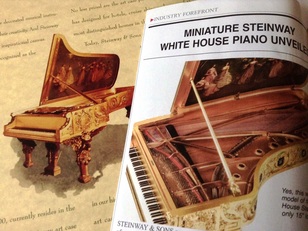
Flipped through the November Music Trades magazine the other day and came upon a picture of a miniature art case piano based on an elaborate Steinway given to the people of United States during the first Roosevelt administration.  Detailed marquetry on its side portrays the thirteen original American colonies, while nine lavishly painted muses adorn the underside of the lid. 

From intricate carvings to ornate legs, the 1903 White House Steinway (now at the Smithsonian’s National Museum of American History) is a richly decorated example of turn-of-the-previous-century piano design and craftsmanship.

But this White House Steinway – the one in the magazine -- isn’t a real Steinway.  Is it?

Steinway says it is – and has declared it so.   But this Steinway is only 15-inches long.  You could probably hold it in your outstretched hands (if they let you).   It’s priceless.  And perfectly proportioned, down to the most obscure piano detail.   It’s not a model.  It’s a “real” Steinway, according to the company.

As piano folks say, it’s actionable.  It plays!

Each tiny key, wippen, hammer, damper, string and bridge pin works in perfect synchrony with all the other 12,115 grand piano parts to produce real musical notes.  A Lilliputian pianist could sit her miniature self down on the instrument’s gilded stool, lift the fallboard and play a concert!  And it probably would sound good (in a smallish sort of way), although the article doesn’t say that. 

The 1:7 scale Steinway was created by Canadian artist Paul Gentile, who is famous for making other astonishingly accurate small scale musical instruments.  In his quest for perfection, he even fashioned a small version of Steinway’s 19th century rim press to help create the piano’s case (it wouldn’t surprise me if he used precisely the number of hard rock maple laminates and the correct glue and procedure to assure authenticity).  He even had Steinway’s foundry cast the instrument’s golden plate.

His particular genius and level of obsession clearly qualify Gentile to make a piano, one of the most exacting (and emotionally gratifying) undertakings in the world.  

Of course, Steinway has created instrument after instrument for more than 160 years, ever since the company’s German immigrant founder, Heinrich Engelhard Steinweg, built the first one in his Manhattan kitchen.  To this day, each Steinway has an individual allure that must be matched to the player, although all Steinways share the same exalted pedigree.

Gentile’s gilded miniature, apparently, is no exception.

But what’s so eminently instructive about the mere existence of this miniature art case piano is the gilded reputation Steinway & Sons has crafted for itself over the years.  Through times of uncertainty and change, they have built their brand on a foundation of excellence, as described initially by the man who became known as Henry Engelhard Steinway.

“Build the best piano possible,” he instructed.  Then “sell it at the lowest price consistent with quality.” 

That price has continued to rise, to the point where a Steinway concert grand can set you back around $150,000 (closer to  $200,000 with certain veneered cases).  Steinway prices increase by a predictable chunk every year, but there’s no shortage of discerning buyers willing to invest in new Steinways or plunk down the cash for quality rebuilt ones, especially those restored in the company's own shop.

Quality is a difficult notion to put your finger on because it’s experienced in the eye (or ear) of the beholder.  Even so, through a combination of old world craftsmanship and diligent brand building over the years, Steinway & Sons pianos have managed to become the quality standard to which others are most often compared – particularly at the concert performance level, whether the grand on stage is a New York Steinway or a Hamburg Steinway.  Of course, other exquisitely-crafted pianos from low volume (mostly European) makers also are available to performers, each with its unique appeal and devotees.  But there’s still only one Steinway.

It’s just that now one of them is very, very small.

TakeAway:  Build your brand brick by authentic brick.   In time, perhaps you can become the standard by which your competitors are judged.  And maybe then some famous artist will take the time to honor you by creating a working miniature of your product.


0 Comments

New Whole Foods Tagline Nails It!

11/3/2014

0 Comments

 
PictureImage © by Brian E. Faulkner
Two words at the bottom of our Whole Foods sales receipt caught my eye yesterday:

            VALUES MATTER.

“What’s up with this?” we asked the nearest WFM team member.

“You know, values – the things people believe.  They matter.  That’s what Whole Foods is all about.”

Of course.  Whole Foods Market has hung its mostly organic hat on that for years.  A tilt toward unadulterated, un-manufactured foods has been their stock in trade ever since John Mackey and his wife started their first store in 1978.  Company “values” still encompass trust and the greater good … and attract a refreshing variety of both staff and customers.

But these days, Whole Foods Market® is far from alone in offering organic fare.  Even the most mundane mainstream grocer now carries some organics, and the leaders among them have gone in heavy for it – even Walmart, for heaven’s sake!   Not to mention a plethora of “natural foods” competitors out there who would like to eat WFM’s lunch. 

So Whole Foods needs a way to stand out … again.

That very evening, the first Whole Foods TV ad we’d ever seen popped into our living room (which either means we’ve missed ‘em when they’ve run before or they’ve just starting running in our area).  The spot talked about how values matter, profiled a family-owned farm and touched on organics’ companion differentiator, local providers – another difference that’s becoming less different these days as mainstream grocery marketers climb on the “local” bandwagon.

“America’s Healthiest Grocery Store,” declared the tagline at the end of the spot, nailing down in only four words what America has been saying about Whole Foods for a long time.  Witness this quote from Health Magazine in 2008, which asked a group of health experts to pick the Top 10 healthiest grocery stores (Whole Foods was #1):

“Whole Foods has the whole package -- from an extraordinary selection of fresh conventional and organic fruit and vegetables to delicious prepared foods with healthy ingredients and clear labeling. Whole Foods puts a premium on products that are grown or produced locally (read: super fresh).”

The Whole Foods tagline is a home-run.  It includes all “10 qualities of an effective tagline”— at least as I’ve perceived them over the years.

  1.  Simple – uses as few words as possible.
  2.  Direct – makes a strong, unambiguous declaration-
  3.  Compelling – connects to both head and heart.      
  4.  Authentic – grounded in Marketable Truth©.  
  5.  Strategic – sets your brand apart.
  6.  Personal – talks about customer wants and needs.
  7.  Meaningful – expresses tangible benefits.   
  8.  Visual – attracts eye and ear.
  9.  Memorable – sticks in the mind.
10.  Enduring – works as long as the truth lasts.

I’d like to think that the new Whole Foods “tagline” is a keeper.  Could be a test.  Or just an ad campaign theme. 

But based on this short presentation on Whole Foods' web site (http://www.wholefoodsmarket.com/values-matter), I’d say America’s Healthiest Grocery Store” is a keeper.  They simply may be sneaking it in under the “Values Matter” banner. 

It should be a keeper, because it tells the truth … and tells it well.

Content © by Brian E. Faulkner      Marketable Truth © by Brian E. Faulkner

0 Comments

Godiva's Alluring Words & Enduring Promise.

9/18/2014

0 Comments

 
Picture
Tags: Godiva chocolate, Chocolatier, Trufflelata,  Target

When I traveled for business more than I do now, I’d occasionally come across a Godiva boutique and add a small purchase of their memorable chocolates to my personal expenses. 

It was a pleasant surprise to turn a corner in some upscale mall or market and spot the luxurious Godiva logo.  No matter where my thoughts had been, they immediately shifted to “chocolate” and the stolen moment I was about to experience.

I always picked the simplest dark piece from among the tempting individual choices and array of gold boxes – nothing fancy, just the one I imagined would deliver the purest Godiva experience without complicating it with other flavors.  After enjoying one (maybe two if I wasn’t in a hurry), the rest of my purchase got packed away for the trip home. 

Now flash forward to news that Godiva has launched a temptation called Trufflelata™, a creamy soft-serve shake made right there in the boutique with your favorite truffle blended in: Chocolate Lava Cake, Salted Caramel, Strawberry Crème, Hazlenut Crunch -- even Oreo Trufflelata.   Take your delightful pick.  

The alluring Trufflelata description and photography reminds me how good Godiva is at making us crave their products (with packaging, color, lighting, visual impact, aroma) -- same for their line of GODIVA Liqueurs announced earlier this year, including a Dark Chocolate offering they describe as “a delicious full-flavored indulgence with less guilt.” 

From way back in 1926, when chocolatier Joseph Draps first opened his Brussels shop, Godiva has been superb at crafting words to describe their “extraordinary richness and design, a collection of passion and purity” (the founder's words).  Today’s wordsmiths describe Godiva as “a sought after name with the timeless quality of passion, style, sensuality and modern boldness.”  Their corporate boilerplate proclaims GODIVA Chocolatier as a brand that “consumers universally associate with prestige, elegance and quality …”

I am taken with Godiva’s consistent ability to describe itself in words that haven’t strayed far at all from their founder’s original pronouncement -- many of the same “notes” are there.  It’s a perfect example of  Marketable Truth©, the authentic difference at the core of a product or service that speaks to its enduring competitive advantage.  When you couple their words with the product experience, it’s clear their “decadent offerings” deliver.  You can taste Godiva's truth.

How well regarded is Godiva among chocolate aficionados?  Very well, you’d think.  But chocolate purists often take exception with Godiva’s vaulted reputation, and some even have been known to make unkind comments when comparing the maker to those whose chocolates they consider more sublime (and perhaps more rare).  So maybe Godiva isn’t the best chocolate in the world, but neither is it the most expensive -- by far.  But to me, Godiva is both rare and costly.  I pay for -- and thoroughly enjoy -- the Godiva experience.

After a bit of dip during the recession, Godiva Chocolatier continues its global growth.  The company now is Turkish-owned, after 40 years under the Campbell Soup corporate umbrella, and has 450 worldwide boutiques.  Their $500-million or so in sales revenue is a drop in the bucket compared to the $75-billion worth of chocolate sold globally (U.S. total chocolate sales estimates are $18-20bn, about 25% of which is the premium market).    

In researching this story, I learned that women crave chocolate more than men, which doesn't seem all that surprising to this husband and father of three daughters.  As a friend points out, all you've got to do is walk through a crowded mall with a Godiva gift bag under your arm and see how many ladies' glances you get.

These days you can buy their chocolate bars at Target for around four bucks (“Expect More. Pay Less”).  The company also has introduced a line of tiny Godiva Gems wrapped in colored paper for sale in food and drug stores.  Which makes me wonder whether making the brand so universally available in the short run risks watering it down in the long run. 

It used to be that if you couldn’t afford $20,000 for a new car you could treat yourself to 10-bucks worth of Godiva chocolate a couple of times a year if you were fortunate to find one of their boutiques or specialty retailers.  An important ingredient of their marketing success was scarcity, which made your $10 purchase seem a bit like found gold.   Today, the new car you can't afford costs around $60,000, but your Godiva treat is still within reach at $26, a high enough price to make it an investment in self-worth vs. a reflection of net worth.

So, while you’re savoring your Godiva truffle, sipping your Godiva liqueur or relaxing with a cup of Godiva coffee “inspired by our finest flavors”, think about where the brand lives in your mind these days.   Godiva has insinuated itself into your being for a long time now and is likely to stay there despite its latter-day mass market adventurism.  The brand retains its set-apart image largely because of Godiva's exclusive positioning over many years, making it a brand that “consumers universally associate with prestige, elegance and quality.”

Frankly, though, I'd hate to see Godiva become a product so common that you can find it almost anywhere.  It just doesn't seem so wickedly worth it when you buy it at Target.   

TakeAway:  If you sell a premium brand, plant its exclusivity deep in people’s minds.  And don't try to grab somebody else's customers by going down market when things get tough.  Stick with your brand promise.  Your patience will be rewarded.

Content © by Brian E. Faulkner

About Brian Faulkner:

Brian Faulkner is a content writer and Key Message expert.  He helps clients come up with words to set their businesses, brands and products apart and attract the customers they want most.  His strategic insights (and the words that go with them) have made a significant, often immediate difference for client companies over many years.  His "sweet spot" is smaller to moderate sized consumer products, retail, service and manufacturing companies that may have struggled to find just the right words to position their business, brands or products to competitive advantage:

>  blogs to establish you as the thought leader / authority in your business category
>  case stories that communicate your sales successes and invite prospect inquiry
>  testimonials that showcase customer / client satisfaction in 1-2 short sentences
>  positioning statements to guide business development & marketing
>  landing page copy to set your business or brand apart in a compelling way
>  tagline development to attract the interest of your most qualified prospects

Brian also is a three-time Emmy award-winning Public Television writer and narrator of over 100 segments for UNC-TV’s popular “Our State” magazine series, on the air since 2003.  


0 Comments

You Gotta Get An iPhone, Dad!

9/13/2014

0 Comments

 
PictureImage © by Brian E. Faulkner
Two of my daughters are nuts for Apple iPhones and have been lobbying me to get one for some time.  They figure that if I join the Apple crowd we can talk and perhaps even see each other more often by way of Apple FaceTime.  Not to mention have “in-person” conversations with my young grandchildren, who are spread out way too far.

If I’ve almost arrived in AppleLand, the truth is that I’ve been there before. 

Back in the mid ‘80s, I traded in my ancient MS-DOS word processor (which itself had been traded up from an IBM Selectric typewriter) for a Mac Plus.  It was slick, but compared to today’s devices had the storage capacity of a gnat.  Even so, I could not only type and re-type on it in any number of fonts but also make charts and draw pictures and publish my work right there on my electronic “desktop” (thanks in part to a very expensive, very hefty Apple laser printer that I still have stored in my basement). 

Being aboard the Apple train not only made for greater efficiency, it also made me feel just a little bit cool, which no doubt Messrs. Jobs and Wozniak would have been pleased to know had they been able to see into my little office on Fourth Street.

1984 had promised to be a whole lot more creative with arrival of the Mac – presaged as it was by Apples I, II and III and Cupertino's late ‘70s pronouncement that “Soon there will be 2 kinds of people: those who use computers and those who use Apples.”  Thirty years on, it still seems that way.  For the best part of two generations Apple has managed to maintain the notion that people who use their products are more creative, more spontaneous and a whole lot more fun than the comparative Neanderthals who don’t use Apple devices.   In a genius twist of advertising, Apple painted a picture of Mr. Gates’ PCs as clunky, boring, unstable and prone to catch whatever virus happened to be going around that week.

After a few years, shifting circumstances introduced a PC into my business, which gradually claimed the bulk of my writing and publishing work.   In time, my Apple Plus got used only by my children to play Where in the World is Carmen Sandiego?   Then became a dust-catcher.

Flash forward thirty years, to the relentless campaign pursued by two of my daughters to get me back on board the Apple Train.  They have iPhones and iPads and iWhoKnowsWhat. They perceive me as a modern day Luddite (my battered old flip phone works just fine, thank you – except at home, of course, where AT&T’s signal strength couldn’t blow the wings off a mosquito).  A few months ago, I almost bit for a 5S but got entranced with Nokia’s superior camera quality and deliberated between the two phones as if my immediate future depended on choosing the right one but ended up doing nothing. 

My four kids then got together and bought me an iPad for my birthday.  They also bought their mother one, which she has filled to overflowing with apps and videos.  I have not.  I use my iPad to check email and the news some nights before falling off to sleep – and as a stand-in camera when I need to take pictures like the one above.  I can’t imagine reading a novel on the thing or on a Nook or a Kindle or any other sort of e reader.  You can’t fold the pages back on them, underline memorable passages and stuff bits of paper between their pages.

The whole digital-or-die-back dilemma makes me feel like my Dad, to whom being technologically progressive meant switching from black-and-white to color TV sometime in the '60s.  One of my brothers still laughs when I inquire whether he’s got any of the newest gadgets, but then again he doesn’t have to because his wife (a retired science teacher) takes care of all that stuff.

Do my daughters have reason to be discouraged about my stubbornness?  After all, the iPhone 6 is due out in a few days, and it actually has a screen that’s big enough for me to see.  The answer is “Yes.”  Because I am a procrastinator -- not because the iPhone 6 isn’t “perfect” for me.

I noticed while flipping through my iPad last night that Apple sales have barely made a dent in Latin America, which is dominated by Android devices, many of which have larger screens more suitable for watching movies.  That may be a big untapped market.  But I don’t think it holds a candle to the unaddressed sales potential represented by people like me.

Who knows?  We just might respond to an advertising campaign that nags at us -- like a pair of lovely and well-meaning daughters.  I can see the headline now:

 “Apple is for the Rest of You.  So Get Serious!”

If I were you, Mr. Cook, I’d get right on it.

Content © by Brian E. Faulkner


About Brian Faulkner:

Brian Faulkner is a content writer and Key Message expert.  He helps clients come up with words to set their businesses, brands and products apart and attract the customers they want most.  His strategic insights (and the words that go with them) have made a significant, often immediate difference for client companies over many years. His "sweet spot" is smaller to moderate sized consumer products, retail, service and manufacturing companies that may have struggled to find just the right words to position their business, brands or products to competitive advantage:

>  blogs to establish you as the thought leader / authority in your business category
>  case stories that communicate your sales successes and invite prospect inquiry
>  testimonials that showcase customer / client satisfaction in 1-2 short sentences
>  positioning statements to guide business development & marketing
>  landing page copy to set your business or brand apart in a compelling way
>  tagline development to attract the interest of your most qualified prospects

Brian also is a three-time Emmy award-winning Public Television writer and narrator of over 100 segments for UNC-TV’s popular “Our State” magazine series, on the air since 2003.  


0 Comments

Brand As Handshake: A New Twist On An Old Problem.

9/5/2014

1 Comment

 
Picture
How do you brand something as ordinary as fresh vegetables?  If you’re a grower who sells veggies to grocery store produce departments, how do you make your product stand out over competitive brands (few) and unbranded produce (many)? 

Back in 1927, the fresh produce industry was about to take an early step toward branding.  Of course, branding had been around ever since some enterprising Neanderthal decided to claim rights to a tool he’d made with by scratching his unique mark on it. 

And these days, most everything gets branded, from cattle to cars, soap to cereal – and with the advent of social media, even ourselves.

Brand, like a trademark, is not only a symbol of a company but “a consistent pledge” from that company to its customers, a “bridge to a relationship” with them that associates that brand with “only one origin or source,” according to Robert Payne, a partner at intellectual property firm LaRiviere, Grubman & Payne, LLP of Montery, CA (quoted this month in Western Grower & Shipper magazine).

Oddly enough, however, most fresh produce remains unbranded.  But not vegetables and fruit grown by D’Arrigo Bros. Company, of California, pioneers in produce branding.

Back in 1920, two Sicilian immigrant brothers discovered the fertile land of central California and thought it would be perfect for growing broccoli.  It wasn’t long before their 28-acre crop was almost  ready for harvest.  But who would buy it?  California was still in its start-up phase, so the two looked East, where they knew they could sell that much – and a whole lot more.  So Stefano D’Arrigo filled a railroad car with broccoli and shipped it to Boston.  Eight days later, brother Andrea unloaded the crop – still fresh after 2,800 miles – and sold it at a profit.

That was the way it would go.  One brother grew the broccoli in California and the other sold it in Boston, along with an ever-increasing variety of other fresh vegetables.  As competitors caught on, it soon became necessary for the D’Arrigos to set their produce apart.  Thus was born the Andy Boy brand, a highly visible logo with pink lettering and a picture of Stefano’s then 3-year-old son Andy on it.  Their brand still leads the way today, emblazoned on bright pink skirt ties that dress their broccoli rabe for sale. 

“Shoppers have told me that Andy Boy products really stand out in the produce section,” says David Hinkle, Southwest sales manager for Package Containers, Inc., the Canby, OR company that makes the skirt ties.  “The pink tie attracts people’s attention and invites them to buy.”

Frank Ratto, VP of marketing for Ratto Bros., Inc., whose company farms more than a thousand acres of herbs, fruits and vegetables in the Central Valley, likens branding agricultural products with twist ties to a handshake.  “They’re a stand-in for you,” he says.  “They give your product an identity.  They communicate brand value -- value in the Ratto Bros. name, the knowledge that people get fresh and tasty vegetables every time.“

Picture
He says that most produce is sold ‘naked’, so when a shopper sees the Ratto Bros. logo with its distinctive horse and wagon illustration (a picture of Frank’s grandfather delivering produce back in 1905), she knows she’s chosen quality and can serve it to her family with confidence. 

“We brand 23 out of 45 products" with PCI's Identi-Ties®, he says, counting them off one by one – “from basil to watercress.  They’re an important tool in the presentation of our products -- especially in northern California, where our brand means something.”

“The produce department is one of the most demanding sections in a grocery store,” notes Package Containers’ Hinkle.  “Clerks are always having to straighten up the displays after people pick through the produce.  I’ve noticed, however, that there’s less of that with Ratto Bros. produce,” because their branded presentation works so well.  

It may sound amazing that something as simple as a branded twist tie is so effective at differentiating one produce brand from another (or from unbranded produce), but it does.  Just ask D’Arrigo Bros. Company, of California and Ratto Bros., as both third-generation companies extend the invitation for consumers to choose their branded produce, well into the 21st century. 

TakeAway:  Communicate your product’s uniqueness with a brand that’s tangibly and authentically “you.” It can make a real difference – right away and way down the road, too.

Content © by Brian E. Faulkner

Tags: D’Arrigo Bros. Company, Andy Boy brand, Package Containers, Inc., Ratto Bros., Inc., Western Grower & Shipper, LaRiviere, Grubman & Payne, LLP

About Brian Faulkner:

Brian Faulkner is a content writer and Key Message expert.  He helps clients come up with words to set their businesses, brands and products apart and attract the customers they want most.  His strategic insights (and the words that go with them) have made a significant, often immediate difference for client companies over many years.  His "sweet spot" is smaller to moderate sized consumer products, retail, service and manufacturing companies that may have struggled to find just the right words to position their business, brands or products to competitive advantage:

>  blogs to establish you as the thought leader / authority in your business category
>  case stories that communicate your sales successes and invite prospect inquiry
>  testimonials that showcase customer / client satisfaction in 1-2 short sentences
>  positioning statements to guide business development & marketing
>  landing page copy to set your business or brand apart in a compelling way
>  tagline development to attract the interest of your most qualified prospects

Brian also is a three-time Emmy award-winning Public Television writer and narrator of over 100 segments for UNC-TV’s popular "Our State" magazine series, on the air since 2003.  

1 Comment

Could This Be America's Most Satisfying Small Airport Experience?

8/28/2014

0 Comments

 
PictureImage © by Brian E. Faulkner
Now that Condé Nast Traveler readers have named America's 10 best airports, I'm glad to find one of my favorites toward the top of  their list -- Tampa International. As many times as I've flown in and out of Tampa, I've not only never had a hassle, getting in and out of the airport (easy), parking or during the departure / arrival process, but actually have found the place relaxing.

But say you ran a smaller, regional airport located between two hub-sized airports, both roughly equidistant from larger population centers with considerably more flight options?  Many fewer passengers use your airport vs. the others
. How would you convince local people to fly from your airport rather two bigger ones, each an hour or so away? 

One thing you might do is solicit traveler feedback.  Short of conducting passenger intercepts (a good idea), check out Yelp(dot)com and build your key message around the good things people are saying there.  For Piedmont Triad International Airport, which serves twelve North Carolina counties and six Virginia counties surrounding Greensboro, Winston-Salem and High Point (the world’s furniture capital), the online chatter mostly is good news. 

Passengers seem to appreciate the ease with which they fly in and out of PTIA, despite the occasional complaint about not having a Starbucks to hang out in.

      “In and out quickly.  You can close the door to your car and be at your gate in under 12 minutes.”

                                                                             local passenger

         “An awesome airport … one of my favorites.”


                                                                             Hollywood, CA passenger

“I have been so overwhelmed by my experience at Greensboro airport that I feel like I needed to write about it,” posts a traveler from New Jersey.   “Every single employee of the airport or any of the vendors is ecstatic that you chose to fly out of ‘their’ airport.  They are constantly thanking you and going out of their way to help you.  It is the same every time - car rental, ticket agents, TSA, gate agents, security, vendors - they all have that same attitude.  Fly out of this airport if you have the chance!!”

There seem to be two kinds of people who love to “Fly PTI.”  One is the local passenger willing to pay a small premium for their ticket to avoid driving either to Charlotte or Raleigh-Durham -- if you drive to Charlotte from the Triad and dare count on I-85 or I-77 during certain morning or afternoon hours you could easily miss your flight.  The second kind of PTIA passenger (mark me among them) revels in the experience of a less-than-bustling terminal, short wait times and efficient service.  For people like us, an investment in avoiding the inevitability of parking hassles, long lines and general uncertainty is an easy choice.  Some PTIA passengers do quibble about the lack of restaurant options, but they love the convenient rental car location just steps outside baggage claim.  Some also snicker at the “International” in PTIA but love easy connection to the big hubs – while appreciating the ease of getting in and out of this airport. 

Management, of course, would like to see an increase in hustle and bustle because that means more paying customers.  But here of late they also seem to be embracing – and crowing about – the many pluses of their situation while working diligently to offer “the best passenger experience we can.”

“It’s hard running an airport,” says Kevin Baker, PTIA’s executive director, “because everybody’s goal is to leave the building.  So while they’re with us, our goal is to make them as comfortable as possible.

“We want it to be a hard decision for people to leave our airport” in favor of one of the others. “Parking is cheaper, and easier.  Every seat in the ticketing area and in both concourses has power available to passengers – plus the ability to charge your iPad or other device.  And there’s free WiFi.”

The 4.5 million people living within 90 minutes of PTIA will be glad to learn that the difference in fares between GSO, CLT and RDU has been reduced, according to the airport’s marketing and customer relations manager, Stephanie Freeman. 

“Lower fares used to be the key driver of leakage to the other airports,” Freeman says, “and the perception still lingers.  We have found that people will choose to fly from here for as much as $150 difference compared to Charlotte and $100-$150 compared to Raleigh-Durham, and that difference is increasing.”

Baker acknowledges that while PTIA’s fares are “coming more in line,” there will always be some passenger leakage, particularly in light of Charlotte’s position as a hub with 140 destinations vs. PTIA’s 16.  (PTIA was 91st in passenger enplanements among U.S. airports during CY2013, according to the FAA. Charlotte was #8 and Raleigh-Durham #39.) “We can’t change that,” he says, “but we can make the first step in connecting to more than 200 worldwide destinations easier.”  Currently, there are 53 direct flights out of PTIA to 14 destinations served by American/U.S. Airways, Delta, United, Frontier and Allegiant.

PTIA has added a variety of passenger-pleasing amenities over the past four years.  In addition to the personal connectivity features mentioned above, they’ve refreshed the terminal and concourses, updated flight information displays and, most recently, have added charging stations for electric vehicles – the first airport to do so in North Carolina. Fifty Airport Ambassadors also add a personal touch to airport service, a team of 50 volunteers who “do our best to transform your traveling stress into southern-style comfort.”

Baker points out that in addition to its many passenger delights, Piedmont Triad International Airport is transforming its 4,000 acre campus into an “aerotropolis,” with hopes of becoming the Wichita of the East.  Called “The best landing field in the south" during its early days, PTIA now is the third busiest airport in North Carolina -- and the state’s largest aerospace employer.   Tenants include:
  • Honda Aircraft Company, which employs 650 people (at last count) and plans to introduce their innovative Honda Jet – designed and manufactured at PTIA -- into service next year;
  • maintenance, repair and overhaul giant TIMCO Aviation Services, which alone has 705,000 square feet of hanger space at GSO, 1,500 local employees and attracts business from all over the world, in part because the airport’s two parallel main runways can comfortably handle the world’s largest planes;
  • and Cessna Aircraft, with a 45,000 square foot service center for its Citation business jets.

The FedEx mid-Atlantic air hub is here, in the company of firms like GE Aviation and B/E Aerospace.  And according to Executive Director Baker, there’s plenty room for more. The (self-supporting) airport authority has approved a 10-year, $350 million development program to acquire and prepare some 600 acres of land nearby.  Down-the-road benefits?  Some 18-thousand potential new jobs and perhaps $3.2 billion of business impact.

A wealth of aviation-based training already is in place to help assure the region’s economic success.  Guilford Community College’s aviation training center and other nearby schools offer aviation- and aerospace-related programs.  The new T.H. Davis Aviation Center, which partners with Embry-Riddle Aeronautical University, is considered one of the best-equipped aviation maintenance training facilities in the Southeast.

However, daily evidence of this airport’s success is reflected in the experiences of its passengers, people who choose to fly in and out of PTIA despite the looming reality of two hub-sized airports only an hour-and-a-half away.   

Could Piedmont Triad International Airport be America's Most Satisfying Small Airport?  

You’d think so to read what a strong plurality of PTIA travelers have to say – and as anyone who flies commercial these days well knows, airline passengers will complain at the drop of a boarding pass should something go awry but are less likely to pay a compliment.

PictureImage © by Brian E. Faulkner
“PTI has such an awesome hometown feel to it,” writes a passenger from Chicago.  “It is so simple and straightforward.  No hassle, just a bunch of common sense - the way it should be!”

“Piedmont Triad International Airport is an awesome little airport!” writes another passenger. “And while it does not have the breadth of dining and shopping options of other airports, it has its own small airport charm!”

 “It’s ‘Home Sweet Home’,” says a third, “compared to huge, chaotic airports.”

All is not perfection at PTIA – some passengers do have minor gripes.  But for a smaller airport caught between two much larger ones, the good news is very good indeed.

The tagline says it all.  Fly easy.  Fly PTI.  

TakeAway:  Communicate your competitive advantage based on what your most satisfied customers have to say about your product or service.  Because that’s the truth!

Content © by Brian E. Faulkner

Tags:  PTIA, Piedmont Triad International Airport, Greensboro, Winston-Salem, High Point, Starbucks, GSO, CLT, RDU, American / U.S. Airways, Delta, United, Frontier, Allegiant, aerotropolis, Honda Jet, TIMCO, Cessna Aircraft, GE Aviation, FedEx, B/E Aerospace, Guilford Community College, Embry-Riddle Aeronautical University, Yelp.com

About Brian Faulkner:

Brian Faulkner is a content and strategic communiction writer.  He helps clients come up with words to set their businesses, brands and products apart and attract the customers they want most.  His strategic insights, and the words that go with them, have made a significant, often immediate difference for client companies over many years.  His "sweet spot" is smaller to moderate sized consumer products, retail, service and manufacturing companies that may have struggled to find just the right words to position their business, brands or products to competitive advantage:

>  blogs to establish you as the thought leader / authority in your business category
>  case stories that communicate your sales successes and invite prospect inquiry
>  testimonials that showcase customer / client satisfaction in 1-2 short sentences
>  positioning statements to guide business development & marketing
>  landing page copy to set your business or brand apart in a compelling way
>  tagline development to attract the interest of your most qualified prospects

Brian also is a five-time Emmy award-winning Public Television writer / narrator.  He is principal writer and narrator of UNC-TV’s popular "Our State" magazine series, on the air since 2003.  His distinctive sound has been heard on many hundreds of radio spots and client videos since the 1970s.  People say he has a “Mercedes voice” and sounds a bit like Charles Kuralt, which Brian considers a welcome ... but happy ... illusion.


0 Comments

People Power as a Competitive Advantage.

8/14/2014

2 Comments

 
PictureImage © by Brian E. Faulkner
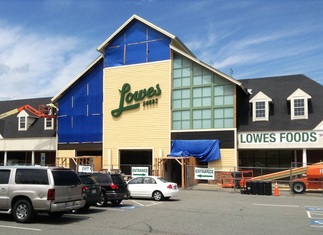
Lowes Foods, a 60-year-old, 100+ store grocery chain based in North Carolina, has made a gutsy move:  they’ve put the future of their business in the hands of their people.  Their team.  Their hosts -- the honorific says it all.  

The moment you walk in one of their rebranded, re-cultured stores, you can feel the difference.  Smiles seem to arise naturally.  Employees greet you and offer their help – and seem to mean it.  There’s a refreshing hustle about the place.  More spontaneity. Lowes Foods leadership has managed somehow to meld procedure and belief and make it work.  
 

“Cultural branding is really at the core, at the heart of what we’re trying to do,” says the company’s enthusiastic CMO, Michael Moore, a veteran of 28-years in the grocery business.  “And what I’ve experienced a lot as I’ve gone to retailers, both in the States and overseas, is that there’s so much emphasis placed on the visual side of the equation, prettying up the store, making it a little bit more shoppable, so on and so forth, but yet there’s nothing that’s done with what we call our hosts.”

Although stores like Publix (1077 stores in six southeastern states), Wegmans (84 stores in the Northeast), Whole Foods Market (371 stores nationally) and Nugget Markets (9 stores in California) are known for getting the cultural piece right.  And each rises continuously on FORTUNE’s list of the 100 Best Companies to Work For*. 

Nugget Markets claims that their “positive attitude and love of people” sets their associates apart, which – in turn -- sets them apart in the marketplace.

“Our associates are the difference maker,” says Chris Carpenter, their COO and Vice President, “and it is they who separate us from our competition.  We believe that when our associates are having fun and feeling valued, there is an energy and enthusiasm that is created—and it transcends right through the guest.”

Lowes Foods’ management gets that.  My recent conversation with CMO Moore in one of the company’s stores was interrupted several times by cheers from people in the Chicken Kitchen celebrating completion of another batch of “chicken you’d cross the road for.”  

Who wouldn’t rather shop at a store where people are enthusiastic about their work – as long as quality and selection are up to par?  Personal experience is just one of a dozen or so competitive factors that set any business apart – along with service, convenience, innovation, etc.  Even grocers who sell primarily on price often have other competitive factors in their favor.  Aldi for example, is known for its limited inventory, quality merchandise plus low price.

But the people part likely does as much, or more, to attract and hold customers than any other single competitive factor.  It’s also the most challenging to make happen -- and sustain -- in the me-saturated American culture.   Disney has proven the value (and endurance) of people power for decades.  

“The Disney operating style has greatly influenced our training program,” says Moore.  “We believe in one of the core Disney concepts in particular, which is when we’re on the floor we’re onstage, and we want the people onstage to be delightful.  We want our hosts to be rabid fans, working for Lowes, and we want our guests to feel that love – and feel that commitment and support.”

Even when my local Lowes Foods store was only halfway through its renovation, the cultural transformation already had begun taking hold.  I was pleasantly surprised when a man in the produce department engaged me in conversation about the mushrooms I was buying.  (see http://theproducemerchant.com/produce-stand-outs/ for more about him)

Customer satisfaction is relatively easy to achieve, because it’s … relative.  Creating delight, however, is quite something else and may not even be measurable except by collecting personal anecdotes and tracking repeat business. The man in produce delighted me by offering suggestions on how to store and prepare my mushrooms.  A month or so later, a young woman roaming the store with crisp watermelon samples intercepted me in the cereal aisle.  Her smile alone was enough to delight.  And had I not been a long-time Lowes Foods customer, either "host" would have more than counterbalanced my experience a few weeks prior with the only rude clerk I’ve ever encountered at that store (a memorable example of how not to treat a customer).

“Culture is the driver in our company in all departments,” says Lowes Foods VP of Fresh Sales Chris Van Parys.  “While the bricks and mortar have all evolved, of course, the take-away we have the most pride in is our people or hosts.  The main focus is taking care of our guests in new and unexpected ways.”

And not everybody fits. 

“There’s a certain profile we look for as we think about new hire strategy,” says Moore, “people comfortable with that kind of interaction.  The folks who are not, there’s tons of great backstage kind of work that fits better for them.  And we really make sure that’s front and center as people are making applications for jobs.”

The new people who have appeared in my local Lowes Foods store recently seem to embody that spirit more readily than the old crew (although there are a few choice holdovers).  Even the young workers who stock the shelves have sprouted an upbeat, helpful attitude.  You find much the same at Publix, where employees also are owners.


PictureImage © by Brian E. Faulkner
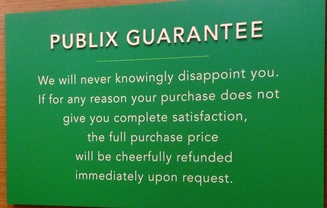
“Providing premier service and a pleasurable shopping experience is what we hang our hat on,” says Kimberly Reynolds, media and community relations manager in their Charlotte, N.C. division, who noted that as far back as 1930, their founder proclaimed that “we shall treat our customers like kings and queens.”  Today, how the Publix brand promise plays out in the stores remains their “secret sauce,” as an associate in Fort Mill, S.C. proved to me recently by not only being above-and-beyond helpful concerning a product they did not carry but personable to boot.  She personified founder George W. Jenkins' belief that "Publix will be a little better place — or not quite as good — because of you."

Max De Pree, in his seminal little book, “Leadership Is an Art”, talks about covenantal leadership, which I have seen at work in only a small handful of client organizations over the years – from small businesses to billion-dollar consumer products companies and their business units.  The culture of a national apparel manufacturer/marketer I consulted to revolved around a passionate leader who created the future, invested the team in it and sponsored their success.  But the company's culture proved tenuous.  When the leader moved on (or in another case  I recall, when corporate ownership changed), the cultural focus and inspired energy dissipated.

Lowes Foods, like Publix, appears to understand that in order to survive, qualities like “team” and “passion” and “commitment” can’t be pasted on.  They have to be planted deep and lived out in the attitudes and actions of people who believe they are contributing to a larger cause.  Only then can business culture become an enduring – rather than momentary – source of competitive advantage.  It’s not something you can fake.

Publix hires people with “a servant’s” heart, which CEO Ed Crenshaw appears to epitomize.  Lowes Foods hires people who understand the concept of “host” from the heart out, and their senior management team is quick to credit one another with the early success they’ve achieved in rebranding the chain and building a new culture.  That suggests stability in an era when grocery shoppers will change stores on a dime just to get a good price.   

Stability alone is no guarantor of success, of course, although stability based on a culture of believers with a can-do attitude can work wonders in attracting and keeping customers – and perhaps even help make a buck or two more than the competitor down the block. 

Publix and Lowes Foods are destined to compete more directly in the near future as the Florida chain moves deeper into North Carolina. Customers are sure to respond positively to both stores’ people-powered presentations and reward them with increased business and greater loyalty.

TakeAway: People power can be a powerful source of competitive advantage. How does your culture stack up?

Content © by Brian E. Faulkner   *FORTUNE and FORTUNE 100 Best Companies to Work For are registered trademarks of Time Inc.

Tags:  Lowes Foods, Publix, cultural branding, Wegmans, Whole Foods Market, Nugget Markets, ALDI


About Brian Faulkner:

Brian Faulkner is a content writer and Key Message expert.  He helps clients come up with words to set their businesses, brands and products apart and attract the customers they want most.  His strategic insights, and the words that go with them, have made a significant, often immediate difference for client companies over many years.  His "sweet spot" is smaller to moderate sized consumer products, retail, service and manufacturing companies that may have struggled to find just the right words to position their business, brands or products to competitive advantage:

>  blogs to establish you as the thought leader / authority in your business category
>  case stories that communicate your sales successes and invite prospect inquiry
>  testimonials that showcase customer / client satisfaction in 1-2 short sentences
>  positioning statements to guide business development & marketing
>  landing page copy to set your business or brand apart in a compelling way
>  tagline development to attract the interest of your most qualified prospects

Brian also is a three-time Emmy award-winning Public Television writer and narrator of over 100 segments for UNC-TV’s popular Our State magazine series, on the air since 2003.  


2 Comments

TaglineS, Positioning and the Aflac Duck.

8/8/2014

0 Comments

 
Picture
Is the Aflac Duck still a marketing asset, or has the brand icon become so silly that he deflects attention from the company’s message?

I loved the Duck at first.   His arrival back in 2000 was a hoot.  You’ve got to hand that to talking ducks, especially ones that can almost pronounce the company name.  He was fresh, he was cute.  He quacked me up -- and was destined for advertising stardom.

But has he finally lost his duck go-power?   Partially.

The Duck reminds me of Joe Namath, the New York Jets star quarterback who Hanes Hosiery hired to do a TV spot for a new product called Beautymist 40 years ago.   

The camera panned along a pair of slender legs sheathed in the product while a perky woman who sounded like she was about to break into laughter talked about how Beautymist makes any legs look like a million dollars.  Then we see it’s really Joe.  The commercial was hugely successful.   Recall was out of this world – for Joe Namath.   Hardly anybody remembered the product.  

In contrast, the Duck worked for Aflac right out of the box.  People associated the brand with him immediately.  But even as the Duck worked his creative magic, it was hard to discern from the commercials what Aflac actually did – at least for me.  Even today, I had to go to Wikipedia to remind myself that Aflac sells different types of insurance and is best known for the supplemental kind offered through employers – insurance that pays expenses not covered by existing major medical coverage. 

Interestingly, their Web site wasn’t much help until I ventured well beyond the landing page.
It’s astonishing how little product positioning Aflac appears to have included in their spots over the years, as if curiosity alone will drive prospects to inquire -- even though the Duck supposedly has been quacking about product since 2009.  A strategically focused, well-stated tagline could have knocked it out of the park for Aflac and put a productive coda on the Duck’s antics long ago.   Viewers would have “got” Aflac’s strong benefits and unique distribution channel (although many people probably Googled the name and figured that out for themselves).

In a recent MediaPost article, columnist Steve Smith seems to disagree with me -- I think. 

He cites a TV spot about quick claim resolution in which the Duck “highlights the competency of the brand by contrasting it with the duck’s ineptitude in all other endeavors.”  In other words, the Duck acts the fool to introduce an Aflac product feature, like “a near-silent comedian trading on a string of sight gags.” 

Smith then recommends “leveraging the duck more effectively” on Vine and Instagram.  In other words, export the silliness to social media where it can be broken into bits and enjoyed ad nauseum.  Thus, the writer (who also is a digital media critic and a columnist for Mobile Marketing Daily) presumes that the Duck remains effective in a slapstick, “idiot savant” sort of way. 

There clearly is a market for silliness or there wouldn’t be so many cat videos on YouTube.  But as a brand spokes-icon, the Duck seems to have lost his way.  He’s gotten sillier and sillier, taking more and more attention away from the product in a situation where the brand desperately needs to communicate a key message.  The Duck’s original mission was elegantly simple: create awareness of the brand name.  But now it seems that he has almost become the message.

The Duck is no more Aflac’s message than Joe Namath was Beautymist’s message, although the Duck and the brand are now practically indistinguishable.  His function should be to lay out the welcome mat for the message but not overwhelm it.  He should make his entrance, do his bit and exit stage right.

Even so, the Duck clearly has produced results for Aflac – in a let’s “run the damned idea into the ground until every blessed soul in America is familiar with an otherwise obscure personal insurance product” sort of way, as Smith puts it.  “Sometimes frequency trumps creative cleverness,” he concludes -- although the Energizer Bunny might not agree.

But think how much more effective (and less dependent on frequency) Aflac's advertising would have been had the Duck set the stage for a powerful tagline that amplified their brand message and prompted even more qualified prospects to inquire about their product.  

“It all seems to be a slightly tortured road to underscore the brand’s point,” Smith writes, commenting on the most recent Aflac spot, in which the character does poorly at Yoga.  I couldn’t agree more.  But then he stretches that point by suggesting that the Duck’s antics force the viewer to “make some sense of the online slapstick and engage more deeply in order to make the tiny logical hop to the brand message.”

I don't quite buy that.
  Aflac needs to crank the Duck back and focus more on brand positioning and product benefits.

TakeAway:  Clever is never enough.

Content © by Brian E. Faulkner

Tags:  tagline, key message, Aflac, Aflac Duck, Hanes Hosiery, Beautymist, Joe Namath, Energizer Bunny, YouTube, cat videos

AbouT Brian Faulkner:

Brian Faulkner is a content writer and Key Message expert.  He helps clients come up with words to set their businesses, brands and products apart and attract the customers they want most.  His strategic insights, and the words that go with them, have made a significant, often immediate difference for client companies over many years.  His "sweet spot" is smaller to moderate sized consumer products, retail, service and manufacturing companies that may have struggled to find just the right words to position their business, brands or products to competitive advantage:

>  blogs to establish you as the thought leader / authority in your business category
>  case stories that communicate your sales successes and invite prospect inquiry
>  testimonials that showcase customer / client satisfaction in 1-2 short sentences
>  positioning statements to guide business development & marketing
>  landing page copy to set your business or brand apart in a compelling way
>  tagline development to attract the interest of your most qualified prospects

Brian also is a three-time Emmy award-winning Public Television writer / narrator.  He is principal writer and narrator of UNC-TV’s popular "Our State" magazine series, on the air since 2003.  His distinctive sound has been heard on many hundreds of radio spots and client videos since the 1970s.  People say he has a “Mercedes voice” and sounds a bit like Charles Kuralt, which Brian considers a welcome ... but happy ... illusion.


0 Comments

The People's Vision: Don't Let Our Future Just Happen.

7/30/2014

0 Comments

 
PictureImage © by Brian E. Faulkner
The managing editor of Bloomberg Politics, Mark Halperin, suggested during a conversation the other day on MSNBC’s “Morning Joe” that Hillary Clinton lacked “a big strategic vision on how to deal with the world.”  Same for President Obama.  Both, he observed, tend to look on the world episodically rather than strategically:

“We’re still dealing with the fallout of the end of the Cold War. We’re still dealing with the fallout of a post-9/11 world. And I think a lot of people are able to question (Mrs. Clinton's) role in the president’s record on the question of where is the grand strategy? Where is the vision of how to take America into a situation where we’re not dealing episodically with lots of crises without an overall sense of how to bring things together?”

Where is the vision, indeed! 

How do we “position” ourselves in the world?   How do we want to be perceived – generally and in light of tectonic shifts in geo-politics?  Where are we going?  How will we get there?   And how does all this impact my world, my country and me? 

The political parties and their presidential aspirants could do well to figure that out.

“The vision thing,” as George H. W. Bush famously called it back in 1987, has tripped up many a politician – and business leader.  Vision is not something you brainstorm for a couple of hours during a weekend retreat, tack on the office wall and forget about (although I have seen that happen many a time).  A well-grounded vision should arise from the core of your business with the vigor of Jack’s beanstalk because it wraps competency, focus and future into a single commanding insight about who you are and what you bring to the world.  Vision fuses who you are with what you want to become.  It propels you into tomorrow and next year and the year after that -- whether company or country. Decisions no longer get made piecemeal but are considered within the context of a well understood, well accepted and forward-looking strategic framework.

My definition of vision is a dream with a goal.

Too simple?  Vision is simple.  Making vision complicated is make-work.  And a disservice to your organization and the people who will help imagine and fashion your future.

All too often, however, we give little more than lip service to vision.  As Halperin noted, we react episodically.  We may solve some immediate problem with clever footwork but, in the long run, not get much more than a rim shot in return.   

The Obama administration appears to lack vision.  The president and his frequently flying secretary of state seem to react to foreign policy situations while fostering the impression of acting deliberately.  It seems true in their Middle East decision-making and when dealing with the seemingly indomitable Mr. Putin -- unless, of course, the administration’s actions are being guided by a strategy that simply isn’t apparent to the rest of us.  Either way, the perceived result is the same: geo-political muddle.

Our leaders do the country a disservice by not connecting the dots, by refusing (or neglecting) to meld the people’s dreams and goals into a clear and compelling vision, whether they’re talking about “rebuilding the middle class” or how government plays out its foreign policy on their behalf.  Historian and diplomat George F. Kennan once stated that, as an agent of the people (but not a principal unto itself), the primary obligation of government is to the “interests of the national society it represents … military security, the integrity of its political life and the well-being of its people.”    

Considered in that light, is it clear that President Obama has a vision for America – for all Americans?  Is he serving the interests of the national society he represents?  Or is he working his own agenda?  And are we in for more of the same if the Democrats’ leading contender is elected president in 2016?

On CNN this weekend, geo-political commentator and author Fareed Zakaria asked Hillary Clinton about the upcoming presidential campaign, to which she responded, in part, with her view about visioning:  

“Every election is sui generis.  I think it starts with where we are in the country at this time, with what Americans are thinking, feeling and hoping, and it proceeds from there.  And it is always about the future.  …  The questions for somebody running for president are not, you know, will you run and can you win … you have an election, not about a candidate, but you have an election about an agenda.”

The comment suggests that one day Mrs. Clinton actually may come up with a vision that helps the American people discern whether her view of our country and its place in the world earns their vote.  Meanwhile, even NPR national political correspondent Mara Liasson says that Hillary lacks “a big idea.”  Clinton’s early-bet, very liberal opponent, Elizabeth Warren (who says she’s not running in the primary), already has posted a list of 11 Progressive Commandments that leaves no doubt about her vision for the country, at least regarding domestic issues.  I admire her specificity if not her politics.

What about your business?  Do you have a vision?  Does it reflect your present and illuminate your future?  

  • Perhaps your business strategy is concerned with protecting what you’ve already built.   
  • Maybe your company banks on its ability to respond with agility to present and emerging customer needs – faster and with greater innovation than its competitors.  
  • Or you’re a groundbreaker, with that rare ability to see beyond the horizon, make new things happen and change the world. 

In each case, your business should be guided by a strategic vision that your people understand and buy into, a vision that reflects both its dream for the future and a concrete goal somewhere out there in time.  Proverbs 29:18 (KJV) says “Where there is no vision, the people perish.” They also are apt to react to situations episodically (interestingly, a more up-to-date translation of the Proverbs verse suggests that things tend to fall apart without having first acceded to God’s guidance). 

Content © by Brian E. Faulkner

Tags: vision, strategic vision, Bloomberg Politics, Mark Halperin, Hillary Clinton, Morning Joe, President Obama, Cold War, George H. W. Bush, George F. Kennan, Fareed Zakaria, Elizabeth Warren, 11 Progressive Commandments, Proverbs 29:18  

ABOUT BRIAN FAULKNER:

Brian Faulkner is a content writer and Key Message expert.  He helps clients come up with words to set their businesses, brands and products apart and attract the customers they want most.  His strategic insights, and the words that go with them, have made a significant, often immediate difference for client companies over many years.  His "sweet spot" is smaller to moderate sized consumer products, retail, service and manufacturing companies that may have struggled to find just the right words to position their business, brands or products to competitive advantage:

>  blogs to establish you as the thought leader / authority in your business category
>  case stories that communicate your sales successes and invite prospect inquiry
>  testimonials that showcase customer / client satisfaction in 1-2 short sentences
>  positioning statements to guide business development & marketing
>  landing page copy to set your business or brand apart in a compelling way
>  tagline development to attract the interest of your most qualified prospects

Brian also is a three-time Emmy award-winning Public Television writer / narrator and is principal writer and narrator of UNC-TV’s popular "Our State" magazine series, on the air since 2003.  His distinctive sound has been heard on many hundreds of radio spots and client videos since the 1970s.  People say he has a “Mercedes voice” and sounds a bit like Charles Kuralt, which Brian considers a welcome ... but happy ... illusion.
0 Comments

Amazon's New Superphone.

6/19/2014

0 Comments

 
Picture
Part 1:  Wednesday Morning, June 18, 2014

Like other observers today, I eagerly await announcement of a new Amazon smartphone.  Speculation abounds regarding:

a) the foolishness of Amazon in launching a smartphone into a category chock full of well-established, innovative competitors;

b) the brilliance of doing so because of an unanticipated feature than upends the market.

I’m going with number two.   Because Amazon is ceaselessly innovative and flush with confidence born of transformational moves that have earned them dominance in a categories from book selling to online sales of just about anything you want as the de-facto 21st Century Wish Book. 

They must have something cool up their sleeve.

My first thought, way out here in speculation land, is that Amazon is about to introduce a soon-to-be-ubiquitous new appliance that is nothing less than a handy tool to help people buy more stuff from them.  Either that or they’re launching just a pretty-good phone to get a grip on the market before launching their groundbreaking device.  Whether sooner or later, Amazon’s new entry will be a game-changing purchase appliance there’s no name for yet that will glue even more of us to the amazing Amazon money machine.

Part II, below, was written after the Amazon announcement.  Did I nail it?  Halfway nail it?   Or nowhere near nail it – in fact, come up so short that my speculation looks silly and sophomoric?   You decide.

Picture
Part 2:  Thursday Morning, June 19, 2014

It’s called the Fire, and Amazon’s new superphone has folks buzzing – and boosting Amazon’s stock price. 

Initial online business comment about the new phone is all over the board but leans toward the mystified, especially in light of the device’s high price and limited distribution.  Sure there’s some “expensive groundbreaking technology,” a new 3D imager that allows users to look at objects with a more dynamic perspective and get into games in more immersive ways. 

But, to me, the Amazon launch feels more like a market test than a do-or-die bid to outdo Apple and other well-entrenched smartphone brands – an experiment.

Here are some questions I’d want the experiment to answer were I Amazon CEO Jeff Bezos.

Will sales of the new phone be limited to early adopters?   Or will Fire’s array of “cool factor” features (including more efficient, more intuitive ways to interact with the device) attract a broader base of consumers to AT&T stores?  That's the only places people can buy the Fire, at least as of July 25th. 

Will a price in line with the iPhone 5S elevate the new phone’s positioning?  Will pricing inhibit or enhance sales?   Will the ultimate price for the new Amazon product eventually slide down toward zero as it evolves into that ubiquitous Amazon purchasing appliance I speculated about above?

Most important: will users buy more stuff from Amazon right away, using the new phone’s built-in Firefly app, since its 3D feature now makes it easy for shoppers to identify products they want and order them in seconds simply by holding down the Firefly button.   The camera can identify "over 100 million items,” says Bezos, “including songs, movies, TV shows” and apparently some things as challenging to identify as exotic fruit or as simple to discern as a jar of branded peanut butter or magazine cover.   

All in all, it’s an intriguing launch by a company that’s unafraid (and wealthy enough) to test its mettle in new markets, even if some previous Amazon market innovations have been less than an overwhelming success (witness Kindle Fire’s miniscule share of the tablet market).

So keep watching.  Fresh Amazon surprises no doubt await – even as competitors across all channels seek to create competitive advantage of their own with groundbreaking sales and distribution schemes.

TakeAway:  Innovation is fleeting.  So protect your innovative product or service by building a wall around it in the consumer’s mind that competitors will find difficult – if not impossible -- to break through.
Content © by Brian E. Faulkner

Tags: 
Amazon.com, Fire, Fire phone, smartphone, iPhone 5S

about Brian Faulkner:

Brian Faulkner is a Key Message expert.  He helps clients come up with words to set their businesses, brands and products apart and attract the customers they want most.  His strategic insights, and the words that go with them, have made a significant, often immediate difference for client companies over many years.  He thrives on strategic communication problem solving, complex subjects, new ideas, concepts-as-products, challenging marketing situations and demanding deadlines.  His "sweet spot" is smaller to moderate sized consumer products, retail, service and manufacturing companies that may have struggled to find just the right words to position their business, brands or products to competitive advantage.
Picture


Brian also is a three-time Emmy award winning Public Television writer and narrator of UNC-TV’s popular Our State magazine series, on the air since 2003. His distinctive voice has been heard on many hundreds of radio spots and client projects since the 1970s.  People say he sounds a bit like Charles Kuralt, which Brian considers a welcome but happy illusion.

0 Comments
<<Previous
Forward>>


    sample blog:

    This is a sample blog  for writer Brian E. Faulkner.  It presents stories about brands that do (or don't) communicate competitive advantage effectively. Stories have been gleaned from the business press, personal experience and occasional interviews. New articles are added from time to time, and every so often there will be a post of general interest -- about things like success, passion, social trends, etc. 

    Author

    Brian Faulkner is a writer and strategic communication consultant who helps business clients explain their competitive advantage in compelling and enduring ways.
     
    He also is a five-time Emmy award winning Public Television writer & narrator for a highly-rated and well-loved magazine series.

    Picture
    Image © by Brian E. Faulkner

    Categories

    All
    Advertising
    Authenticity
    Brand Branding
    Brand & Branding
    Brand Names
    Business Culture
    Competitive Advantage
    Competitive Advantage
    Competitive Factors
    Content
    Creativity
    Culture
    Customer Satisfaction
    Differentiation
    Experience
    Flexibility
    Future
    Innovation
    Key Message
    Leadership
    Luxury
    Marketable Truth
    Marketing
    Passion
    Politics
    Positioning
    Price
    Quality
    Sales
    Service
    Small Business Marketing
    Story
    Strategic Thinking
    Taglines
    Team
    Technology
    Trends
    Values
    Vision

    Archives

    July 2019
    January 2019
    November 2016
    February 2016
    October 2015
    September 2015
    August 2015
    July 2015
    June 2015
    May 2015
    April 2015
    March 2015
    February 2015
    January 2015
    December 2014
    November 2014
    October 2014
    September 2014
    August 2014
    July 2014
    June 2014
    May 2014
    April 2014
    March 2014
    February 2014
    January 2014
    December 2013
    November 2013
    October 2013
    September 2012
    October 2011
    March 2011

    RSS Feed

Content © by Brian E. Faulkner.   All rights reserved.