A BLOG ABOUT COMMUNICATING COMPETITIVE ADVANTAGE
  • Brian Faulkner
  • Blog
  • CONTACT

The Customer is Culture at this Successful Company.

11/10/2014

0 Comments

 
Picture
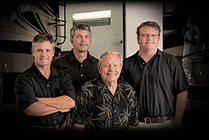
Bob Tiffin gets up every morning a happy man.  After early meetings with his management team, the genial founder and CEO of Tiffin Motorhomes takes to his office, phone to ear, eager to speak with his customers. 

He knows he’ll get the calls, first because he invites them.  And second, because motorhomes are complex products and they need service from time to time.  An array of different systems must work as one to keep 30-48 thousand pounds of vehicle, 100-150 gallons of diesel fuel, 90 gallons of fresh water, 100+ gallons of waste water, plus cabinets, furniture and personal belongings (not to mention driver and passengers) rolling down the road. 

“A motorhome, first of all, is a home,” Tiffin points out. “It has everything a home has, but on wheels.  It also has hydraulics and a diesel engine – like a backhoe.”  Not to mention the finest TV and electronics packages available.  Plus a fine kitchen, an air conditioning system and two electrical systems, including a generator.  And it all has to operate properly at sea level or at 11-thousand feet and accommodate a variety of climate and road conditions.  From chassis to engine to handcrafted cabinetry to exceptional fit and finish, the company’s quality standard is high, whether an owner vacation travels or lives full time in their motorhome.  

“Our customer sets the standard,” says Tiffin.  “The customer is the culture of our company.  We think about them when we design our products.  We think of them every minute of every day and do everything we can to help them.  We have 200 employees in our service department.  Fourteen techs each take 30-40 calls a day.  And CoachNet takes the calls after hours and on weekends.” (CoachNet is a leading provider of 24/7 technical and emergency roadside assistance for motorized and towable RVs with a network of more than 40,000 service providers throughout the U.S. and Canada.)

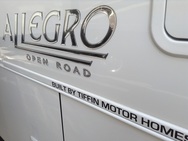
“My three sons work with me in the business, and we meet every day with our engineers to go over each problem we got a call about the day before,” notes Tiffin.  Many of the fixes to those problems find their way into the company’s six Class A motorhome lines, which range from Allegro Breeze, the smallest rear engine diesel coach on the market, to the lavish Zephyr, “45 feet of sumptuous grandeur loaded with more features than we’ve ever put into a motorhome,” including a residential style fridge, two bathrooms and a stacked washer / dryer combo.  

Picture
Image © by Brian E. Faulkner
Picture
http://tiffinmotorhomes.com/
Picture
Image © by Brian E. Faulkner
Bob Tiffin’s customer service passion is rooted in values instilled in him by his father, Alex Tiffin, whom Bob watched do business in the family lumberyard and general store in rural northwest Alabama from the time he was a little boy:
Build it well.  Make it better.  Back it with good service. Treat customers the way they    would want to be treated.  And always answer the phone.
These days, if Bob Tiffin isn’t in his office taking with a customer on the telephone, he’s more than likely talking to a customer in-person, at the Tiffin plant in Red Bay or on the road somewhere.

“If you can’t look your customers in the eye, you can’t do business with them,” Tiffin believes, a maxim that goes back to the Tiffin Supply Company days and has stuck with them since the family acquired and developed a motorhome manufacturing business after one of their customers went bust forty-odd years ago. 

The product may be more sophisticated these days, but Tiffin’s attention to the basics remains the same – in fact, it’s at the nexus of quality and service that Tiffin Motorhomes really shines.  The company is known not only for meticulous attention to design and manufacturing but also for Bob Tiffin and his legendary customer service, all of which combine to set Tiffin apart in a business where the competition isn’t shy about contending for market share.

“There used to be something like 100 motorhome manufacturers,” Tiffin says.  We’ve survived four major economic meltdowns since we started in business, and now there are only 6-7 manufacturers left.”  Which says a lot about his company’s products and the people who build and service them.

Just ask a Tiffin owner.

“Our customers talk about us around the campfire,” he points out. “We want them to say that we try our best to help if there’s a problem.  We don’t sugarcoat the fact that motorhomes can be challenging.   If there’s an issue, we ask our customers to call us, contact one of our 85 dealers, or drive to the factory.  Ninety-nine percent of the time, we’ll fix whatever needs to be fixed.  Because it’s our name that’s on their motorhomes.”   

Bob Tiffin gets it.  He gets it that the promise of quality begins on day one of the manufacturing process, continues through sale and delivery (by a limited number of carefully chosen Tiffin dealers) and extends through the entire ownership experience.  His team gets it too, understands that integrity is the foundation stone on which their current and future business success rests.  The promise Bob makes to Tiffin owners, the promises his sons make, and the promise that every associate in the Tiffin family makes is part of each motorhome that heads up the road from Red Bay.

“Customers invest from $100,000 to more than $500,000 in their motorhomes,” the founder says.  “Sometimes that’s their whole life’s savings.  And keeping them happy is our job” -- a Marketable Truth© deeply embedded in Tiffin’s long-time tagline:

“Where You Go, We Go!”

TakeAway:  Live your integrity.  A reputation for excellence will follow, and your customers will brag on you.

Content © by Brian E. Faulkner      Marketable Truth
© by Brian E. Faulkner   
0 Comments

How To Win BIG in 2016: A Tagline For Tomorrow. 

11/5/2014

0 Comments

 
PictureImage © by Brian E. Faulkner
Despite its overwhelming success, the Republican 2014 campaign was a sorry example of strategic positioning.  Yes, the Republicans improved their ground game and voter motivation differed markedly than in 2010 or 2012.  And yes, there was considerable angst afoot about the president and his policies, his slide toward extra-Constitutional thinking and his enthusiasm for progressive social initiatives that cut deep into traditional American culture. 

But absent the “Nobama” ax the Republicans swung with such gusto, there was a clear lack of strategic underpinning to their midterm messaging.  Instead, they allowed the president to make their case for them.  He saved the Republicans the trouble of building a brand -- a short-term plus but a long-term minus.

The Democrats had more substance to build on (they always seems to think further down the road than the Republicans), but their 2014 messaging wasn’t all that cohesive, either – at least overtly.  However, it was clear to the electorate that the Democrats mostly stood for Obama and his ways, despite some candidates who fled toward the exits in fear of even mentioning the president’s name.   Love him or loathe him, the 2014 midterm was a referendum on Mr. Obama, including his carriage, his approach to a frightful list of geopolitical and geo-economic conundrums, his penchant for  social reconstruction and his claim to “protect the middle class” – a phrase I would forever ban from all political discourse, not because it isn’t important, not because it isn’t needed or worthy or possible, but because it has been beaten into utter meaninglessness by overuse.

So, as the endless phalanx of political ads finally fades to black, leaving the talking heads to chew things over, this observer has a suggestion for both political parties as they slog toward 2016: come up with a magnetic, meaningful word picture of the years ahead.  Recast The American Story in its many manifestations, from Main Street to Wall Street to the Arab Street.  Create a message that people can get a grip on, hang their hats on -- or cast aside in favor of the other guy’s take on things.

Democrat or Republican, what’s needed is a hard-working tagline that acts as a stand-in for party "market positioning".  Which should include the following characteristics:

  1.  Simple – uses as few words as possible.
  2.  Direct – makes a strong, unambiguous declaration.
  3.  Compelling – connects to both head and heart.      
  4.  Personal – speaks to people’s wants and needs.
  5.  Strategic – sets your message (or brand) apart.
  6.  Authentic – grounded in Marketable Truth©.   
  7.  Meaningful – presents tangible benefits.   
  8.  Visual – attracts eye and ear.
  9.  Memorable – sticks in the mind.
10.  Enduring – remains true, even in the face of change.

Readers of this blog know that my subject is communicating competitive advantage.  I am no political commentator, but there clearly are parallels between positioning a business, product or brand to advantage and doing so for a political party or candidate.  If you spread out the pieces and parts of your belief on a tabletop, you should be able to re-assemble them in a more strategically useful, more refreshing and attractive way, regardless of which political party plucks your heartstrings and moves your feet toward the voting booth. 

Use the list of qualities above to guide you in creating a key message, a compact, well-crafted expression of competitive advantage that helps assure consistency in every communication you make – commonly expressed as a tagline.  Then lay out a plan to tell your American Story.  Start disseminating your message at least by November of 2015.  And stick with it.   Modify the accents, if needed, but not the core message as party and candidates move together toward November of 2016:

Short, Compelling & Strategic Tagline

- supporting initiative #1
- supporting initiative #2
- supporting initiative #3
- supporting initiative #4
- etc.

Can it be all that simple?   Seems so to me.  And it just might save us from suffering through two more years of verbal mush, the kind we’ve become all too accustomed to as our national political campaigns unfold. 

Content © by Brian E. Faulkner.    Marketable Truth © by Brian E. Faulkner  


0 Comments

New Whole Foods Tagline Nails It!

11/3/2014

0 Comments

 
PictureImage © by Brian E. Faulkner
Two words at the bottom of our Whole Foods sales receipt caught my eye yesterday:

            VALUES MATTER.

“What’s up with this?” we asked the nearest WFM team member.

“You know, values – the things people believe.  They matter.  That’s what Whole Foods is all about.”

Of course.  Whole Foods Market has hung its mostly organic hat on that for years.  A tilt toward unadulterated, un-manufactured foods has been their stock in trade ever since John Mackey and his wife started their first store in 1978.  Company “values” still encompass trust and the greater good … and attract a refreshing variety of both staff and customers.

But these days, Whole Foods Market® is far from alone in offering organic fare.  Even the most mundane mainstream grocer now carries some organics, and the leaders among them have gone in heavy for it – even Walmart, for heaven’s sake!   Not to mention a plethora of “natural foods” competitors out there who would like to eat WFM’s lunch. 

So Whole Foods needs a way to stand out … again.

That very evening, the first Whole Foods TV ad we’d ever seen popped into our living room (which either means we’ve missed ‘em when they’ve run before or they’ve just starting running in our area).  The spot talked about how values matter, profiled a family-owned farm and touched on organics’ companion differentiator, local providers – another difference that’s becoming less different these days as mainstream grocery marketers climb on the “local” bandwagon.

“America’s Healthiest Grocery Store,” declared the tagline at the end of the spot, nailing down in only four words what America has been saying about Whole Foods for a long time.  Witness this quote from Health Magazine in 2008, which asked a group of health experts to pick the Top 10 healthiest grocery stores (Whole Foods was #1):

“Whole Foods has the whole package -- from an extraordinary selection of fresh conventional and organic fruit and vegetables to delicious prepared foods with healthy ingredients and clear labeling. Whole Foods puts a premium on products that are grown or produced locally (read: super fresh).”

The Whole Foods tagline is a home-run.  It includes all “10 qualities of an effective tagline”— at least as I’ve perceived them over the years.

  1.  Simple – uses as few words as possible.
  2.  Direct – makes a strong, unambiguous declaration-
  3.  Compelling – connects to both head and heart.      
  4.  Authentic – grounded in Marketable Truth©.  
  5.  Strategic – sets your brand apart.
  6.  Personal – talks about customer wants and needs.
  7.  Meaningful – expresses tangible benefits.   
  8.  Visual – attracts eye and ear.
  9.  Memorable – sticks in the mind.
10.  Enduring – works as long as the truth lasts.

I’d like to think that the new Whole Foods “tagline” is a keeper.  Could be a test.  Or just an ad campaign theme. 

But based on this short presentation on Whole Foods' web site (http://www.wholefoodsmarket.com/values-matter), I’d say America’s Healthiest Grocery Store” is a keeper.  They simply may be sneaking it in under the “Values Matter” banner. 

It should be a keeper, because it tells the truth … and tells it well.

Content © by Brian E. Faulkner      Marketable Truth © by Brian E. Faulkner

0 Comments

Could This Be America's Most Satisfying Small Airport Experience?

8/28/2014

0 Comments

 
PictureImage © by Brian E. Faulkner
Now that Condé Nast Traveler readers have named America's 10 best airports, I'm glad to find one of my favorites toward the top of  their list -- Tampa International. As many times as I've flown in and out of Tampa, I've not only never had a hassle, getting in and out of the airport (easy), parking or during the departure / arrival process, but actually have found the place relaxing.

But say you ran a smaller, regional airport located between two hub-sized airports, both roughly equidistant from larger population centers with considerably more flight options?  Many fewer passengers use your airport vs. the others
. How would you convince local people to fly from your airport rather two bigger ones, each an hour or so away? 

One thing you might do is solicit traveler feedback.  Short of conducting passenger intercepts (a good idea), check out Yelp(dot)com and build your key message around the good things people are saying there.  For Piedmont Triad International Airport, which serves twelve North Carolina counties and six Virginia counties surrounding Greensboro, Winston-Salem and High Point (the world’s furniture capital), the online chatter mostly is good news. 

Passengers seem to appreciate the ease with which they fly in and out of PTIA, despite the occasional complaint about not having a Starbucks to hang out in.

      “In and out quickly.  You can close the door to your car and be at your gate in under 12 minutes.”

                                                                             local passenger

         “An awesome airport … one of my favorites.”


                                                                             Hollywood, CA passenger

“I have been so overwhelmed by my experience at Greensboro airport that I feel like I needed to write about it,” posts a traveler from New Jersey.   “Every single employee of the airport or any of the vendors is ecstatic that you chose to fly out of ‘their’ airport.  They are constantly thanking you and going out of their way to help you.  It is the same every time - car rental, ticket agents, TSA, gate agents, security, vendors - they all have that same attitude.  Fly out of this airport if you have the chance!!”

There seem to be two kinds of people who love to “Fly PTI.”  One is the local passenger willing to pay a small premium for their ticket to avoid driving either to Charlotte or Raleigh-Durham -- if you drive to Charlotte from the Triad and dare count on I-85 or I-77 during certain morning or afternoon hours you could easily miss your flight.  The second kind of PTIA passenger (mark me among them) revels in the experience of a less-than-bustling terminal, short wait times and efficient service.  For people like us, an investment in avoiding the inevitability of parking hassles, long lines and general uncertainty is an easy choice.  Some PTIA passengers do quibble about the lack of restaurant options, but they love the convenient rental car location just steps outside baggage claim.  Some also snicker at the “International” in PTIA but love easy connection to the big hubs – while appreciating the ease of getting in and out of this airport. 

Management, of course, would like to see an increase in hustle and bustle because that means more paying customers.  But here of late they also seem to be embracing – and crowing about – the many pluses of their situation while working diligently to offer “the best passenger experience we can.”

“It’s hard running an airport,” says Kevin Baker, PTIA’s executive director, “because everybody’s goal is to leave the building.  So while they’re with us, our goal is to make them as comfortable as possible.

“We want it to be a hard decision for people to leave our airport” in favor of one of the others. “Parking is cheaper, and easier.  Every seat in the ticketing area and in both concourses has power available to passengers – plus the ability to charge your iPad or other device.  And there’s free WiFi.”

The 4.5 million people living within 90 minutes of PTIA will be glad to learn that the difference in fares between GSO, CLT and RDU has been reduced, according to the airport’s marketing and customer relations manager, Stephanie Freeman. 

“Lower fares used to be the key driver of leakage to the other airports,” Freeman says, “and the perception still lingers.  We have found that people will choose to fly from here for as much as $150 difference compared to Charlotte and $100-$150 compared to Raleigh-Durham, and that difference is increasing.”

Baker acknowledges that while PTIA’s fares are “coming more in line,” there will always be some passenger leakage, particularly in light of Charlotte’s position as a hub with 140 destinations vs. PTIA’s 16.  (PTIA was 91st in passenger enplanements among U.S. airports during CY2013, according to the FAA. Charlotte was #8 and Raleigh-Durham #39.) “We can’t change that,” he says, “but we can make the first step in connecting to more than 200 worldwide destinations easier.”  Currently, there are 53 direct flights out of PTIA to 14 destinations served by American/U.S. Airways, Delta, United, Frontier and Allegiant.

PTIA has added a variety of passenger-pleasing amenities over the past four years.  In addition to the personal connectivity features mentioned above, they’ve refreshed the terminal and concourses, updated flight information displays and, most recently, have added charging stations for electric vehicles – the first airport to do so in North Carolina. Fifty Airport Ambassadors also add a personal touch to airport service, a team of 50 volunteers who “do our best to transform your traveling stress into southern-style comfort.”

Baker points out that in addition to its many passenger delights, Piedmont Triad International Airport is transforming its 4,000 acre campus into an “aerotropolis,” with hopes of becoming the Wichita of the East.  Called “The best landing field in the south" during its early days, PTIA now is the third busiest airport in North Carolina -- and the state’s largest aerospace employer.   Tenants include:
  • Honda Aircraft Company, which employs 650 people (at last count) and plans to introduce their innovative Honda Jet – designed and manufactured at PTIA -- into service next year;
  • maintenance, repair and overhaul giant TIMCO Aviation Services, which alone has 705,000 square feet of hanger space at GSO, 1,500 local employees and attracts business from all over the world, in part because the airport’s two parallel main runways can comfortably handle the world’s largest planes;
  • and Cessna Aircraft, with a 45,000 square foot service center for its Citation business jets.

The FedEx mid-Atlantic air hub is here, in the company of firms like GE Aviation and B/E Aerospace.  And according to Executive Director Baker, there’s plenty room for more. The (self-supporting) airport authority has approved a 10-year, $350 million development program to acquire and prepare some 600 acres of land nearby.  Down-the-road benefits?  Some 18-thousand potential new jobs and perhaps $3.2 billion of business impact.

A wealth of aviation-based training already is in place to help assure the region’s economic success.  Guilford Community College’s aviation training center and other nearby schools offer aviation- and aerospace-related programs.  The new T.H. Davis Aviation Center, which partners with Embry-Riddle Aeronautical University, is considered one of the best-equipped aviation maintenance training facilities in the Southeast.

However, daily evidence of this airport’s success is reflected in the experiences of its passengers, people who choose to fly in and out of PTIA despite the looming reality of two hub-sized airports only an hour-and-a-half away.   

Could Piedmont Triad International Airport be America's Most Satisfying Small Airport?  

You’d think so to read what a strong plurality of PTIA travelers have to say – and as anyone who flies commercial these days well knows, airline passengers will complain at the drop of a boarding pass should something go awry but are less likely to pay a compliment.

PictureImage © by Brian E. Faulkner

“PTI has such an awesome hometown feel to it,” writes a passenger from Chicago.  “It is so simple and straightforward.  No hassle, just a bunch of common sense - the way it should be!”

“Piedmont Triad International Airport is an awesome little airport!” writes another passenger. “And while it does not have the breadth of dining and shopping options of other airports, it has its own small airport charm!”

 “It’s ‘Home Sweet Home’,” says a third, “compared to huge, chaotic airports.”

All is not perfection at PTIA – some passengers do have minor gripes.  But for a smaller airport caught between two much larger ones, the good news is very good indeed.

The tagline says it all.  Fly easy.  Fly PTI.  

TakeAway:  Communicate your competitive advantage based on what your most satisfied customers have to say about your product or service.  Because that’s the truth!

Content © by Brian E. Faulkner

Tags:  PTIA, Piedmont Triad International Airport, Greensboro, Winston-Salem, High Point, Starbucks, GSO, CLT, RDU, American / U.S. Airways, Delta, United, Frontier, Allegiant, aerotropolis, Honda Jet, TIMCO, Cessna Aircraft, GE Aviation, FedEx, B/E Aerospace, Guilford Community College, Embry-Riddle Aeronautical University, Yelp.com

About Brian Faulkner:

Brian Faulkner is a content and strategic communiction writer.  He helps clients come up with words to set their businesses, brands and products apart and attract the customers they want most.  His strategic insights, and the words that go with them, have made a significant, often immediate difference for client companies over many years.  His "sweet spot" is smaller to moderate sized consumer products, retail, service and manufacturing companies that may have struggled to find just the right words to position their business, brands or products to competitive advantage:

>  blogs to establish you as the thought leader / authority in your business category
>  case stories that communicate your sales successes and invite prospect inquiry
>  testimonials that showcase customer / client satisfaction in 1-2 short sentences
>  positioning statements to guide business development & marketing
>  landing page copy to set your business or brand apart in a compelling way
>  tagline development to attract the interest of your most qualified prospects

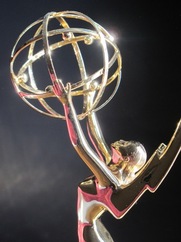
Brian also is a five-time Emmy award-winning Public Television writer / narrator.  He is principal writer and narrator of UNC-TV’s popular "Our State" magazine series, on the air since 2003.  His distinctive sound has been heard on many hundreds of radio spots and client videos since the 1970s.  People say he has a “Mercedes voice” and sounds a bit like Charles Kuralt, which Brian considers a welcome ... but happy ... illusion.


0 Comments

A New Tagline For OJ?

8/22/2014

0 Comments

 
PictureImage © by Brian E. Faulkner
Keywords:  tagline, taglines, orange juice, OJ, soft drinks, carbonated soft drinks, cola, soda, competitive advantage, brand story

I
t’s hard to imagine.  Americans are turning away from orange juice!  Not in huge quantities, mind you, but the trend definitely is down, according to a FoxBusiness story online. August sales data from Nielsen and the Florida Department of Citrus revealed a drop in volume of 9.2% (gallons) vs. a year ago.  Dollar sales were down 5.4%.

What’s that all about?


Cost is one factor.  A gallon of OJ ($6.44 average retail, up 4.1% over last year) now costs almost twice as much as a gallon of gas ($3.45 according to AAA).  A bacterial disease also is making the revered breakfast staple more expensive by reducing fruit production, says Florida Department of Citrus spokesperson David Steele, III. 

But one of the biggest factors in diminished sales seems to be that old bugaboo, sugar.  Another may be misplaced attention. 

“Nutritional experts have been advising against the sugary fruit drink,” reveals Gabrielle Karol in her FOXbusiness story. She cites Alissa Rumsey, a registered dietician and spokesperson for the Academy of Nutrition and Dietetics, writing that she’s “definitely heard people say it’s affecting their decision whether to buy orange juice or not.”

Okay … but shame on the sugar police for picking on our orange juice!  As a friend said in discussing this story, “It ain’t exactly soda.”

True.  A 12-oz. soft cola soft drink has close to 40 grams of sugar.  A glass of orange juice (presumably 8-oz.) has about 21 grams of the sweet stuff -- not added sugar, mind you (like high fructose corn syrup), but the natural occurring variety.  If my math is right, a 12-oz. glass of OJ would have approximately 31 grams of sugar.  A small cup of Greek yogurt in my fridge has 14.  A tablespoon of my favorite Morello Cherry “fruit spread” has 8g.  A dollop of ketchup, 4.  And an 8-oz. serving of apple cider (no added sugar) has 31g. 

So a breakfast-sized serving of OJ (probably more like 4-oz) compares favorably with other sweetish fare – and it’s good for you to boot -- especially compared to the real dietary demon: soft drinks, which are sugar bombs with zero nutritional value.   

It could be that OJ simply has lost its cool - if it ever had any (I thought OJ was great when I was eight). But carbonated soft drinks have been the beneficiaries of billions of dollars worth of artificially maintained cool over the years.  And today we consume soft drinks in shamefully large annual quantities as part of the "American lifestyle”. 

So maybe what OJ needs (the carbonated beverage, not the celebrity criminal) is an attractive new tagline – not to mention some relief from dieticians who appear to have nothing better to do than pick on a true-love product like orange juice.  (To be fair, the dietician quoted in this story recommends eating whole oranges instead of drinking orange juice, for the fiber content and because the sugar is less concentrated.) 

As for OJ's new tagline, I thought immediately of The Un-Soda.  But that’s too 7-Uppy sounding.  So what about these possibilities:

Orange Juice:  The Anytime Sunshine Drink.
Orange Juice:  Made by the Sun, Enjoyed by You.
Orange Juice:  The Best Way Start to Your Day … Under the Sun.

No doubt other good ideas will pop into readers’ minds.   Meanwhile, OJ:  Don’t let the bullies get you down.

TakeAway:  The OJ trial taglines above reveal key ingredients to be considered in giving birth to a tagline that clearly communicates competitive advantage, invites people into the brand story and makes future customers want what you have – without wasting a word.  A tagline must be:

  1.  Simple.   
  2.  Direct.
  3.  Compelling.   
  4.  Authentic.  
  5.  Strategic.
  6.  Personal.
  7.  Meaningful.  
  8.  Visual.
  9.  Memorable.
10.  Enduring.

Notice I didn’t include “creative.”  There are too many clever -- but empty -- taglines already out there. 

Content © by Brian E. Faulkner

About Brian Faulkner:

Brian Faulkner is a content writer and Key Message expert.  He helps clients come up with words to set their businesses, brands and products apart and attract the customers they want most.  His strategic insights, and the words that go with them, have made a significant, often immediate difference for client companies over many years.  His "sweet spot" is smaller to moderate sized consumer products, retail, service and manufacturing companies that may have struggled to find just the right words to position their business, brands or products to competitive advantage:

>  blogs to establish you as the thought leader / authority in your business category
>  case stories that communicate your sales successes and invite prospect inquiry
>  testimonials that showcase customer / client satisfaction in 1-2 short sentences
>  positioning statements to guide business development & marketing
>  landing page copy to set your business or brand apart in a compelling way
>  tagline development to attract the interest of your most qualified prospects

Brian also is a three-time Emmy award-winning Public Television writer and narrator of over 100 segments for UNC-TV’s popular Our State magazine series, on the air since 2003.  

0 Comments

TaglineS, Positioning and the Aflac Duck.

8/8/2014

0 Comments

 
Picture
Is the Aflac Duck still a marketing asset, or has the brand icon become so silly that he deflects attention from the company’s message?

I loved the Duck at first.   His arrival back in 2000 was a hoot.  You’ve got to hand that to talking ducks, especially ones that can almost pronounce the company name.  He was fresh, he was cute.  He quacked me up -- and was destined for advertising stardom.

But has he finally lost his duck go-power?   Partially.

The Duck reminds me of Joe Namath, the New York Jets star quarterback who Hanes Hosiery hired to do a TV spot for a new product called Beautymist 40 years ago.   

The camera panned along a pair of slender legs sheathed in the product while a perky woman who sounded like she was about to break into laughter talked about how Beautymist makes any legs look like a million dollars.  Then we see it’s really Joe.  The commercial was hugely successful.   Recall was out of this world – for Joe Namath.   Hardly anybody remembered the product.  

In contrast, the Duck worked for Aflac right out of the box.  People associated the brand with him immediately.  But even as the Duck worked his creative magic, it was hard to discern from the commercials what Aflac actually did – at least for me.  Even today, I had to go to Wikipedia to remind myself that Aflac sells different types of insurance and is best known for the supplemental kind offered through employers – insurance that pays expenses not covered by existing major medical coverage. 

Interestingly, their Web site wasn’t much help until I ventured well beyond the landing page.
It’s astonishing how little product positioning Aflac appears to have included in their spots over the years, as if curiosity alone will drive prospects to inquire -- even though the Duck supposedly has been quacking about product since 2009.  A strategically focused, well-stated tagline could have knocked it out of the park for Aflac and put a productive coda on the Duck’s antics long ago.   Viewers would have “got” Aflac’s strong benefits and unique distribution channel (although many people probably Googled the name and figured that out for themselves).

In a recent MediaPost article, columnist Steve Smith seems to disagree with me -- I think. 

He cites a TV spot about quick claim resolution in which the Duck “highlights the competency of the brand by contrasting it with the duck’s ineptitude in all other endeavors.”  In other words, the Duck acts the fool to introduce an Aflac product feature, like “a near-silent comedian trading on a string of sight gags.” 

Smith then recommends “leveraging the duck more effectively” on Vine and Instagram.  In other words, export the silliness to social media where it can be broken into bits and enjoyed ad nauseum.  Thus, the writer (who also is a digital media critic and a columnist for Mobile Marketing Daily) presumes that the Duck remains effective in a slapstick, “idiot savant” sort of way. 

There clearly is a market for silliness or there wouldn’t be so many cat videos on YouTube.  But as a brand spokes-icon, the Duck seems to have lost his way.  He’s gotten sillier and sillier, taking more and more attention away from the product in a situation where the brand desperately needs to communicate a key message.  The Duck’s original mission was elegantly simple: create awareness of the brand name.  But now it seems that he has almost become the message.

The Duck is no more Aflac’s message than Joe Namath was Beautymist’s message, although the Duck and the brand are now practically indistinguishable.  His function should be to lay out the welcome mat for the message but not overwhelm it.  He should make his entrance, do his bit and exit stage right.

Even so, the Duck clearly has produced results for Aflac – in a let’s “run the damned idea into the ground until every blessed soul in America is familiar with an otherwise obscure personal insurance product” sort of way, as Smith puts it.  “Sometimes frequency trumps creative cleverness,” he concludes -- although the Energizer Bunny might not agree.

But think how much more effective (and less dependent on frequency) Aflac's advertising would have been had the Duck set the stage for a powerful tagline that amplified their brand message and prompted even more qualified prospects to inquire about their product.  

“It all seems to be a slightly tortured road to underscore the brand’s point,” Smith writes, commenting on the most recent Aflac spot, in which the character does poorly at Yoga.  I couldn’t agree more.  But then he stretches that point by suggesting that the Duck’s antics force the viewer to “make some sense of the online slapstick and engage more deeply in order to make the tiny logical hop to the brand message.”

I don't quite buy that.
  Aflac needs to crank the Duck back and focus more on brand positioning and product benefits.

TakeAway:  Clever is never enough.

Content © by Brian E. Faulkner

Tags:  tagline, key message, Aflac, Aflac Duck, Hanes Hosiery, Beautymist, Joe Namath, Energizer Bunny, YouTube, cat videos

AbouT Brian Faulkner:

Brian Faulkner is a content writer and Key Message expert.  He helps clients come up with words to set their businesses, brands and products apart and attract the customers they want most.  His strategic insights, and the words that go with them, have made a significant, often immediate difference for client companies over many years.  His "sweet spot" is smaller to moderate sized consumer products, retail, service and manufacturing companies that may have struggled to find just the right words to position their business, brands or products to competitive advantage:

>  blogs to establish you as the thought leader / authority in your business category
>  case stories that communicate your sales successes and invite prospect inquiry
>  testimonials that showcase customer / client satisfaction in 1-2 short sentences
>  positioning statements to guide business development & marketing
>  landing page copy to set your business or brand apart in a compelling way
>  tagline development to attract the interest of your most qualified prospects

Brian also is a three-time Emmy award-winning Public Television writer / narrator.  He is principal writer and narrator of UNC-TV’s popular "Our State" magazine series, on the air since 2003.  His distinctive sound has been heard on many hundreds of radio spots and client videos since the 1970s.  People say he has a “Mercedes voice” and sounds a bit like Charles Kuralt, which Brian considers a welcome ... but happy ... illusion.


0 Comments

Creating Brand Advocates: A Marketing Lesson From the Piano WOrld.

7/7/2014

0 Comments

 
PictureImage © by Brian E. Faulkner
Pianos, especially grand pianos, have the misfortune to all look pretty much alike.  From ten feet away, it’s hard for most of us to tell the difference between one black grand and the next black grand.   The relatively uniform look from one instrument to another is what prompts makers like Steinway and Yamaha to emblazon their names on the sides of their concert pianos in very large letters, hoping that the audience’s eyes – not to mention TV cameras – will linger there a little longer.

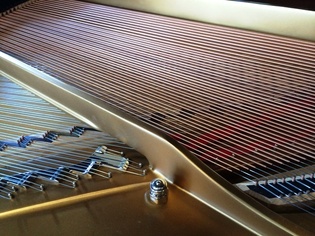
Go to a piano store and lift the lid on a grand of any size. Unless you are a true piano aficionado, for whom even the slightest difference between instruments can be an endless source of amazement and delight, you will find a golden plate (or harp) crisscrossed by an array of bronze and silver colored strings contained within a hefty case that makes that instrument look a lot like the one next to it. However, pianos are anything but alike in tone and touch, the primary criteria pianists use to evaluate the world’s best instruments – mostly hand-crafted in Europe but also including two premier quality holdovers from piano’s so-called golden age in the U.S., Steinway & Sons and Mason & Hamlin.  

Even so, top-tier piano makers typically describe their products in technical rather than tactile terms. Surprisingly, hardly any differentiate their instruments by their tonal palette.   

“To most piano buyers and owners,” writes Larry Fine in his publication, The Acoustical and Digital Piano Buyer, “a piano's tone is probably its most important aspect, but also the most difficult to quantify or describe.”

“There’s only so much that words can say about piano sound,” agrees Eric Johnson, a Registered Piano Technician and piano industry veteran with an MBA from Cornell who has prepped and tuned pianos for “some really great pianist in some really great concert halls,” including Carnegie, Avery Fischer, Alice Tully, Detroit, Chicago, LA, and San Francisco.   (http://www.ericjohnsonpianos.com/ )

“Differentiating one piano from another is a tough thing,” he says, “which is why copywriters so often fall back on design and build processes and brand history.”

So how do piano makers communicate their performance difference?  Mostly they don’t, knowing that playing and listening to pianos is largely a subjective experience.  They’re confident enough in their products to leave praise about tone and touch to the players of their instruments, people who are not shy with their opinions and likely will have gone through an exhaustive audition process before selecting their piano.  The makers then reflect the experience of these brand advocates back to the marketplace, where future buyers will read or hear the accolades.

But words mean different things to different people.

“You can say one piano is bright and another is warm, one is powerful, another is lyrical,” notes Johnson.  “But that distinction is made in the mind of the player.  I see that every time somebody tries to describe some uniquely personal combination of tone and touch they want me to coax from their instrument.”

PictureArtcase Bösendorfer designed by glass artist Jon Kuhn
Of course, people purchase pianos for many reasons, including exotic veneers, intricate decorative work and prestige names.  But the deep difference between instruments truly becomes apparent when their 12-thousand or so parts begin to make music together. Until that happens, even the most lauded piano is just an expensive piece of furniture.  

The artists who make the music aren’t likely to mention how their piano’s hammers are made or point out whether the bridge cap grain runs vertically or horizontally.  But they can close their eyes and know what their piano sounds like.  They can hear it in their dreams … sometimes even before they find that “perfect piano.”

“It is uniqueness that I seek,” says acclaimed classical artist Valentina Lisitsa in praise of Vienna's famed Bösendorfer.  “Bösendorfer gives me a unique voice, unique palette of musical colors, unique tools to achieve my vision.”

Larry Fine describes Bösendorfer in more prosaic terms:  “Perhaps the world's most expensive piano inch for inch, Bösendorfer grands make an eloquent case for their prices. They are distinctive in both appearance and sound, and are considered to be among the finest pianos in the world.”

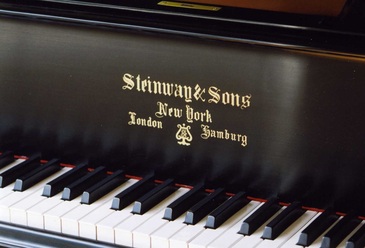
Picture1890s Steinway - Image © by Brian E. Faulkner
Emanuel Ax says this in praise of Steinway & Sons: "When one plays a Steinway, there is a warmth and nobility in the sound that is unequalled by any other instrument."

And here’s Fine’s take:  “Steinway pianos at their best have the quintessential American piano sound: a powerful bass, a resonant midrange, and a singing treble with plenty of tonal color. Although other brands have some of these characteristics, it is perhaps the particular combination of harmonics that comprise the Steinway's tonal coloration that, more than anything else, distinguishes it from other brands and gives it its richness, depth, and power.”

DO Your Customers SING YOUR SONG?

What is the marketplace saying about your business, brand, product or service?  

    > Do your customers or clients sing your praises?

    > Does what they have to say enhance or conflict with what you communicate in your tagline, marketing
       materials, advertising, positioning / capabilities videos and sales conversations?    

    > Do their words prompt others to want what you have, to experience your product’s performance for
       themselves? 

If you don’t know the answers to these questions, take a note from the world of high performance pianos -- and start listening.

TakeAway:  Customers can be your best brand advocates.  So can the people who write articles that your best prospects will read.  

Tags:  Steinway & Sons, Yamaha, Mason & Hamlin, Bosendorfer, Eric Johnson, Registered Piano Technician, Larry Fine,
The Acoustical and Digital Piano Buyer, Valentina Lisitsa, Emanuel Ax

Content © by Brian E. Faulkner

About Brian Faulkner:

Brian Faulkner is a content writer and Key Message expert.  He helps clients come up with words to set their businesses, brands and products apart and attract the customers they want most.  His strategic insights and the words that go with them have made a significant, often immediate difference for client companies over many years.  His "sweet spot" is smaller to moderate sized consumer products, retail, service and manufacturing companies that may have struggled to find just the right words to position their business, brands or products to competitive advantage:

>  blogs to establish you as the knowledge source / authority in your business category
>  case stories that communicate your sales successes and invite prospect inquiry
>  testimonials that showcase customer / client satisfaction in 1-2 short sentences
>  positioning statements to guide business development & marketing
>  landing page copy to set your business or brand apart in a compelling way
>  tagline development to attract the interest of your most qualified prospects

Brian also is a three-time Emmy award winning Public Television writer and narrator of UNC-TV’s popular "Our State" magazine series, on the air since 2003.  His distinctive sound has been heard on many hundreds of radio spots and client videos since the 1970s.  People say he has a "Mercedes voice" and sounds a bit like Charles Kuralt, which Brian considers a welcome ... but happy ... illusion.

0 Comments

Small North Carolina Business Changes With THe Times.

6/16/2014

2 Comments

 
PictureGoodman Millwork Phone Nook
Franco Goodman knows about change.  The millwork firm his family operates “has gone through enough change for three companies.  "Our customer base has changed ten times over 50 years,” Goodman says, and the key to its continuing success is “nimbleness – market flexibility.”

He should know.  Evidence of market change can be seen throughout Goodman Millwork’s multi-acre site in Salisbury, North Carolina, where a good-sized tract of vacant land that once contained a thriving lumber yard lies baking in the June sun and a steam engine that once powered the place waits patiently inside the millwork plant for a new assignment. 

The company was founded in 1907 when brothers Enoch and Linus Goodman got tired of working in other people’s businesses and started one of their own: a portable sawmill.  Their competitive advantage was hauling the mill to the trees instead of asking the woodlot owner to haul his trees to the mill. 

Ingenuity like that – along with the brothers’ insistence on handshake country quality – earned them a reputation as the kind of folks you could count on, which they put to work building Goodman Lumber Company.  In time, they located the business on a site in town after their wives insisted on a more permanent setup not so far out in the country.  The slogan (tagline) that served them for the next 70 years or so was Everything for the Builder, From the Foundation to the Roof. 

Goodman Lumber Company thrived in serving builders’ needs, especially as other businesses prospered around them and created demand for housing, among them the Food Lion chain of grocery stores, which began life in Salisbury and remains headquartered there.  The Goodmans began building homes themselves in the ‘20s, a natural step for an ambitious family that needed more customers for its lumber as the world changed around them.

A change that arose in the 1970s was the advent of big box stores that sold framing and lumber, which began to eat away at Goodman Lumber Company's business.  They responded by looking to other lumber- and building-related markets for opportunity, including custom made woodworking for high-end residences, churches, banks, clubs and restaurants.  For a while, they even built room settings for furniture manufacturers to display their products at trade shows like the High Point Market.  In 1982, the company's name was changed to Goodman Millwork, Inc. to more precisely reflect the value-added nature of their business.

“Now we’ve come to another turning point,” says Franco Goodman.  “We’ll continue to look to our present customer base for business, including architects and interior designers, whose clients want only the finest quality millwork, doors and windows for their renovations and new construction.  And we're also looking to the Internet as we reach for yet another new market.  That’s where at least part of our future lies,” he declares, pointing with pride to pictures of his two sons, now working their way into the family business. 

"We can’t see the end from the beginning,” he acknowledges, “but at least we can make a start."

Nooks And A Necessary Cabinet.

PictureNecessary Cabinet
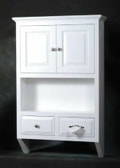
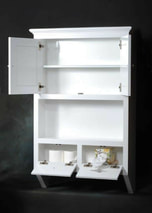
One thing they’ve started is a new line of distinctive wall furniture that extends Goodman Millwork's reach nationwide for the first time by way of the internet.  The line includes two styles of phone nooks with designs reminiscent of early- to mid-20th century homes and a wall-mounted nest of bathroom shelves and drawers that Franco Goodman calls a Necessary Cabinet.

“We made one of these for a customer, and it turned out so good we decided to add it to the line of architecturally inspired phone nooks we were developing," he says. "We didn’t quite know what to name it – other than a bathroom storage cabinet (it’s placed above the toilet tank), but then someone suggested we call it a necessary cabinet.  

Back in colonial days, he explained, people used to call the place where they took care of certain kinds of personal business the necessary room.

Picturehttp://goodmanmillwork.com/featured.html
Everybody needs a necessary cabinet – they just don’t know it yet!  And a phone nook, if for no other reason than to have somewhere to plug in their phone charger and hang their car keys.  And as Goodman Millworks’ new line of heritage-inspired products progress and prosper, you can be sure one of thing: that Franco Goodman (and sons) will soon take note of the next market change coming down the pike and figure a way to wrap  it into their business.

TakeAway:  Build on today’s change to create tomorrow’s business success.

Tags:  Goodman Millwork, Food Lion

Content © Brian E. Faulkner.

About Brian Faulkner:

Brian Faulkner is a content and strategic communication writer.  He helps clients come up with words to set their businesses, brands and products apart and attract the customers they want most.  His strategic insights, and the words that go with them, have made a significant, often immediate difference for client companies over many years.  He thrives on strategic communication problem solving, complex subjects, new ideas, concepts-as-products, challenging marketing situations and demanding deadlines.  His "sweet spot" is smaller to moderate sized consumer products, retail, service and manufacturing companies that may have struggled to find just the right words to position their business, brands or products to competitive advantage.
PictureImage © Brian E. Faulkner.

Brian also is a five-time Emmy award winning Public Television writer and narrator  of UNC-TV’s popular Our State magazine series, on the air since 2003.  His distinctive voice has been heard on many hundreds of radio spots and client projects since the 1970s.  People say he sounds a bit like Charles Kuralt, which Brian considers a welcome but happy illusion.


2 Comments

The Airlines oR DMV - Which is Worse?

6/13/2014

0 Comments

 
PictureImage © by Brian E. Faulkner
Flying commercial has been compared recently to waiting in line at the Department of Motor Vehicles office to register your car.   So which of the two has gotten so much worse that it invites the comparison?

Nearly every DMV wait I’ve experienced through the years has been annoying, hot, boring and lengthy, so not much has changed there.  In fact, I recall one especially memorable clerk in Connecticut back around 1970 whose snarl was genuinely world class.  She did not enjoy being helpful.  But most DMV clerks I’ve encountered have been helpful.  Just recently, a young woman here in North Carolina was not only helpful but pleasant as she sorted out my registration/ inspection mix-up, despite the long line of grumbly folks awaiting her attention.   

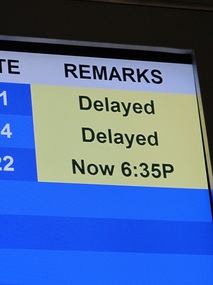
To be sure, life can dish out far greater unpleasantness than waiting in line at the DMV.   But the experience of traversing a busy airport these days apparently is running neck and neck with the DMV for customer dissatisfaction.

Flying used to be fun – back when airliners had propellers and you were eight years old and didn’t know any better.   In 2014, flying commercial (as distinct from renting or owning your own airplane and getting to fly whenever and wherever you want) can be a white knuckle experience, from the check-in line to the security line to the boarding crush to the two-hour delay on the tarmac to maybe getting to your destination on time or maybe not but still having to deal with the baggage crap-shoot no matter what.   Unless, that is, you're a passenger on Southwest Airlines, which has managed to fly above its competitors by offering a straight-ahead, efficient, value-priced product with fewer customer surprises.

Of course, in between the many hassles that greet the flying public today is the flight itself, which has morphed into a crammed-in-your-seat, uncomfortably public experience that nobody in their right mind would recall fondly unless they maybe lucked out and hooked a spot next to Harrison Ford or Angelina Jolie who had been forced to fly coach because this was the last flight out to East Sagebrush, Texas, where they were shooting a Western first thing in the morning.

Every business has its challenges, but some provide a greater sense of reward than others – compare the commercial airline business to selling flowers, for example.  The big challenge of flower selling may be running out of red roses, but as long as the stock holds, delivering bouquets of happiness can be fun.  Ideally, the airline business also should be about delivering happiness.  Instead, the challenge of most airlines these days appears to be annoying as few customers as possible.   Although I’ve never done it, selling flowers seems like it might be a pleasure compared to working an airline ticket counter.

From the time you go online to buy your ticket to the time you and your fellow passengers have to wait as some unthinking clod attempts to stuff his slightly oversized carry-on into the slightly undersized overhead bin while the harried flight attendant tries to introduce some discipline, pleasure is not usually what comes to mind when thinking about commercial air travel, with its ever-skinnier seats and the exorbitant fee they charge to make sure your extra suitcase actually gets on the plane with you.  I’ve even read lately that some airlines are considering shorter lavs to save space – you don’t mind bending over to do your mid-air business, do ya?  

It makes you wonder, What are they thinking?! when airlines slight passenger comfort or convenience to shave a buck or two off their fares.

“Offering our low fares requires doing some things that some people complain about,” Spirit CEO Ben Baldanza recently wrote in a letter to Bloomberg Businessweek, “—more seats on our planes with a little less legroom, no Wi-Fi or video screens, and no refunds without insurance; however, these reduce costs which gives our customers the lowest fares in the industry.  Judging by the number of customers on our planes and repeat customer rate,” he concluded, “most people like this tradeoff.”

This strikes me as long-range customer service suicide. 

So back to the comparison between flying and the DMV. 

“Forty-two percent rated the DMV as worse than a busy airport, while 40 percent said being in a packed airport is worse than standing in line to get a new driver's license,” according to an article by CNBC.com’s auto and airline industry reporter, Phil LeBeau.  "No doubt the airline industry is doing a better job of pleasing passengers, but there still is a lot of room for improvement," LeBeau writes, quoting J.D. Power's Rick Garlick. "Satisfaction is improving, but it's a stretch to say passengers are truly happy."

Now there’s an understatement.  

It’s also an understatement to say that the airline business is tough and complex.  Margins are thin at best and beset by high fuel costs and other profit-munching expenses.  As Richard Branson so wryly put it, "How do you become a millionaire?  Start as a billionaire and then buy an airline.”

Even so, the knack of the airline business to rile up its customers astonishes me no end, despite the often herculean efforts of individual employees to do the opposite.   In light of this unfortunate reality, I have created a pair of taglines to dramatize the difference between the two nearly equal customer service experiences.

DMV Tagline:  Bear with us, it will be over in 15-20 minutes.

Commercial Airlines Tagline:  Bear with us, it will never be over – and have a nice flight.

TakeAway:  When the service in your industry descends to joke status, there’s an opportunity for somebody to  break the mold and create real competitive advantage.  Will that be you … or your competitor?  

Content © by Brian E. Faulkner


About Brian Faulkner:

PictureImage © by Brian E. Faulkner
Brian Faulkner is a Key Message expert.  He helps clients come up with words to set their businesses, brands and products apart and attract the customers they want most.  His strategic insights, and the words that go with them, have made a significant, often immediate difference for client companies over many years. He thrives on strategic communication problem solving, complex subjects, new ideas, concepts-as-products, challenging marketing situations and demanding deadlines.  His "sweet spot" is smaller to moderate sized consumer products, retail, service and manufacturing companies that may have struggled to find just the right words to position their business, brands or products to competitive advantage.


Brian also is a three-time Emmy award winning Public Television writer and narrator of UNC-TV’s popular Our State magazine series, on the air since 2003.  


0 Comments

A Rental Car Company That Doesn't Suck -- and a Powerful Tagline that says so!

5/29/2014

2 Comments

 
Picture
You know the drill.  Whack yourself repeatedly over the head with a board, and if things work out the way you intended, you may soon find yourself in a slick new rental car grooving down the highway toward your out-of-town meeting or hideaway vacation spot.   Or … you could end up with a ride that pulls to the right and smells like last week’s tacos.

For many of us road-weary business types, the car rental process approaches legalized torture -- forget about waterboarding.  Try Alamo instead.   I did, on three trips to Seattle to see my daughter and her family.   I don't recall why I chose Alamo but began to regret the decision almost immediately.

Alamo turned out to be the only rental car company that didn’t have a counter at Sea-Tac, and that still may be the case for all I know.  Instead, we were directed to the parking garage where humidity hung in the air like doom and where we had to follow a series of yellow lines past all the other rental companies’ cars to an office hidden in the far back corner – while dragging a huge sea of baggage along behind us.  The fancy automatic check-in machine didn’t work, so we (that is, I) joined the line with other similarly-entangled Alamo “customers” to wait our turn.

The clerk was great, however, filled with personality and can-do spirit -- despite the late hour and clearly faced with someone who’d arrived at her counter with the vigor of a sweat-soaked sock and halfway short of breath.   She took care of the paperwork lickety-split and walked us out to our car.   Each time we returned to Seattle, we rented from Alamo for some strange reason – perhaps because we already knew how to find them (no sale there) but more likely because we hoped that same helpful young woman would be working, but it was not to be.

Alamo -- to their credit -- rose to the occasion once more but then totally and irrevocably blew it. 

Credit:  A drunken, uninsured young woman dressed to party lost control of her convertible on a narrow side street, slammed into a parked VW (reducing it to junk) and then careened across to our Chrysler 300 and neatly removed the driver’s side parking light before jumping from her car and weaving herself away down the street.   Oddly, the rental wouldn’t run after that, so Alamo sent a wrecker with a sub on the hook, exchanged cars without a hassle, and all was well.   Until later.

Debit:  The woman in the convertible proved to be less than a model citizen and Alamo’s recovery unit didn’t get a dime out of her.  So my insurance company (State Farm) paid up.  And then Alamo began hounding me and hounding me and hounding me for a $100 balance.  They were merciless.  The same collection guy (Steven) called so often we almost got to be phone pals, but no matter how positive the conversation, Alamo’s computer kept spitting out nasty notices.  They finally handed it over to a collection agency, which prompted me to pay it off.

Goodwill Gone.

Think of the goodwill Alamo could have purchased for that $100.  Now, when they invite me online to “Save $10 on an Alamo rental this weekend,” I sneer at the screen and threaten myself with serious injury should I deign do business with them again.

Now flash forward to last night, while scanning one of my favorite pre-sleep diversions:  Jalopnik, an oddly irreverent but entertaining web site about cars and car owners (tagline:  Drive Free or Die).   An article describing the top ten auto rental companies did not include Alamo.  Ha!

But it did introduce me to Silvercar, a disruptive industry upstart from Austin with a tagline that screams competitive advantage!   It also promises a novel and entirely unexpected experience:  Car Rental That Doesn’t Suck.

Car Rental REimagined.

Silvercar only rents silver cars.  Audi A4s.  You reserve your silver A4 (generously equipped with all the digital doodads you need these days) via smartphone app.  Then you show up at your destination, unfortunately only Austin, Dallas-Fort Worth, Los Angeles and San Francisco so far, where you set off immediately in your A4 with ZERO hassle.  Or, if you’d prefer, you could hang out a while in a customer suite that’s been described as a cross between a W hotel and an Apple store.

“We want to do for rental cars what iTunes, did for music,” CEO Luke Schneider told Wired in a pr-launch (October 2012) interview -- he had been CTO with another paradigm-buster, ZipCar. 

Here’s the way Silvercar tells their story online:

“From reservation to return, Silvercar has re-imagined car rental.  What does that mean?  It means that we have worked hard to eliminate many of the hassles that have plagued this industry for years.  But we haven't just improved the car rental process; we have truly re-imagined what it could (and should) be. We like to think of it as bringing the "wow" back to car rental.  And we think we're onto something ... because at Silvercar, we don’t believe in ‘average’ or ‘sometime.’  We know you expect a world-class car, every time.”

Having only one car to choose from (everybody gets an upgrade) is pure genius.   And so is their gradual rollout plan – not to mention the fun they seem to be having building their business.  What other rental car company suggests that its customers strap a GoPro to their car, record their experience and post it to Silvercar’s zany Trunk Show blog?  Or has five favorite movie car chase videos posted on their Web site for people to watch?   Can you imagine Hertz or Avis doing that?

There are no lines and no hassles – even the old gas fill-up bugaboo has been done away with.  Your Silvercar mysteriously knows how much fuel you need and that amount is calculated and added to your bill automatically (at local pump prices plus five bucks).   The price seems right – about what you’d pay for a full-size rental with those other guys.   In short, Silvercar has nailed it in a business that’s been stuck on stop for a long time.

“The cars are great and the whole process is laughably easier than conventional rental car companies,” reads one happy reader testimonial.   So take that, Alamo!

As for me, I have but one question for Mr. Schneider:  When is Silvercar gonna show up at Sea-Tac?  

"Discovery consists of seeing what everybody has seen and thinking what nobody has thought."
- Albert von Szent-Gyorgyi, Nobel Prize-winning Hungarian physiologist and co-discoverer of Vitamin C -

TakeAway:
  A product that makes a clear and compelling difference in customers’ lives can disrupt and scatter its competitors.   If you have a competitive advantage like that, communicate it imaginatively and with gusto.
Tags:  Alamo, VW, Chrysler, Chrysler 300, State Farm, Silvercar, Audi A4

Content © by Brian E. Faulkner.

ABOUT BRIAN FAULKNER:

Brian Faulkner is a Key Message expert.  He helps clients come up with words to set their businesses, brands and products apart and attract the customers they want most.  His strategic insights, and the words that go with them, have made a significant, often immediate difference for client companies over many years.  He thrives on strategic communication problem solving, complex subjects, new ideas, concepts-as-products, challenging marketing situations and demanding deadlines.  His "sweet spot" is smaller to moderate sized consumer products, retail, service and manufacturing companies that may have struggled to find just the right words to position their business, brands or products to competitive advantage.
Picture


Brian also is a three-time Emmy award winning Public Television writer
and narrator of UNC-TV’s popular Our State magazine series,
on the air since 2003.

2 Comments
<<Previous
Forward>>


    sample blog:

    This is a sample blog  for writer Brian E. Faulkner.  It presents stories about brands that do (or don't) communicate competitive advantage effectively. Stories have been gleaned from the business press, personal experience and occasional interviews. New articles are added from time to time, and every so often there will be a post of general interest -- about things like success, passion, social trends, etc. 

    Author

    Brian Faulkner is a writer and strategic communication consultant who helps business clients explain their competitive advantage in compelling and enduring ways.
     
    He also is a five-time Emmy award winning Public Television writer & narrator for a highly-rated and well-loved magazine series.

    Picture
    Image © by Brian E. Faulkner

    Categories

    All
    Advertising
    Authenticity
    Brand Branding
    Brand & Branding
    Brand Names
    Business Culture
    Competitive Advantage
    Competitive Advantage
    Competitive Factors
    Content
    Creativity
    Culture
    Customer Satisfaction
    Differentiation
    Experience
    Flexibility
    Future
    Innovation
    Key Message
    Leadership
    Luxury
    Marketable Truth
    Marketing
    Passion
    Politics
    Positioning
    Price
    Quality
    Sales
    Service
    Small Business Marketing
    Story
    Strategic Thinking
    Taglines
    Team
    Technology
    Trends
    Values
    Vision

    Archives

    July 2019
    January 2019
    November 2016
    February 2016
    October 2015
    September 2015
    August 2015
    July 2015
    June 2015
    May 2015
    April 2015
    March 2015
    February 2015
    January 2015
    December 2014
    November 2014
    October 2014
    September 2014
    August 2014
    July 2014
    June 2014
    May 2014
    April 2014
    March 2014
    February 2014
    January 2014
    December 2013
    November 2013
    October 2013
    September 2012
    October 2011
    March 2011

    RSS Feed

Content © by Brian E. Faulkner.   All rights reserved.