A BLOG ABOUT COMMUNICATING COMPETITIVE ADVANTAGE
  • Brian Faulkner
  • Blog
  • CONTACT

Don't Mess With Your Brand Story.

4/29/2015

0 Comments

 
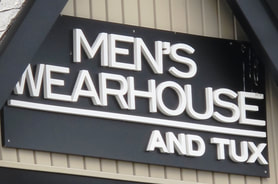
PictureImage © by Brian E. Faulkner
Tags: Microsoft, NPR, George Zimmer, Men’s Wearhouse, Joseph Abboud, Jos. A. Bank, Ford Motor Company, GM, Cadillac, Buick, Ford, Lincoln, Apple, Coca-Cola, New Coke
Every brand, company, product or service has a story – just like people.  People’s stories are a combination of image and reputation, which can be anything from well focused to wildly irresponsible.   Some businesses may be well-positioned (in a controlled, strategic sense) while others cast their reputation to the wind, allowing the marketplace to define who they are and what they represent.   Call it default positioning.   The example that most often comes to my mind is Microsoft, which hasn’t done a great positioning job.  There are many “Microsofts” out there, depending on who's doing the talking.  

Heard an interview with George Zimmer on NPR this morning.  His topic was paying people more, even at the expense of company profits.  But what grabbed my attention was his distinctive gravelly voice, the one he used on television when he was boss of The Men’s Wearhouse – you know the one:  

“You’re going to like the way you look. “I guarantee it!”  

Every spot had a story, and as leader-spokesperson, Zimmer was deeply imbedded in the Men’s Wearhouse image -- along with that famous tagline.  I can’t help but notice that the Men’s Wearhouse strategic positioning has become less distinctive since Zimmer was forced out, supposedly because of management disagreements.  Something’s missing from their advertising, and it’s not just Zimmer.   Despite the few recent Men’s Wearhouse spots featuring signature suit designer Joseph Abboud, their marketing seems focused more on price, like their long-time competitor, Jos. A. Bank, which Men’s Wearhouse purchased early in 2014 after a turbulent takeover battle.   

The takeaway here is that a strong brand story should not be discarded so readily, although I’m sure the Men’s Warehouse board thought long and hard about the strategic consequences of dumping Zimmer.   I find it discouraging, however, that they’ve fallen back on price advertising after such success with set-apart positioning, although it must be working or they wouldn’t do it.  But I’ll bet their margins aren’t as good as when Zimmer was hawking the wares, because price was hardly mentioned in his spots and, as I recall, Wall Street liked the stock.

I have several friends and acquaintances, each with a business in the same retail category.  Two of them ride a high-price wave supported by a brand story that's more than 150 years old.  They don’t have to sell on price and, as a result, get high margins.  Another friend sells the same type of high-end merchandise at market prices, although different brands.  His business story has been established for well over 50 years; customers seek him out because of his quality reputation.  Still others I know in that same business always seem to be wrestling with price.  They don’t command the margins they could because their business stories are indistinct.  They don’t have a Marketable Truth© to stand on. 

Both Ford Motor Company and GM currently are wrestling with their image stories.  GM is in the latter stages of rebooting its Cadillac brand to compete with the best German luxury performance sedans; they've had enough success that Cadillac is no longer seen as exclusively for oldsters seeking a luxury nameplate and plush ride.   Buick, another GM brand that used to have a fuddy-duddy image, is experiencing a surprising sales renaissance driven by rising demand in China, where the brand has become a status symbol.  Different time, different story.

Ford also is into a bit of image retooling of late.  Lincoln (finally!) is thinking about abandoning its confusing alphabet soup model designations in favor of real names like Continental and possibly even Zephyr.   All while Ford grapples with a negative quality blip brought about in recent years by a dashboard communication and entertainment system that has proven troublesome and hard to use – so much so that auto enthusiast Web sites are recommending that people wait ‘til a redesigned system comes out on the 2016 models later this year to purchase their new Fords and Lincolns.   

When I think of brand image, however, I think most often about Apple.  They were an upstart at first, but gradually built a business, operating system and reputation that out-shined the king of personal computers at that time, the venerable IBM.  Will gutsy moves into new product categories like luxury watches and even automobiles sour Apple’s reputation?  Not likely, because they’ve told and retold their brand story so well – and so long – that they’re as close to invincible as any business or brand out there.

Even so, in this day of social-driven media, there are new voices everywhere, and some percentage is quick to broadcast bad news.  One exemplary misstep marketers are quick to recall is the New Coke debacle of 1985, when Coca-Cola almost lost its way -- and that was before the Internet became so widely available.  This very day, April 29, 2015, online rumblings are afoot about a second brand of listeria-laden ice cream and a major beer maker’s label that seems to make light of rape.

Reputation or image -- call it what you will -- can bite you in the backside any minute … but also can help lead you to greatness.  All the more reason to consider whether your brand, business, product or service is solidly positioned in today’s uber-competitive, uber-critical world.

 TakeAway:  Shape your strategic position carefully.  And guard your brand story for dear life.

Content © by Brian E. Faulkner        
Marketable Truth © by Brian E. Faulkner


0 Comments

Getting Paid What You Ought.

4/16/2015

0 Comments

 
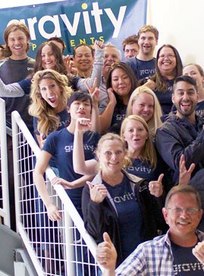
Picture- enthusiastic Gravity people -
American media has been all a-twitter lately about a young Seattle business leader’s decision to increase the pay of his employees to at least $70,000, even as the national conversation continues about increasing the minimum wage.

Under this 30-year-old leader’s imaginative plan, the pay of 70 out of 120 people who work at his company, Gravity Payments, and are not presently making that much money, will see their income rise by $5,000 per year until they reach $70,000.  They should all get there in 2017.  There’s also an immediate pay raise to $50,000 if an employee is not there already (average pay at the check processing firm now is $48,000). 

Why is CEO Dan Price making this move?

“I think CEO pay is way out of whack,” he says, tapping into the growing notion that CEOs make far too much money compared to the people who work for them.  These days that ratio is said to be about 300:1, with the average CEO salary reported in the $11-14-million range. 

“The market rate for me as a CEO compared to a regular person is ridiculous,” Price told the New York Times.  “It’s absurd.  My salary wasn't $1 million because I need that much to live,” he admitted (to ABC News), “but that's what it would cost to replace me as a CEO.  There is nothing in the market that is making me do it.”

So why did he do it?   Some talking heads accused Price of publicity seeking after the story appeared widely on cable and network news yesterday.  Others practically rolled their eyes at the absurdity of such a boneheaded move and suggested that his company would soon be out of business because he’s paying too much in salaries. 

Price himself says that he was led to the idea by conversations with friends who make $40,000 a year and find it a constant challenge to make ends meet, never mind get ahead.   Median U.S. household income currently is around $52,000, lower than before the recession.  In Seattle, median income is $15,000 more and the cost of living is much higher.  Real estate site Trulia.com reports that the average home in Seattle lists for $700,000 (and can be bid even higher in Seattle’s most desirable neighborhoods).  In contrast, the average U.S. home sells for around $175,000. 

But what prompted Price to make the move was a news story he came across suggesting that people need an income of $70-$75,000 to have enough money to live on and be happy, based on a 2010 Princeton University study.  Researchers discovered that “the emotional quality of an individual’s everyday experience, the frequency and intensity of experiences of joy, stress, sadness, anger, and affection that make one’s life pleasant or unpleasant” increases as income goes up – to about $75,000 a year, that is, where happiness apparently plateaus.

Price seemed refreshingly genuine in the few television interviews I’ve seen – and if a bit of an idealist, so what?  He’s earned the right to his private experiment in income equality; eleven years ago, he was a Seattle Pacific University student trying to start a business in his dorm room, where he no doubt consumed many more ramen noodle meals than steak dinners.

He also sees the generous pay raise as a good business move, if not in the short term certainly in the long run, “because I want the company to be sustainable even if something happens to me.” 

To help things along, he’s cutting his own pay to $70,000 and will leave it there until profits return to a level where the big paycheck can be supported once again.

"I may have to scale back a little bit,” Price admits, “but nothing I’m not willing to do. I’m single. I just have a dog.”  And still drives the old Audi he got from a dealer in return for services provided when his business was just getting underway. 

What About Minimum Wage?

Amid TV footage of joyous Gravity Payments employees celebrating their new good fortune, it seems instructive to consider the issue of a national minimum wage.  Several months back, I authored a post suggesting that “minimum wage should be stricken from our business vocabulary” in favor of a much more productive system of “performance pay put in place by employers.”  My take on the politically (and even morally) contentious issue of minimum wage was that paying people more does make sense -- if their wages reflect performance and potential.

Clearly, some people aren’t worth hiring at all – at any price.  But many others are, because given a reason (and the tools) to excel, they likely will.  Their pay should reflect their increasing value as they progress, as they grow into their jobs and help their employers attract more customers, become more efficient, expand, make more money, etc.  Business does not owe warm bodies a living, people who could care less about performance but believe that they are, indeed, owed a job.  Employers are not welfare providers.

Let’s say, like Seattle, our national government decrees a $15 per hour minimum wage and applies it to all employees everywhere in some time frame (Seattle’s is seven years) without tagging the raise to performance.   Some employees will grab the brass ring and fly because they are made that way while others shuffle along without a concern in the world.  These under-performers eventually should find themselves back on the street but likely will not, because "that wouldn't be fair".  Dan Price, on the other hand, is working toward a minimum wage of $70,000 at his company and is not likely, short of charity, to keep people on if they're not performing – at $70K or $48K or any price.  As I opined in my earlier blog post, if your performance excels, you should earn more.  If you're a slacker, however, content with just hanging around and collecting a paycheck, you should be re-introduced to the state of unemployment. 

So keep one eye on Seattle, as its government-decreed $15 minimum wage settles in.  And keep the other eye on Gravity Payments.  See which minimum wage one approach works out best.

TakeAway:  Your employees are a potential source of competitive advantage.  Pay them in step with performance, and you will succeed together.

Content © by Brian E. Faulkner

My earlier Minimum Wage Post:  http://www.brianefaulkner.com/blog/minimum-wage-should-be-stricken-from-our-business-vocabulary

0 Comments

Why Toyota's Camry Is Like The Velveteen Rabbit -- and Cadillac's CT6 Is Not.

4/6/2015

0 Comments

 
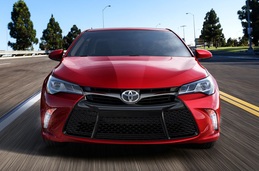
Picture- image courtesy of Toyota -
Tags:  Toyota Camry, Cadillac CT6, Buick, Ford Fusion, The Velveteen Rabbit

Two creative approaches to automobile advertising have caught my eye of late: spots on TV and online for Cadillac’s revolutionary new CT6 luxury performance sedan and a television / online campaign for Toyota’s competent but non-revolutionary Camry.   One campaign engages the mind, the other tugs at the heart.   One campaign is daring, the other is bold.   One is cool and self-centric, the other warm and other-centric.  Both ads are effective.

Let’s start with Toyota, for whom Saatchi, LA has created a series of spots declaring the heretofore ordinary Camry now to be bold – at least by association, because the car only plays a bit part in the ads.  The real drama happens in stories that wrap themselves around the car: 

A young woman finds B.B. King’s guitar in a storage unit, and after “tracking down a legend” in her Camry, returns it to him. 

Another young woman escapes from her wedding just in time, and the getaway car is … a Camry. 

A man comes to realize that “being a dad is more than being a father” as he reflects on those growing-up moments with his daughter, intercut with scenes of them together in a Camry.

Then there’s Sochi medalist Amy Purdy’s paean to her dad, who not only encouraged her through her many physical trials but donated one of his kidneys to save her life. 

Not to mention the spot featuring Amy competing, dancing and modeling as Mohammed Ali narrates. 
Picture- image courtesy of Cadillac -
This is heartfelt stuff.  And although the Camry spots barely move the cool-meter, they do a good job of whacking you in your emotional center (especially if you’re a dad) – and millions of people seem to like them given the YouTube plays they’ve racked up.   But bold? 

Like Cadillac and other auto brands (Buick has been notably successful), Toyota has been trying to crank up their style to generate wider appeal.  Will their “Bold” campaign help attract new buyers, as cars like Ford’s fast-selling Fusion (with a much cooler name) take a bead on Camry’s sales lead?

Marketing experts are divided.  Some say Toyota is headed in the right direction with their Bold campaign but that turning around brand impression takes years, if not generations.  Other say “not so fast,” a Camry is a Camry and no matter how good it may become, it was born to blend in.

Cadillac, too, is all about changing prospective buyers’ impression of their brand – and in recent years they appear to have been succeeding for the most part.  In fact, they appear to have just about exorcised the image of the slab-sided, boat big ‘80s and ‘90s models from people’s minds.  Short of buying up and crushing all the clunky old Caddys left on the road, about all Cadillac can do is (1) design cars that truly stand out in their market niche and (2) have something truly bold to say about them.

Thus, the CT6 “Dare Greatly” campaign, created by Publicis Worldwide, a low-key exercise in creative edginess that presents the car in SoHo, slo-mo style.  
  • “How does a fashion intern (Jason Wu) become an arbiter of style?” the spot asks.
  • “How does a college dropout invent the personal computer?” it asks of Apple co-founder Steve Wozniak.
  • “How does a director take 12 years to shoot a film?” the spot asks of “Boyhood” director Richard Linklater.
  • And in conclusion also asks, “How does a 112 year old carmaker reinvent itself?”

The CT6 launch ad, created by Publicis Worldwide and set to Edith Piaf singing Non, je ne regrettes rien (No, I regret nothing), presents thumbnail descriptions of “only those who dare” in a noir-like New York setting that evokes a sense of mystery and glamor as the newest Cadillac lurks in the background, almost as if an afterthought.   

One does not so much “like” this ad as inhabit it – that is, if you’re in the demographic that GM hopes will lust after this car, which has been designed to raise the game against their European competitors, not so much by emulating them but by establishing a new standard of automotive performance and luxury.       

The CT6 and Camry ads both wrap their product in an image they hope will attract buyers – Camry warms the heart and speaks of “love stuff” while Caddy quickens the pulse and addresses the “daring”.

Both carry off their creative well.  But only Cadillac’s approach seems authentic. 

Ironically, I prefer watching the Camry spots (which makes me older-than-cool and more in their target market).  I like Camrys, which perform their middle-ground, mid-sized sedan function admirably and without pretending to be cool. When I rent one on an out-of-town trip, I am assured of enjoying a competent, quality, unpretentious ride.  Which is what makes a Camry a Camry and part of the reason that nameplate remains the best-selling one in the U.S.  

I think of Margary Williams’ story of The Velveteen Rabbit when considering whether Toyota may be missing the strategic mark with its otherwise well-executed Camry creative.  You may recall the story, where a stuffed bunny yearns to become “Real”. 

“Real isn't how you are made,” the rabbit is told. “It's a thing that happens to you. When a child loves you for a long, long time, not just to play with, but REALLY loves you, then you become Real."

Camry is already “real” in its market’s mind.  So why go to such lengths to pretend it really is something else?

TakeAway:  Don’t sell bold unless you’ve got bold to sell.  Instead, communicate what’s really real.  Be authentic!

Content © by Brian E. Faulkner


0 Comments

MCdONALD'S & aPPLE uP tHEIR eXPERIENCE.

3/31/2015

0 Comments

 
PictureImage © by Brian E. Faulkner
Years ago, when McDonald’s first started its march to fast food dominance, during the days when you could buy a burger, fries and a drink and still get change back from your quarter, consistency was the company’s stock in trade (yes, the price was under 25-cents, about the cost of a gallon of gas back then).  Another plus – and a critical success cornerstone – was that you could get the same McDonald’s fare about anywhere.  Eventually, the price of a Big Mac even became a statistical measure for global economic well being because of their international availability.

These days, Ray Kroc’s golden-arched vision has come up against a new reality.  Fast food customers expect more in the way of service, décor and food quality.  In short, the same old McDonald’s experience will no longer do, even though the neon glow red and yellow plastic has been gone for several years now after a major restaurant re-do.  But more change is underway and down the road.  Food quality is on the upswing, driven both by consumer demand for fare unsullied by artificial ingredients and by fast casual competitors like Chipotle Mexican Grill that are upping the dining experience, forcing change upon the entire quick serve category.

McDonalds’ new CEO, Steve Esterbrook, calls himself an “internal activist.”  Which means he's all about the business of change.  A Brit, he's known for simplifying the McDonald’s menu and turning the business around, in a world where the company’s business generally is declining. 

“This is where McDonald’s is headed,” Esterbrook said, referring to their  stylish new 500-seat restaurant at the Frankfurt airport, where you can order at the counter or use a number of kiosks that fall easily to hand as you enter the store.  There’s even a sit-down ordering option, thanks to a waiter with a tablet – and your food is brought to you so you don’t have to waste time milling around the counter. 

Picture
McDonald’s isn’t the only iconic business that sees change in its immediate future.  Apple, too, is upping its customer experience to accommodate the more upscale presentation demanded by luxury watch buyers.   The Apple Watch hits stores in about three weeks and reportedly may be had  for as little as $349 (with a sapphire crystal screen) or in 18k at upwards of $10,000 (as rumor has it).  But some marketing mavens are cautioning caution as the brand evolves.  Can Apple stretch itself into the luxury category without losing its everyman base?  Probably not without this store redesign, which – Apple Watch aside -- can’t come too soon for those serious Apple technology buyers who have tired of having to cut through the gadget gawkers to get serious attention – even out here in the burbs.
 
Customer experience is inextricably entwined with brand.  Brand impression, a critical strategic distinction not so readily established, can be sullied in an instant by a buying or service experience that doesn’t match.

As for me, I’d be more inclined to check out McDonald’s given the new décor and ordering options exhibited in their Frankfurt airport store.   However, I’m not in the market for a watch at any price (haven’t worn one in well over 30 years), although I have been conversing with myself about a MacBook Pro purchase for some time (not to mention the iPhone 6 my family keeps after me to buy) and would genuinely appreciate a less carnival-like, more “considerate”  atmosphere in which to make up my mind.

TakeAway:  Where does your product or service stand?  Does your customer experience match the brand impression you’ve created?  

Read about my iPhone 6 dilemma here:
www.brianefaulkner.com/blog/you-gotta-get-an-iphone-dad
Content © by Brian E. Faulkner   

0 Comments

Passion Is Calling.  How Will You Respond?

3/18/2015

0 Comments

 
PictureImage © by Brian E. Faulkner
When I think about passionate people, one person always comes first to mind.  I’ve written about this man here before, although not by name.

He impressed me from the start, not just because he started his business in a closet – quite literally -- but because of his passion.  He was confident that he and his team could create a new line of apparel for a disorganized, under-served market that needed a more consistent branded product.  So, with the blessing of his parent company, he gathered a small group of like-minded believers around the closet and went to work.


Their business took hold and prospered, and their brand became an icon in the trade.  His team grew as they created opportunity, managed growth and guided the company into the future.  No matter how successful they became (and they were enormously successful in a blazingly short time), they never lost that passion about their business, their customers and their purpose.

The passion was most obvious during their annual sales meetings, which were a combination of “You Ain’t Seen Nothin’ Yet!” commitment and a palpable awe that they’d all been graced with the privilege of working together.   Love was afoot in that company.  And no matter how many sales meetings we worked for successive clients, no other experience quite matched the sense of belonging my team felt when working with this passionate group.

Albert Einstein claimed to have no special talents, but he did have passion.  He was “passionately curious” -- and look where that got him!

So I began musing about all of this today and wondered what might happen if the sort of passion discussed above were to be introduced to – even expected of – students in America’s public schools.   I read occasionally about students, sometimes whole classes full of students, who are inspired by passionate teachers.   But I hear far more frequently about classes held hostage by the bad behavior of a handful of kids who could care less about anything other than clever disruption.  What if those kids – all kids – were routinely introduced to passionate possibilities?  What if they were exposed to such a variety of these possibilities during their school experience that a spark strikes and leads them to careers … dreams … lives … that otherwise would have been beyond their imagining?   They would act up less and learn more.  Every child has that potential. 

Some years ago, I had the privilege of speaking to second and fourth grade classes about reading and writing.  One day I arrived to find a girl standing up in front facing the blackboard. 

“What’s up with this?”  I asked the teacher, who mumbled something about how the girl had been talking too much.  So I turned to the girl.

“How would you like to be my assistant?” I asked.  Her eyes brightened and a smile crept across her face, which then bloomed into pure delight.  The class responded, too, and we had a great time.  I often wonder about that young girl.   Grown up now, no doubt, perhaps with children of her own.  She had a glint of intelligence in her eyes that said anything was possible … if only she was given the opportunity to discover whatever life’s pursuit would have been perfect for her – maybe even beyond her imagining.

I also recall, about that same time, speaking to an assembly of high school students in a large gym.  As the principal was introducing me, a small group of students in the bleachers across the way began bleating like goats and snorting like pigs.  So, when I finally got hold of the microphone, here’s what I told them:

“You guys up there in the bleachers think you’re cute.  But if you keep on doing things like that, here’s what’s going to happen.  You’re going to graduate high school – just barely.  And you’ll find yourself unprepared in a world that would just as soon chew you up, spit you out and leave you by the side of the road.  So go ahead, make all the racket you want.  Even though there’s not much of a market out there for animal noises.”

It got pin quiet after that.

The world does not owe every ne’er do well a living.   But everyone should have the opportunity to earn a living, a living shot through with optimism and passion.  The sky should be the limit for both employee and employer as they succeed together.  But not if you’re a slug who could care less about qualities like passion, team, responsibility and  accomplishment. 

“The saddest people I’ve ever met in life are the ones who don’t care deeply about anything at all,” Nicholas Sparks wrote in Dear John.   Which, unfortunately, can be seen all too readily in our schools.

So imagine what might happen if American students were introduced to their passion at an early age.  Imagine the showplace of success our schools could become.  Imagine the businesses that could be built, the art that could be created, the world that could be changed -- all because some child somewhere realizes what truly is possible and gets plugged into their passion.

I have friends who are crazy about pianos.  Another who loves 1950s Fords.  One who’s passionate about geology and the environment.  And a daughter who’s passionate about planes and cars, the engines that make them go and the stars in the sky and the space that surrounds them plus all manners of fascinating, undiscovered things and is making wondrous progress on a path of her own making.  She dropped out of high school in the 10th grade because she was unchallenged and bored, earned her GED, worked in New York, traveled the world for a while, took part-time calculus classes (for fun) and then got trained to be an airplane mechanic before settling herself back into college to study physics.

She’s got a natural spark, and her possibilities are endless.  As it should be for everyone.

TakeAway:  Passion is calling.  How will you respond?  

Content © by Brian E. Faulkner


0 Comments

Experience Mustang -- All Over Again.

3/14/2015

0 Comments

 
Picture
While scientists busily try to clone pets and people, an enterprising Orlando firm has re-invented the iconic Ford Mustang.  Their product looks just like the real thing: a 1964.5 Pony car with all the Mustang badges and design cues in place.   http://www.revologycars.com/

For all intents, it is the real thing – only thoroughly updated.

The Ford-licensed product was developed by Tom Scarpello’s Revology Cars in Orlando.  Scarpello, who used to build high performance versions of Ford cars when he worked for the company, loves classic cars but doesn’t like the way they drive.  “A lot of people agree with me,” he says.  “Consumer expectations have advanced and people are finding that carefully and professionally modified classic cars are an exciting alternative.  If the car is built right, the market potential for this type of vehicle is very significant.”  


The “new” Mustang is technologically superior to the original and has great appeal for that reason, unless you’re a purist who can’t imagine cruising around in anything less than the real McCoy.  

“The concept behind the company is to bring a scientific approach to the restoration of classic automobiles, utilizing modern components and manufacturing processes to ‘evolve’ them, to improve their performance, reliability, durability, fuel economy, safety, and comfort, while retaining their essential character and style,” explains Scarpello on the Revologoy Web site.   Open the ashtray and there’s a USB connection.  Turn the window crank, and the power windows go up and down.  Flip on the lights and LEDs illuminate front and back.  Engines, power-trains, suspensions and brakes are sourced from modern vehicles, Revology says, including a Ford manufactured 302 cu. in V8 that puts 265 hp on the ground through either a 4-speed automatic or 5-speed manual transmission.

So, if you’ve got a spare $119K for the fastback – or $122K for the convertible, get in line.  Or, you could re-build your own classic Mustang if that’s your idea of fun, starting with a 50-year-old (or newer) example, which may be anywhere from in barn-find dismal condition to pin-perfect.  Even a shabby example of a base ‘60s era Mustang with a six cylinder engine can set you back a significant pile of dollars, while a decent survivor (a relatively non-neglected, unmodified car that can be put back on the road in reasonable time with less-than outrageous expense) can cost in the many tens of thousands.   Various examples:  http://barnfinds.com/?s=1966+Mustang

Some people buy and restore classic cars for fun and profit then flip them to the next owner (who may not be so handy with a wrench) and go on to the next project.  Others collect them, some of whom are hoarders with barns or fields full of cars rusting away (see one of the examples above) waiting for that day that never comes.  Others buy (and enjoy) daily drivers.  And some purchase only the best examples and show them.

No matter which path you choose, you’re investing in experience.  You’re buying memories – not perfectly straight sheet metal, blemish-free paint and numbers that match.  Maybe your dad or mom drove a Mustang when they were courting and you want to surprise them on their 50th anniversary with a great-performing car that looks like an authentic new Mustang – because it is, complete with a 100,000 mile warranty.  

Experience sells, whether Mustangs or even something seemingly as mundane as groceries.  Products with “experience” built in make you feel good and make you want to come back for more, whether that’s next week when grocery shopping time rolls around again or decades from now when you get a hankerin’ for that classic car you enjoyed so much all those years ago.   Experience is largely about pleasure.  There are companies you look forward to doing business with (even in relatively mundane product categories) and those that leave you cold.   There are tools that fit perfectly in the hand and are a pleasure to use and tools that barely get the job done.  Airline A wraps its welcome around you, while Airline B treats you like cattle.  Brand is a form of experience, a bridge between product and prospect.

Take one look at Revology’s “new” Ford Mustang and you’ll get the idea.

TakeAway:  Does your product or service provide a brand “experience” that makes your customers or clients look forward to doing business with you -- all over again?    

Content © by Brian E. Faulkner
0 Comments

Car BUYING Decisions, Car Dealer Surprises.

3/6/2015

0 Comments

 
PictureImage © by Brian E. Faulkner
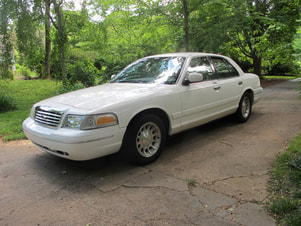
I've been thinking lately about buying a new car – a newer car.  My 1998 Crown Vic with “only" 326,165 miles has been showing signs of terminal illness.  

“It’s the transmission,” my trusty mechanic reported after a test drive.  “You can feel it jerking like a fish on a line.”  Sure enough, I could feel it – and could feel my wallet becoming much lighter if transmission repairs were to cost more than $2,000, which he said was possible. 

“You could always donate it to the fire department for training,”  he added, without a wink or smile, which would have meant he was kidding. As the local fire chief, he was always on the lookout for such things.  But sacrifice my trusty old Crown Vic to the Jaws of Life, a car so clean I've been known to dry if off after a rainstorm? I’d sooner make a planter out of it. That way, I could still wipe the paint clean after it showers.

All of this got me thinking about buying another car:

  On the PLUS side:  I enjoy looking around at new cars.
  On the MINUS side:  I don’t like spending money I don’t have on cars I don’t think I really need.
Turns out there are plenty of Crown Vics for sale online, many of them retired police cars.  Some look like they were driven by the Blues Brothers while others are shiny and new.  There was one attractive non-police LX Sport model for sale recently that appealed to me right away.  Unfortunately, the seller’s ex-wife had taken a baseball bat and high heel shoes to the sheet metal.  He was offering the car cheap, since he’d already bought himself a Jag (wait ‘til she gets a load of that!).

Truth is, the Crown Vic is getting long in the tooth.  The newest of them are 2011s and look pretty much like my ‘98, although mechanical improvements have been made over the years.  Should I look at cars with a turning radius less than a small delivery truck?  Should I consider something more stylish?

As a friend once told me, “Lookin’ don’t cost nothin’.” 

So I headed out in the Crown Vic to see what I could find, with the transmission still jerking like it had a fish on the line.  First stop?  The local Ford store, where I’d heard they had a slightly newer Crown Vic for sale.  Long gone.

“Those Crown Vics sell fast,” said Ed the salesman, who looked every bit the man who’d spent years in sun-soaked car lots talking to people like me.  “So why not keep your Crown Vic?” he asked.  

“The transmission may be on the way out,” I said, looking  as hangdog as possible so Ed would feel sorry for me and cut me a deal on something else. “And my wife says we need a newer, more dependable car to ride our grandchildren around in, since even the closest ones live three hours down the road.  And besides, she says, you need to make a more up-to-date appearance. 

Right on both counts.

“You don’t need to get rid of that car,” said Ed.  Right again -- me and the Crown Vic could keep right on goin’ if it weren't for that pesky transmission problem!

“Maybe it’s something else,” proffered Ed, who had taken an odd tack away from selling me something new in favor of fixing what I was already in.

“Why don’t you go up there to the shop and let them check it out before you make a decision.”

It’s worth a try ...  thanks, Ed!

Jarrod the tech no doubt had seen his share of Crown Vics come through the shop, most probably driven by older folks like me who’d grown content with their cars and weren't so easily smitten by curvaceous new sheet metal, and thus appeared to understand where I was coming from. 

“Feels more like an ignition issue to me,” he proclaimed during our short test ride.  “Transmission’s shifting smoothly.  Car runs good.  Let’s put it on the analyzer.”

“I’ll have to come back,” I said, rather lamely, sliding back into the driver's seat and heading out the door.  Gotta think about this:
* Option 1:  Fix it.  Maybe get to 400,000 miles before it breaks again.
* Option 2:  Sell or trade the car before it breaks (or somebody's ex takes a ball bat to it).
* Option 3:  Buy a newer car and KEEP THE CROWN VIC!   We could use a spare car, right?
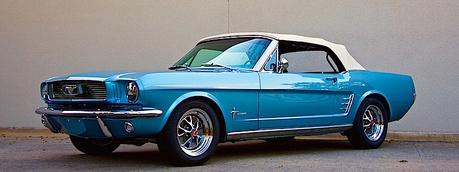
I can easily see myself in a sky blue Mustang convertible like this.  Or maybe one of those svelte new Lincoln sedans, although stark reality suggests something more like a used Taurus.  But then what would happen to the Crown Vic if the new car gets the garage?  Leave it out in the SUN?  Or the RAIN?!  

One plus about buying a car is that I get to do business with Ed, a man who defies the car salesman stereotype.  His first impulse was to help me make the right decision, not to feather his own nest by pushing me toward an immediate sale, which he said is not unique to him but an extension of his dealership's customer-first philosophy. So let me know if you’re in the market for a new (or newer) car.  I’ll be glad to pass Ed's name along to you.  Meanwhile, I've got an ignition module to replace on my Crown Vic.

TakeAway:  Surprise your prospects with authentic, customer-first sales and service.  They’ll come back for more -- and tell their friends about it.


Content © by Brian E. Faulkner


0 Comments

What's So Mysterious About Business Creativity?

2/23/2015

0 Comments

 
PictureImage © by Brian E. Faulkner

Creativity is for people who do creative stuff, right? Artists, who paint and sculpt, write, dance, act and make music. 

“But not me!” you might say, “I’m a business person -- and definitely not creative.”

I recall a client who thought that way.  Said he could hardly draw a straight line so was not creative.  Yet, this man was the most creative businessperson I’ve ever encountered (although I've yet to meet Elon Musk). He thought in odd angles and perceived the future with clarity. He also could share his vision, and in a few short years of very hard work grew his  business from a handful of people in a small office to a national brand that dominated its category.

Is there a connection between creativity and business success?


A 2014 study commissioned by Adobe suggests that “creative companies … outperform in both revenue growth and market share.” The study surveyed more than 300 senior managers in a variety of large global firms and found that “58% of respondents from creative companies (those that encourage creative perspective, practices, and culture) said their revenues have strong growth (10%+ year-over-year) while only 20% of less creative companies reported strong revenue growth. And creative companies are 50% more likely to report a commanding market leadership position."

Clearly, one must be cautious in interpreting findings like this since other success factors also may be at play in these organizations. But it stands to reason that leaders who encourage people to color outside the lines and explore the outer edges of opportunity will foster innovation and growth – and also be great places to work, as the Adobe study also found.

Sure, some folks seem to have more "creative" genes than others, just as some people have more innate ability to play sports -- or a musical instrument. You can learn how to play baseball or piano, for instance, and even though you might do a fair job at it, there's not much you can do with your skill beyond enjoy it. But even a kernel of creativity can sometimes lead to big things. I recall Colonel Sanders from time to time and his creative approach to preparing, cooking and selling chicken. He started experimenting with his "secret recipe" during the 1930s in Kentucky by offering chicken to patrons of a gas station he owned (at age 40). A variety of learning experiences, several failures and 20 odd years later, he hit the road to sell restaurants on purchasing franchised rights to chicken done his way. Even his gravy was a cut above, enough to make you want to "throw away the durned chicken and just eat the gravy." By the time he set out to sign up franchisees he was nearly broke, but he persisted -- and found not only that people liked his Kentucky Fried Chicken (which was pressure fried instead of pan fried) but that it also boosted sales for the restaurants who chose to buy in. Today, Harlan Sanders' creative approach is the basis for one of the world's most successful brands. 


So how can you put creative thinking to work for your business? 

Kenichi Ohmae, a long-time managing partner with McKinsey & Company, recommended in his Mind of the Strategist that to get a fresh look at a problem or product it helps to break it into bite-sized bits: features, benefits, base assumptions, competitive advantages, market perspective, etc, then reassemble the bits in new ways -- and question everything (a more non-linear approach to S-W-O-T discussions). The mere act of decoupling yourself from predictable thinking can open up new worlds of possibility, as long as you recognize that false starts and frustrations are a valuable part of the process - along with the courage to see your way through.  If that sounds like old-fashioned anything-goes brainstorming, well … it is.  It’s about opening yourself to new thinking based on the knowledge and experience of others.

Edwin Land, of Polaroid fame, observed that most major discoveries at his company were made by people able to take a “fresh, clean look at the old, old knowledge.”  Like a client I consulted to recently, which turned out to have a revolutionary product benefit hidden deep within their story, an uncommunicated competitive advantage with the potential to make a hugely profitable difference to their customers.  It was there all along but just took fresh eyes to see.

Another way to take a clean look at things is through peripheral visioning: looking beyond your normal field of vision, searching outside your comfort zone for fresh perspective … and possibly even enlightenment.  If you run a grocery store, study the machine tool business.  If you’re in the service business, learn all you can about the marketing of consumer products. If you’re a retailer, get to know how non-profits think. If you've been in business practically forever, get to know a few unrelated startups. Read all you can about them. Get curious!  You’ll be surprised how much of what you learn can be applied to your business – that is, if you’re willing to risk leading the way through unexplored territory. If you’re not comfortable doing this yourself, seek out professional creative thinkers and ask them to help (or hire one to think inside your company, as one of my clients did). Wrap people from businesses with different problems and perspectives into your brainstorming, and it won’t be long before you find yourself immersed in a mindspace where stale, predictable thinking gets transformed into creative new possibilities.

My definition of creativity is looking at the ordinary in extraordinary ways (playing off those odd angles).  It's a lot like daydreaming, something society encourages us not to do. Some of my most fruitful ideas come during long drives with my mind in idle.  A twenty-minute nap gets results, too, although it has taken me a long time to get over the guilt of interrupting a “workday” for a brief snooze. But when you consider that business ideas precede success, spending a chunk of your valuable time thinking seems less crazy to those more accustomed to working inside the box. People once thought powered flight was crazy, but two bicycle repairmen brothers from Dayton dared to imagine otherwise.

Albert Einstein once called imagination “the preview of coming attractions.”  So why not get busy imagining your coming business attractions?  Not creative?  

Don’t believe that for a minute! 

TakeAway:  Take the risk of seeing, thinking and learning outside your comfort zone.  The dividends can be extraordinary.

Content © by Brian E. Faulkner


0 Comments

Brand Names Mentioned in THIS Blog To Date:

2/20/2015

0 Comments

 
Picture
Search brand name mentions above:

3M
AFLAC
Affordable Care Act
Alcoa
Alamo Rent A Car
Allegiant Air
amazon.com  (2)
American Airlines
Andy Boy
Apple (7)
AT&T
Audi
Avenir
Bali
B&H Photo-Video
Ben & Jerry’s
Best Buy (2)
BMW  (3)
Bosendorfer
Budweiser
Buick   (2)
Burger King
Cadillac  (4)
Camaro
Camry
Campers Inn
Carvana
CBS
Chevrolet  (4)
Chrysler / Chrysler Corporation  (3)
Chrysler 300
Chipotle Mexican Grill
Clarion
Coca-Cola (3)
Coach
CoachNet
Colorado (pickup truck)
Corvette
Comcast
Costco  (2)
Craftsman
D’Arrigo Bros. Company (2)
Datsun
Delta Airlines
Democrat Party
DeSoto  (2)
Discover
Disne
Dodge  (2)
Dunkin’ Donuts (2)
Earth Fare
eBay
Ehrenberg-Bass Institute of  
   Marketing Science
Energizer Holdings  / Energizer
   Bunny  (3)
FedEx  (4)
F-150
Food Lion
Ford  (6)
Fox News
Frontier Airlines
gawker.com


G.E.
Geek Squad  (2)
GeekWire
GEICO  (2)
GM, General Motors (4)
GoDaddy  (2)
Godiva Chocolatier  (2)
Goodman Millwork
Google
Grand Bohemian Hotel
Greentoe.com
Hanes
Harry’s Razors
Honda
House of Cards
Hyundai  (2)
Impala
Interstate Batteries
J. C. Penney (2)
Jos. A. Bank
Joyce Farms
Kenmore
Kodak
Krispy Kreme  (2)
Kohl’s  (3)
L’eggs
Lincoln  (2)
Linkedin
Lowes Foods
Lowes
Marriott  (2)
Martin & Co. 
Mason & Hamlin
Maytag
McKinsey & Company  (2)
Men’s Wearhouse
Mercedes-Benz  (5)
Merchant & Gould
Mercury
Microsoft  (3)
Modern Quik-Ship
Mountain Dew
Music Trades
Mustang
Neilsen North America
NCR
Netflix  (2)
Nike
Nikon
Nissan
Olympus
Orbitz
Oreck  (2)
Package Containers  (2)
Pepsi (2)
Plymouth (2)
Pontiac
Porsche
Poulet Rouge
priceline.com
PTIA (Piedmont Triad International Airport)
Publix  (2)


Ratto Bros., Inc.
Ram
REI
Republican Party
Ritz Crackers
Sara Lee  (2)
Sears
shopsmart.org
Silverado  (2)
Silvercar
Sony
Southwest Airlines  (2)
Sprint
Squidoo
Starbucks (7)
State Farm
Steinway & Sons (6)
Stuart Weitzman
Super Bowl XLIX
Target
Taurus
The Center for Media Research
The Colbert Report
The Kessler Collection
The Masters
The Weather Channel
Thunderbird
Tiffin Motorhomes
Time Warner Cable  (2)
TIMCO
Toyota  (3)
Tractor Supply
Trader Joe’s
U.S. Airways  (2)
USA Today
Vero Fashion Outlet
VW
Wachovia Bank
Walmart  (2)
Wegman’s
Whole Foods Market  (5)
Wikipedia
Winnebago
Wired
WordPress
Yahoo
Yamaha
yelp.com
0 Comments

Price! Price! Price!

2/16/2015

0 Comments

 
Picture
Tags:  Greentoe.com, Priceline, Consumer Reports, Nikon, Canon, Olympus, J. C. Penney, B&H, B&H Photo, online discount cameras, smartshop.org

Have you ever thought about the difference between price selling and selling price?


Price selling is discounting.  It’s lazy marketing.  And having sale after sale after sale not only takes a bite out of profit but could be a long-term trap (just ask J.C. Penney).

Selling price is price-as-product. 

An intriguing example of price-as-product popped up on my screen this morning: Greentoe.com.   Their ad snagged me because I’ve been fishing around online for cameras and lenses.  So I clicked through to their site, where they immediately offered “the lowest prices available” on brands like Nikon, Canon, Olympus, etc.

“People like you are saving big on photo gear,” claimed the big green headline (the shade of money).  “Set your price and save up to 20%.  Brand new products.  No grey market.  Authorized retailers.  USA warranty included.” 

Does the advent of Greentoe.com mean I’ll no longer have to contend with my local Best Buy’s lackluster camera department?  (http://tinyurl.com/nywuxcx)  Does it mean I won’t have to risk ordering my next camera from one of those slippery big city camera discounters?

Maybe …

“Greentoe.com is the first and only website that allows you to name your own price for products in five categories: photography, appliances, musical instruments, baby items, and home theater,” reports shopsmart.org, an online Consumer Reports “best deals” resource.   They’re doing for consumer products what priceline.com has done for air travel and booking hotel rooms.  And it has the same sort of intrigue.  Will they accept my bid?   Will it be soooo much lower than the price somebody else paid?

Greentoe’s process is simple: 

(1) Submit an offer, on “thousands of products” (and give them your payment info).

(2) “Hundreds of retailers” then are notified of your offer (a green, orange or yellow gauge helps you determine how likely they are to accept – similar to Priceline).

(3) The first retailer to accept gets the sale; the transaction is between buyer and seller. 

If you know precisely what item you want, Greentoe.com may be your cup of tea – that is, if their retail partners have what you’re looking for.  The site’s selection of musical instruments and pro audio equipment is far from comprehensive, but it’s not meant to be.  They know that brick-and-mortar stores always have aged merchandise or overstocks they need to sell, so greentoe.com matches them up with customers who live hundreds or thousands of miles away.   Same for TVs, appliances and other products.

Their customers don’t have to be lucky or do the legwork, the company states in its well written and informative blog
, they “just have to have a little luck to find that deal.”   Greentoe provides the luck.

There is something else.   Once you’ve punched in your payment card numbers, there’s no turning back, so if you’re at all queasy about things like that – or don’t make purchase decisions easily (like me), it might be best to buy elsewhere. 

Heretofore, the place I most likely would have picked to buy a camera is New York’s B&H Photo-Video, especially if I needed help choosing the right one.  B&H has it all:  vast selection, attentive service, technical expertise, free advice and competitive prices.  And, if you live anywhere nearby or are visiting Manhattan, you get to handle the goods before making a purchase decision.  Walking into their 70,000 square foot their store is like entering a dream world of professional photo, video and audio goodies.

You can buy cheaper than B&H, but probably not as well. 

To be sure, there are other excellent purveyors of professional photo, video and audio products – online and off, and some may have as compelling a presentation as B&H, but the positioning of that big store at 34th & 9th has always fascinated me.   They’re not only the largest independent (non-chain) photo-video retailer in America, they also communicate their competitive advantages clearly and set price accordingly -- unlike all too many businesses that only play the price card.   B&H.com appears to command a slight price premium over some other online camera sources, and if so, they more than earn their margins with their compelling added-value.

Greentoe.com’s selling proposition also is compelling, however, so I will keep them in mind when it comes time to buy whatever camera I decide on.  Who knows?  My bid price just might outweigh the loyalty I feel to B&H for sending me all those informative catalogs over the years.  But then again, during the time in my life when I sold audio equipment, it always rankled me when I helped educate a prospect only to see him buy from some discounter instead of me. 

It’s so easy to discount, which is the unfortunate first impulse of many businesses.  In most situations, price selling is mind-numbing, profit crushing and unnecessary – unless, like Greentoe.com, price is your product.

TakeAway:  Does your business or brand have competitive advantages that will attract more qualified customers and allow you to command better margins?  Or are you content to sell principally on price?

Content © by Brian E. Faulkner

0 Comments
<<Previous
Forward>>


    sample blog:

    This is a sample blog  for writer Brian E. Faulkner.  It presents stories about brands that do (or don't) communicate competitive advantage effectively. Stories have been gleaned from the business press, personal experience and occasional interviews. New articles are added from time to time, and every so often there will be a post of general interest -- about things like success, passion, social trends, etc. 

    Author

    Brian Faulkner is a writer and strategic communication consultant who helps business clients explain their competitive advantage in compelling and enduring ways.
     
    He also is a five-time Emmy award winning Public Television writer & narrator for a highly-rated and well-loved magazine series.

    Picture
    Image © by Brian E. Faulkner

    Categories

    All
    Advertising
    Authenticity
    Brand Branding
    Brand & Branding
    Brand Names
    Business Culture
    Competitive Advantage
    Competitive Advantage
    Competitive Factors
    Content
    Creativity
    Culture
    Customer Satisfaction
    Differentiation
    Experience
    Flexibility
    Future
    Innovation
    Key Message
    Leadership
    Luxury
    Marketable Truth
    Marketing
    Passion
    Politics
    Positioning
    Price
    Quality
    Sales
    Service
    Small Business Marketing
    Story
    Strategic Thinking
    Taglines
    Team
    Technology
    Trends
    Values
    Vision

    Archives

    July 2019
    January 2019
    November 2016
    February 2016
    October 2015
    September 2015
    August 2015
    July 2015
    June 2015
    May 2015
    April 2015
    March 2015
    February 2015
    January 2015
    December 2014
    November 2014
    October 2014
    September 2014
    August 2014
    July 2014
    June 2014
    May 2014
    April 2014
    March 2014
    February 2014
    January 2014
    December 2013
    November 2013
    October 2013
    September 2012
    October 2011
    March 2011

    RSS Feed

Content © by Brian E. Faulkner.   All rights reserved.