A BLOG ABOUT COMMUNICATING COMPETITIVE ADVANTAGE
  • Brian Faulkner
  • Blog
  • CONTACT

Thinking Outside The Cup: Can Chipotle's Brilliant New Marketing Idea Cultivate Fresh Thoughts IN YOU?

7/11/2014

0 Comments

 
Picture
You’re sitting in a restaurant munching on a burrito -- dining alone.  You don’t have anything to read, so your thoughts wander. 

Maybe you think of something you have to do later that day – or think about the someone with whom you plan to do whatever you're going to do later.   You trace a letter on your drink cup’s condensation.  

Then a thought stirs to life …

That’s what happened to author Johanthan Safron Foer (Eating Animals) one day while enjoying a meal at Chipotle Mexican Grill.   

An idea was born – and he emailed Chipotle’s CEO about it:

“I bet (that some of the people who) go into your restaurants every day … have very similar experiences, and even if they didn’t have that negative experience, they could have a positive experience if they had access to some kind of interesting text,” Foer related to Vanity Fair’s VF Daily online column, quoting his email.  “So I said, ‘Wouldn’t it be cool to just put some interesting stuff on (your cups)?  Get really high-quality writers of different kinds, creating texts of different kinds that you just give to your customers as a service.’”

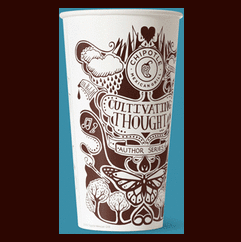
CEO Steve Ells bought the idea.  High quality writers were solicited (10 out of 50 said yes).  And Chipotle’s new Cultivating Thoughts cups now stimulate their guests with a variety of short essays, fiction and comedy by authors the like of Safran Foer, Malcom Gladwell, Toni Morrison and Sarah Silverman.

The idea was one of those intuitive flashes we all get from time to time, only Safran Foer did something with his.  And what pleases him most is “800,000 Americans of extremely diverse backgrounds having access to good writing,” many of whom don’t have access to libraries, or bookstores.

The project was launched in May and is said to reach a million people per day in the 40 states where Chipotle has restaurants.  But the jury’s still out on what impact it may have on the chain’s brand perception and business.  Some say the highbrow writing is a mismatch to Chipotle’s demographic (give people credit for having a brain, eh?), although the chain is known for producing content that "aims to change the way people think about and eat fast food,” according to Mark Crumpacker, Chipotle’s chief marketing and development officer.  There's also a fair amount of angst being expressed online because not one of the first ten writers selected was Mexican. 

All in all, Cultivating Thoughts seems a splendid idea that’s bound to be taken up elsewhere with different writers and ideas.   

Stories anyone?

TakeAway:  Don’t let those sudden inspirations slip away.  The idea you have today may be your marketing success tomorrow.

Tags:  Chipotle Mexican Grill


About Brian Faulkner:

Brian Faulkner is a content writer and Key Message expert.  He helps clients come up with words to set their businesses, brands and products apart and attract the customers they want most.  His strategic insights, and the words that go with them, have made a significant, often immediate difference for client companies over many years.  His "sweet spot" is smaller to moderate sized consumer products, retail, service and manufacturing companies that may have struggled to find just the right words to position their business, brands or products to competitive advantage:

>  blogs to establish you as the knowledge source / authority in your business category
>  case stories that communicate your sales successes and invite prospect inquiry
>  testimonials that showcase customer / client satisfaction in 1-2 short sentences
>  positioning statements to guide business development & marketing
>  landing page copy to set your business or brand apart in a compelling way
>  tagline development to attract the interest of your most qualified prospects

Brian also is a three-time Emmy award winning Public Television writer and narrator of UNC-TV’s popular Our State magazine series, on the air since 2003.  

0 Comments

Strong Content Gets LINKEDIN Attention for Entrepreneur.

5/9/2014

1 Comment

 
PictureImage © by Brian E. Faulkner
This morning, an article about The 7 Bad Habits of Entrepreneurs popped up on LinkedIn, authored by one of my LinkedIn connections.   The headline caught my eye, and the content sounded familiar.  I’d read it before.

Four days ago, essentially the same piece had dropped into my email in-box – with a slightly different headline: The 7 Bad Habits That Will Hurt Your Voice Over Career.  Author and voice over artist Dan Hurst had adapted Steven Covey’s 7 Habits of Highly Effective People to his own purposes, and it had caught my attention twice in less than a week.   http://danhurst.com/posts/7-bad-habits-of-struggling-entrepreneurs

Dan and I seem to have two things in common:

1.  We are both voice over artists with tons of experience (one of only a few hats I wear comfortably).

2.  We both understand the need to communicate competitive advantage in a clear and compelling way – which requires an unusual degree of self-awareness (most often learned by thrashing your way down that hard road people talk about all the time) and brutal objectivity.  It seems especially true of lone-wolf types like consultants and voice over artists but likely rings equally true in your business as well.

“It’s important to see yourself for what you really are,” writes Hurst, “but that needs to be tempered by really understanding how your clients view you.  The right voice is like choosing the right oil color for a painting. Ok, fine.  You’ve got the right color, but it’s more about what you do with that color that counts.”

Communicate a REAL Difference.

In the consulting business (in positioning any business or product for that matter), it’s imperative to understand how you make a difference to customers and clients.  Why should they want to inquire about your services or buy what you’re selling?   Can you express that in a very few words -- a convincing tagline?

On the consulting side of my business, I am a Key Messaging Expert.  I help clients come up with words to Attract The Customers You Want Most.   In voice overs, I am The Natural Choice known for my “Mercedes delivery.”  Dan Hurst is One of America’s Most Experienced Bi-Lingual Voice Over Talents whose English and Spanish voice overs are “smooth and powerful.” 

In assessing what I call the Marketable Truth© of your business, brand or product (even if your business is just you), it’s critical to know what standard you’re comparing yourself to.  Dan puts it perfectly:  It’s all about “knowing the difference between good, better and great.  Good is based on the market standard.  One isn’t even competitive until one is good.  Better is stepping beyond good to get noticed.  But great is what the client chooses.”

All too many marketers (not limited to voice talents and consultants by any means) are content with communicating “pieces and parts” – we do this or we sell that -- without reference to the benefits they bring to a world that’s all too willing to reward mediocre positioning with mediocre results. 

“I don’t want to hire someone that ‘can do’ something,” Dan Hurst concludes.  “I want to hire someone who excels … who owns the element that I’m looking for.”

TakeAway:  Don’t be content with selling GOOD.  Or even BETTER.   Sell GREAT!    And communicate your greatness in terms that make a big difference for your customers or clients.

Marketable Truth and content © by Brian Faulkner.

Tags:  7 Habits, Steven Covey, Dan Hurst, Mercedes

About Brian Faulkner:

Brian Faulkner is a Key Message expert.  He helps clients come up with words to set their businesses, brands and products apart and attract the customers they want most.  His strategic insights, and the words that go with them, have made a significant, often immediate difference for client companies over many years.  He thrives on strategic communication problem solving, complex subjects, new ideas, concepts-as-products, challenging marketing situations and demanding deadlines.  His "sweet spot" is smaller to moderate sized consumer products, retail, service and manufacturing companies that may have struggled to find just the right words to position their business, brands or products to competitive advantage.

PictureImage © by Brian E. Faulkner

Brian also is a three-time Emmy award winning Public Television writer and narrator of UNC-TV’s popular Our State magazine series, on the air since 2003.

His distinctive voice overs have been heard on many hundreds of radio spots and client projects since way back in 1966.  People say he sounds a bit like Charles Kuralt, which Brian considers a welcome but happy illusion.

www.faulknerproducerservices.com


1 Comment

Old Business Discovers New Dollars In Content Marketing.

4/30/2014

0 Comments

 
Picture
Last month, an article posted on this blog about a 66-year-old Oregon packaging company and its revenue-generating products for the produce industry was sent by one of their sales reps to his prospects and customers.  

It worked! 

Before long, the company reported an increase in sales directly linked to the blog post.  (http://tinyurl.com/l3cw6cc) 

Then a produce industry trade magazine discovered the post, lifted quotes from it and published an article about the astonishing financial performance of the company’s Home-Toters® produce merchandising bags.  It’s too soon to measure the effectiveness of that happy outcome (if it can directly be measured at all), but as with any productive Internet content, the post (and its derivatives) no doubt will have other lives.

Content marketing is a relatively new term based on a time-proven concept:  if you come across an idea (content) you can put to work in your business, you’re likely to send it along to a colleague or friend who can use it in theirs.   They, in turn, will spread it further—perhaps to places you’d never imagined, like that produce trade magazine.   

“Salespeople love great content, because it’s an opportunity to reach out to customers and offer them something of value without asking for something in return,” says Frank Strong, a PR professional quoted today in The Content Strategist , an online publication about content marketing.  Strong calls people like the packaging company rep “potential content champions.” 

The key word in that phrase may be “potential,” because content marketing is only now beginning to take hold in business people’s minds (especially C-suite execs), and its strategic potential is practically unfathomable.  Even an old hand like Bill Marriott, executive chairman and chairman of the board of Marriott International, Inc., reportedly has taken to blogging after having been “evangelized” by an employee – he records his thoughts and depends on others to weave them into online content.  If you read Marriott’s blog, you’ll see it’s nothing more than good old fashioned storytelling. A good is example is his life-affirming post about “deciding to decide”.  (http://tinyurl.com/pxvnwf4  )

LinkedIn Hops on the Content Bandwagon.

Anyone who’s read one of LinkedIn’s Influencer posts will have witnessed the appeal of content marketing.   “For the past couple of years, LinkedIn has been slowly and effectively doubling down on content,” writes Joe Lazauskas in The Content Strategist.  LinkedIn’s Head of Content Products, Ryan Roslansky, notes in the same article that LinkedIn Influencer posts "average nearly 31,000 pageviews and over 80 comments.”  People are no longer just trolling for job opportunities on LinkedIn, they’re increasingly looking to the business networking site for content that will help their businesses become more successful.

So why not you?

TakeAway:  Got a valuable business story to share?  Extend your reach through content marketing.

Content © by Brian E. Faulkner.

ABOUT BRIAN FAULKNER:

Brian Faulkner is a content and strategic communication writer.  He helps clients come up with words to set their businesses, brands and products apart and attract the customers they want most.  His strategic insights, and the words that go with them, have made a significant, often immediate difference for client companies over many years.  He thrives on strategic communication problem solving, complex subjects, new ideas, concepts-as-products, challenging marketing situations and demanding deadlines.  His "sweet spot" is smaller to moderate sized consumer products, retail, service and manufacturing companies that may have struggled to find just the right words to position their business, brands or products to competitive advantage.

Brian also is a five-time Emmy award winning Public Television writer and narrator of UNC-TV’s popular Our State magazine series, on the air since 2003.  

0 Comments

A Small Business Marketing Lesson From NETFLIX: THINK FIRST, DO LATER.

3/6/2014

0 Comments

 
PictureImage © by Brian E. Faulkner
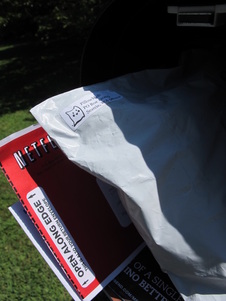
There’s a lesson for small business marketers in the process Netflix used in deciding whether to produce “House of Cards.”   According to an article in the New York Times, it was clear that Netflix had a hit on their hands before shooting the first frame.  A more traditional media company would have invested in a pilot and tested it with focus groups before committing to a series.   Instead, tapping data from their 33-million worldwide subscribers, Netflix gauged audience preferences for director David Fincher, name-brand star Kevin Spacey and the British version of “House of Cards”, pointing toward the series’ success in advance.  (see: http://www.nytimes.com/2013/02/25/business/media/for-house-of-cards-using-big-data-to-guarantee-its-popularity.html?_r=2& )

The potential takeaway here for small businesses is Think first, do later, a discipline readily applied to any communication project.  Think first means asking strategic questions before moving forward with “creative”. 


·      Who will be reading or viewing your ad, brochure, video, etc. – and why?

·      What headline will most attract the eye and make people want to read more?

·      What information will pique their interest and engage their mind early in the first paragraph?

·      How will your product or service be positioned to their advantage?

·      What is unique or revolutionary about it?

·      How does it differ from prospect expectations – or competitors’ offerings?

·      How will your Key Message change people’s thinking about your product or service?

·      What action do you want readers or viewers to take – now or later?

Years ago, I collaborated with the president of an international consumer products company on a speech he was to give before a large group.  I don’t even recall the subject (assignments for this client typically were concerned with strategic visioning or the future).  What I DO recall, however, is finally realizing that out of that huge audience, he only wanted to influence a small handful of key people – inspire them to think a certain way and do certain things.  Armed with that information, I was able to not only hit help him the mark, but harvest tons of extra goodwill from the rest of his audience, many of whom took the time to ask for copies of my client’s speech.   

I have used the think first, do later concept a lot since then, primarily to slow down and focus clients who said they wanted this or that kind of communication project done but really hadn’t thought much about how they wanted people to feel, think or act when they viewed their ad, read their brochure or listened to their sales presentation.  It's like saying “We need a web site,” without having thought much beyond the notion that “We need a web site.”    You see the results all over the Internet: creatively attractive but strategically impotent web sites whose creators clearly have failed to ask the important questions up front.   You see the same thing in politics, where strategic questions with myriad long-term implications don’t seem to have been asked (or are ignored to serve ideological ends).    

But that’s a whole other story …

TakeAway:   Ask strategic, customer-centric questions before working on “creative.”  Build the answers into your content.      © Brian E. Faulkner

For related perspective, see http://www.brianefaulkner.com/key-message.html


0 Comments


    sample blog:

    This is a sample blog  for writer Brian E. Faulkner.  It presents stories about brands that do (or don't) communicate competitive advantage effectively. Stories have been gleaned from the business press, personal experience and occasional interviews. New articles are added from time to time, and every so often there will be a post of general interest -- about things like success, passion, social trends, etc. 

    Author

    Brian Faulkner is a writer and strategic communication consultant who helps business clients explain their competitive advantage in compelling and enduring ways.
     
    He also is a five-time Emmy award winning Public Television writer & narrator for a highly-rated and well-loved magazine series.

    Picture
    Image © by Brian E. Faulkner

    Categories

    All
    Advertising
    Authenticity
    Brand Branding
    Brand & Branding
    Brand Names
    Business Culture
    Competitive Advantage
    Competitive Advantage
    Competitive Factors
    Content
    Creativity
    Culture
    Customer Satisfaction
    Differentiation
    Experience
    Flexibility
    Future
    Innovation
    Key Message
    Leadership
    Luxury
    Marketable Truth
    Marketing
    Passion
    Politics
    Positioning
    Price
    Quality
    Sales
    Service
    Small Business Marketing
    Story
    Strategic Thinking
    Taglines
    Team
    Technology
    Trends
    Values
    Vision

    Archives

    July 2019
    January 2019
    November 2016
    February 2016
    October 2015
    September 2015
    August 2015
    July 2015
    June 2015
    May 2015
    April 2015
    March 2015
    February 2015
    January 2015
    December 2014
    November 2014
    October 2014
    September 2014
    August 2014
    July 2014
    June 2014
    May 2014
    April 2014
    March 2014
    February 2014
    January 2014
    December 2013
    November 2013
    October 2013
    September 2012
    October 2011
    March 2011

    RSS Feed

Content © by Brian E. Faulkner.   All rights reserved.