A BLOG ABOUT COMMUNICATING COMPETITIVE ADVANTAGE
  • Brian Faulkner
  • Blog
  • CONTACT

High Flying DEALER Offers Car Purchase by Vending Machine.

6/25/2014

0 Comments

 
PictureYa think?
There are three kinds of car buyers.  One loves to kick the tires and joust with the dealership.  They are in the minority.  Another knows just what they want, has researched pricing and secured financing – possibly with a credit union.  This buyer shops dealers online and hones in on their transaction like a laser, taking delivery with limited exposure to dealer shenanigans.

But most of us still take the weary path, driving from car lot to car lot looking for the vehicle, price, trade-in allowance and financing package that either suits us or that we finally accept because we need a car and our patience has worn thin.

The second and third kind of car buyer, the traditional kind, now has another option – that is, if they live within reasonable driving distance of Atlanta (or can fly in): Carvana, a purveyor of late-model mid-market and luxury pre-owned vehicles that delivers buyer’s purchases through a novel “vending machine” not far from Georgia Tech. 

The vending machine concept (their storefront actually resembles one) sets Carvana apart from other online auto buying sources, as does an eye-pleasing, easy to navigate web site.  Prospects can even test drive their would-be purchases virtually before plunking down their bucks and showing up at the vending machine with an access code.  And if they need financing, that’s available, too -- the people backing the venture have years of experience running dealerships and in consumer finance.  All in all, Carvana seems organized for success, which begins with offering clear savings for its customers.

“The average consumer spends more than 20 hours and overpays roughly $3,500 when purchasing a car due to antiquated dealer sales practices,” declares a post on Carvana’s friendly and informative blog (http://blog.carvana.com/sample-page/the-back-room/).  That said, the firm claims to save $1,500 per car by not having a dealership, which they pass along to their customers.  A brief comparison of price on their Web site with those advertised for similar models with comparable mileage by dealerships in my area suggests that Carvana’s price is lower – a difference that could evaporate rapidly if a prospect has the time and patience to negotiate a better deal locally.  

Time and convenience are other Carvana differentiating factors, as is what they call a 7-Day Test Drive, essentially a post-delivery No Questions Asked Money Back Guarantee.

Customers can pick their car out from the comfort of their home, then fly/drive/walk to the company’s vending machine and take delivery there.  Inventory selection seems to consist mostly of silver and white 2011-2013 sedans or SUVs with the occasional red F-150, Mustang, Camaro or Jeep thrown in.  If they live within 75 miles of Atlanta, there’s free home delivery, or buyers can take delivery of their new ride in the traditional way.  For an additional $199, people who live within 76-250 miles of Carvana can have their new car trucked to them and delivered at home.  Buyers more than 250 miles away are invited to fly into Hartsfield and be picked up at the airport.

There would seem to be a vast market for the Carvana concept, since the typical car buying experience has been long due some transformation.  It isn’t the answer for everybody – maybe for most car buyers, people who like to see, touch and drive before they buy and who appreciate local service.   But all in all, it’s a refreshing concept that Carvana’s customers seem to like – witness this high compliment from a satisfied buyer, who said:

“If Apple invented a way to buy a car, this would be it.”

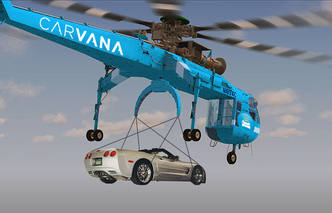
I admire this innovative idea -- and the visionary thinking that led to it.  I also appreciate Carvana’s spiffy online presentation and their copywriter, who has a mischievous (but restrained) sense of humor.  That could be the work of company president Ernie Garcia, if his recent blog post announcing future delivery of Carvana cars by helicopter is any clue.

A whole new way to buy a car?   Sure.  But I wouldn’t lay awake waiting on the helicopter.

TakeAway: Is there an idea lurking in your mind that could revolutionize your business category?      
Content © by Brian E. Faulkner

About Brian Faulkner:

Brian Faulkner is a content writer and Key Message expert.  He helps clients come up with words to set their businesses, brands and products apart and attract the customers they want most.  His strategic insights, and the words that go with them, have made a significant, often immediate difference for client companies over many years. His "sweet spot" is smaller to moderate sized consumer products, retail, service and manufacturing companies that may have struggled to find just the right words to position their business, brands or products to competitive advantage:

>  blogs to establish you as the knowledge source / authority in your business category
>  case stories that communicate your sales successes and invite prospect inquiry
>  testimonials that showcase customer / client satisfaction in 1-2 short sentences
>  positioning statements to guide business development & marketing
>  landing page copy to set your business or brand apart in a compelling way
>  tagline development to attract the interest of your most qualified prospects

PictureImage © by Brian E. Faulkner

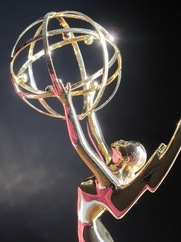
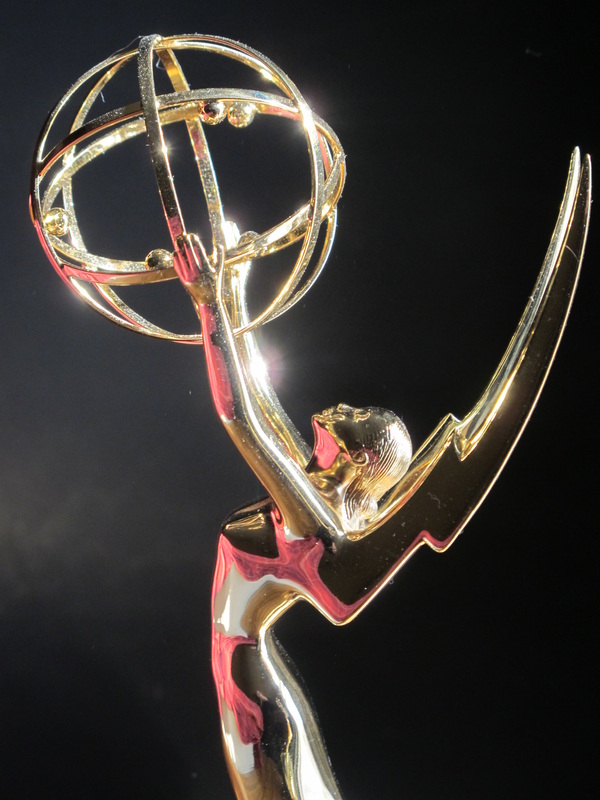
Brian also is a three-time Emmy award winning Public Television writer and narrator of UNC-TV’s popular Our State magazine series, on the air since 2003. His distinctive voice has been heard on many hundreds of radio spots and client projects since the 1970s.  People say he sounds a bit like Charles Kuralt, which Brian considers a welcome but happy illusion.

(www.faulknerproducerservices.com)


0 Comments

Amazon's New Superphone.

6/19/2014

0 Comments

 
Picture
Part 1:  Wednesday Morning, June 18, 2014

Like other observers today, I eagerly await announcement of a new Amazon smartphone.  Speculation abounds regarding:

a) the foolishness of Amazon in launching a smartphone into a category chock full of well-established, innovative competitors;

b) the brilliance of doing so because of an unanticipated feature than upends the market.

I’m going with number two.   Because Amazon is ceaselessly innovative and flush with confidence born of transformational moves that have earned them dominance in a categories from book selling to online sales of just about anything you want as the de-facto 21st Century Wish Book. 

They must have something cool up their sleeve.

My first thought, way out here in speculation land, is that Amazon is about to introduce a soon-to-be-ubiquitous new appliance that is nothing less than a handy tool to help people buy more stuff from them.  Either that or they’re launching just a pretty-good phone to get a grip on the market before launching their groundbreaking device.  Whether sooner or later, Amazon’s new entry will be a game-changing purchase appliance there’s no name for yet that will glue even more of us to the amazing Amazon money machine.

Part II, below, was written after the Amazon announcement.  Did I nail it?  Halfway nail it?   Or nowhere near nail it – in fact, come up so short that my speculation looks silly and sophomoric?   You decide.

Picture
Part 2:  Thursday Morning, June 19, 2014

It’s called the Fire, and Amazon’s new superphone has folks buzzing – and boosting Amazon’s stock price. 

Initial online business comment about the new phone is all over the board but leans toward the mystified, especially in light of the device’s high price and limited distribution.  Sure there’s some “expensive groundbreaking technology,” a new 3D imager that allows users to look at objects with a more dynamic perspective and get into games in more immersive ways. 

But, to me, the Amazon launch feels more like a market test than a do-or-die bid to outdo Apple and other well-entrenched smartphone brands – an experiment.

Here are some questions I’d want the experiment to answer were I Amazon CEO Jeff Bezos.

Will sales of the new phone be limited to early adopters?   Or will Fire’s array of “cool factor” features (including more efficient, more intuitive ways to interact with the device) attract a broader base of consumers to AT&T stores?  That's the only places people can buy the Fire, at least as of July 25th. 

Will a price in line with the iPhone 5S elevate the new phone’s positioning?  Will pricing inhibit or enhance sales?   Will the ultimate price for the new Amazon product eventually slide down toward zero as it evolves into that ubiquitous Amazon purchasing appliance I speculated about above?

Most important: will users buy more stuff from Amazon right away, using the new phone’s built-in Firefly app, since its 3D feature now makes it easy for shoppers to identify products they want and order them in seconds simply by holding down the Firefly button.   The camera can identify "over 100 million items,” says Bezos, “including songs, movies, TV shows” and apparently some things as challenging to identify as exotic fruit or as simple to discern as a jar of branded peanut butter or magazine cover.   

All in all, it’s an intriguing launch by a company that’s unafraid (and wealthy enough) to test its mettle in new markets, even if some previous Amazon market innovations have been less than an overwhelming success (witness Kindle Fire’s miniscule share of the tablet market).

So keep watching.  Fresh Amazon surprises no doubt await – even as competitors across all channels seek to create competitive advantage of their own with groundbreaking sales and distribution schemes.

TakeAway:  Innovation is fleeting.  So protect your innovative product or service by building a wall around it in the consumer’s mind that competitors will find difficult – if not impossible -- to break through.
Content © by Brian E. Faulkner

Tags: 
Amazon.com, Fire, Fire phone, smartphone, iPhone 5S

about Brian Faulkner:

Brian Faulkner is a Key Message expert.  He helps clients come up with words to set their businesses, brands and products apart and attract the customers they want most.  His strategic insights, and the words that go with them, have made a significant, often immediate difference for client companies over many years.  He thrives on strategic communication problem solving, complex subjects, new ideas, concepts-as-products, challenging marketing situations and demanding deadlines.  His "sweet spot" is smaller to moderate sized consumer products, retail, service and manufacturing companies that may have struggled to find just the right words to position their business, brands or products to competitive advantage.
Picture


Brian also is a three-time Emmy award winning Public Television writer and narrator of UNC-TV’s popular Our State magazine series, on the air since 2003. His distinctive voice has been heard on many hundreds of radio spots and client projects since the 1970s.  People say he sounds a bit like Charles Kuralt, which Brian considers a welcome but happy illusion.

0 Comments

Small North Carolina Business Changes With THe Times.

6/16/2014

2 Comments

 
PictureGoodman Millwork Phone Nook
Franco Goodman knows about change.  The millwork firm his family operates “has gone through enough change for three companies.  "Our customer base has changed ten times over 50 years,” Goodman says, and the key to its continuing success is “nimbleness – market flexibility.”

He should know.  Evidence of market change can be seen throughout Goodman Millwork’s multi-acre site in Salisbury, North Carolina, where a good-sized tract of vacant land that once contained a thriving lumber yard lies baking in the June sun and a steam engine that once powered the place waits patiently inside the millwork plant for a new assignment. 

The company was founded in 1907 when brothers Enoch and Linus Goodman got tired of working in other people’s businesses and started one of their own: a portable sawmill.  Their competitive advantage was hauling the mill to the trees instead of asking the woodlot owner to haul his trees to the mill. 

Ingenuity like that – along with the brothers’ insistence on handshake country quality – earned them a reputation as the kind of folks you could count on, which they put to work building Goodman Lumber Company.  In time, they located the business on a site in town after their wives insisted on a more permanent setup not so far out in the country.  The slogan (tagline) that served them for the next 70 years or so was Everything for the Builder, From the Foundation to the Roof. 

Goodman Lumber Company thrived in serving builders’ needs, especially as other businesses prospered around them and created demand for housing, among them the Food Lion chain of grocery stores, which began life in Salisbury and remains headquartered there.  The Goodmans began building homes themselves in the ‘20s, a natural step for an ambitious family that needed more customers for its lumber as the world changed around them.

A change that arose in the 1970s was the advent of big box stores that sold framing and lumber, which began to eat away at Goodman Lumber Company's business.  They responded by looking to other lumber- and building-related markets for opportunity, including custom made woodworking for high-end residences, churches, banks, clubs and restaurants.  For a while, they even built room settings for furniture manufacturers to display their products at trade shows like the High Point Market.  In 1982, the company's name was changed to Goodman Millwork, Inc. to more precisely reflect the value-added nature of their business.

“Now we’ve come to another turning point,” says Franco Goodman.  “We’ll continue to look to our present customer base for business, including architects and interior designers, whose clients want only the finest quality millwork, doors and windows for their renovations and new construction.  And we're also looking to the Internet as we reach for yet another new market.  That’s where at least part of our future lies,” he declares, pointing with pride to pictures of his two sons, now working their way into the family business. 

"We can’t see the end from the beginning,” he acknowledges, “but at least we can make a start."

Nooks And A Necessary Cabinet.

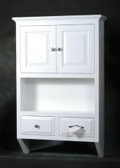
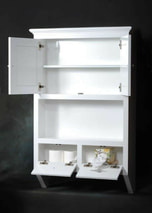
PictureNecessary Cabinet
One thing they’ve started is a new line of distinctive wall furniture that extends Goodman Millwork's reach nationwide for the first time by way of the internet.  The line includes two styles of phone nooks with designs reminiscent of early- to mid-20th century homes and a wall-mounted nest of bathroom shelves and drawers that Franco Goodman calls a Necessary Cabinet.

“We made one of these for a customer, and it turned out so good we decided to add it to the line of architecturally inspired phone nooks we were developing," he says. "We didn’t quite know what to name it – other than a bathroom storage cabinet (it’s placed above the toilet tank), but then someone suggested we call it a necessary cabinet.  

Back in colonial days, he explained, people used to call the place where they took care of certain kinds of personal business the necessary room.

Picturehttp://goodmanmillwork.com/featured.html
Everybody needs a necessary cabinet – they just don’t know it yet!  And a phone nook, if for no other reason than to have somewhere to plug in their phone charger and hang their car keys.  And as Goodman Millworks’ new line of heritage-inspired products progress and prosper, you can be sure one of thing: that Franco Goodman (and sons) will soon take note of the next market change coming down the pike and figure a way to wrap  it into their business.

TakeAway:  Build on today’s change to create tomorrow’s business success.

Tags:  Goodman Millwork, Food Lion

Content © Brian E. Faulkner.

About Brian Faulkner:

Brian Faulkner is a content and strategic communication writer.  He helps clients come up with words to set their businesses, brands and products apart and attract the customers they want most.  His strategic insights, and the words that go with them, have made a significant, often immediate difference for client companies over many years.  He thrives on strategic communication problem solving, complex subjects, new ideas, concepts-as-products, challenging marketing situations and demanding deadlines.  His "sweet spot" is smaller to moderate sized consumer products, retail, service and manufacturing companies that may have struggled to find just the right words to position their business, brands or products to competitive advantage.
PictureImage © Brian E. Faulkner.

Brian also is a five-time Emmy award winning Public Television writer and narrator  of UNC-TV’s popular Our State magazine series, on the air since 2003.  His distinctive voice has been heard on many hundreds of radio spots and client projects since the 1970s.  People say he sounds a bit like Charles Kuralt, which Brian considers a welcome but happy illusion.


2 Comments

The Airlines oR DMV - Which is Worse?

6/13/2014

0 Comments

 
PictureImage © by Brian E. Faulkner
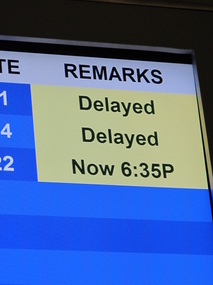
Flying commercial has been compared recently to waiting in line at the Department of Motor Vehicles office to register your car.   So which of the two has gotten so much worse that it invites the comparison?

Nearly every DMV wait I’ve experienced through the years has been annoying, hot, boring and lengthy, so not much has changed there.  In fact, I recall one especially memorable clerk in Connecticut back around 1970 whose snarl was genuinely world class.  She did not enjoy being helpful.  But most DMV clerks I’ve encountered have been helpful.  Just recently, a young woman here in North Carolina was not only helpful but pleasant as she sorted out my registration/ inspection mix-up, despite the long line of grumbly folks awaiting her attention.   

To be sure, life can dish out far greater unpleasantness than waiting in line at the DMV.   But the experience of traversing a busy airport these days apparently is running neck and neck with the DMV for customer dissatisfaction.

Flying used to be fun – back when airliners had propellers and you were eight years old and didn’t know any better.   In 2014, flying commercial (as distinct from renting or owning your own airplane and getting to fly whenever and wherever you want) can be a white knuckle experience, from the check-in line to the security line to the boarding crush to the two-hour delay on the tarmac to maybe getting to your destination on time or maybe not but still having to deal with the baggage crap-shoot no matter what.   Unless, that is, you're a passenger on Southwest Airlines, which has managed to fly above its competitors by offering a straight-ahead, efficient, value-priced product with fewer customer surprises.

Of course, in between the many hassles that greet the flying public today is the flight itself, which has morphed into a crammed-in-your-seat, uncomfortably public experience that nobody in their right mind would recall fondly unless they maybe lucked out and hooked a spot next to Harrison Ford or Angelina Jolie who had been forced to fly coach because this was the last flight out to East Sagebrush, Texas, where they were shooting a Western first thing in the morning.

Every business has its challenges, but some provide a greater sense of reward than others – compare the commercial airline business to selling flowers, for example.  The big challenge of flower selling may be running out of red roses, but as long as the stock holds, delivering bouquets of happiness can be fun.  Ideally, the airline business also should be about delivering happiness.  Instead, the challenge of most airlines these days appears to be annoying as few customers as possible.   Although I’ve never done it, selling flowers seems like it might be a pleasure compared to working an airline ticket counter.

From the time you go online to buy your ticket to the time you and your fellow passengers have to wait as some unthinking clod attempts to stuff his slightly oversized carry-on into the slightly undersized overhead bin while the harried flight attendant tries to introduce some discipline, pleasure is not usually what comes to mind when thinking about commercial air travel, with its ever-skinnier seats and the exorbitant fee they charge to make sure your extra suitcase actually gets on the plane with you.  I’ve even read lately that some airlines are considering shorter lavs to save space – you don’t mind bending over to do your mid-air business, do ya?  

It makes you wonder, What are they thinking?! when airlines slight passenger comfort or convenience to shave a buck or two off their fares.

“Offering our low fares requires doing some things that some people complain about,” Spirit CEO Ben Baldanza recently wrote in a letter to Bloomberg Businessweek, “—more seats on our planes with a little less legroom, no Wi-Fi or video screens, and no refunds without insurance; however, these reduce costs which gives our customers the lowest fares in the industry.  Judging by the number of customers on our planes and repeat customer rate,” he concluded, “most people like this tradeoff.”

This strikes me as long-range customer service suicide. 

So back to the comparison between flying and the DMV. 

“Forty-two percent rated the DMV as worse than a busy airport, while 40 percent said being in a packed airport is worse than standing in line to get a new driver's license,” according to an article by CNBC.com’s auto and airline industry reporter, Phil LeBeau.  "No doubt the airline industry is doing a better job of pleasing passengers, but there still is a lot of room for improvement," LeBeau writes, quoting J.D. Power's Rick Garlick. "Satisfaction is improving, but it's a stretch to say passengers are truly happy."

Now there’s an understatement.  

It’s also an understatement to say that the airline business is tough and complex.  Margins are thin at best and beset by high fuel costs and other profit-munching expenses.  As Richard Branson so wryly put it, "How do you become a millionaire?  Start as a billionaire and then buy an airline.”

Even so, the knack of the airline business to rile up its customers astonishes me no end, despite the often herculean efforts of individual employees to do the opposite.   In light of this unfortunate reality, I have created a pair of taglines to dramatize the difference between the two nearly equal customer service experiences.

DMV Tagline:  Bear with us, it will be over in 15-20 minutes.

Commercial Airlines Tagline:  Bear with us, it will never be over – and have a nice flight.

TakeAway:  When the service in your industry descends to joke status, there’s an opportunity for somebody to  break the mold and create real competitive advantage.  Will that be you … or your competitor?  

Content © by Brian E. Faulkner


About Brian Faulkner:

PictureImage © by Brian E. Faulkner
Brian Faulkner is a Key Message expert.  He helps clients come up with words to set their businesses, brands and products apart and attract the customers they want most.  His strategic insights, and the words that go with them, have made a significant, often immediate difference for client companies over many years. He thrives on strategic communication problem solving, complex subjects, new ideas, concepts-as-products, challenging marketing situations and demanding deadlines.  His "sweet spot" is smaller to moderate sized consumer products, retail, service and manufacturing companies that may have struggled to find just the right words to position their business, brands or products to competitive advantage.


Brian also is a three-time Emmy award winning Public Television writer and narrator of UNC-TV’s popular Our State magazine series, on the air since 2003.  


0 Comments

So Few Words, So Much Sacrifice.

6/7/2014

1 Comment

 
PictureImage © by Brian E. Faulkner
An aged gentleman, a retired pediatrician as I recall, had some words to say that brought me to the edge of tears yesterday evening during the NBC Nightly News.  Reflecting on that day 70 years ago when he and so many others of his generation looked the impossible in the eye and set off toward the beach with the idea of beating the Germans anyway, he said, “We all gave.  Some gave all.”

Not much has been said through the years either by D-Day veterans or the other soldiers, sailors and Marines who joined a war that was already several years along by the time the Japanese gave America the excuse. They left most of the words to others.  And saved gems like that for today.

I was two, plus one month, on D-Day.  Many of my parents’ generation had already faced the cannons, and now more of their lives were being strewn across Normandy beaches as the Allies faced the thorny task of fighting their way uphill against the Reich’s favorably positioned forces.  Europe was nearly lost -- save the English.  Chances of the war being over any time soon were not great.   My father had joined up late and was still stateside (where he remained, translating English to Japanese prisoners in Alabama).  But worry knocked at every American's door. 

It’s hard to imagine how it felt to stand in a recruiting station all those years ago wondering if you’d get picked to serve, and if not, why not!  Or what it was like to look into the eyes of your bride -- wondering if you’d ever see her again and yet still be willing (eager!) to get on the train?

What was it like to be only nineteen and six months later strap one of the most powerful fighter planes in the world around you and go out to meet another young man – now your enemy – who spent every moment of every flight thinking about how to shoot you down before you shoot him down first?   

What was it like to drop from a heaving LST into water so deep that you choked on it and nearly drowned before taking your first steps toward a beach that was so far away that the men falling along its shore looked like dots in the distance?  What thoughts worried your mind as you trudged toward your fate that day, thankful to be still on your feet but burdened with so much equipment that you could barely make headway against the bloody surf as an insane amount of heavy artillery fire screamed overhead from the ships behind you and death called your name from the bluffs above the beach?  

Stories from the World War II era now lie at the edge of our collective memory, its veterans passing at something like 500 a day.  Most of the men (and women) who survived the war have already gone.  Their stories fade with advancing age, and yet all were incredibly, astonishingly young back then.  They were sons and brothers, neighbors and friends.  They were the kid at the corner store and somebody’s sister’s boyfriend.  And America called on them for nothing less than to help save the world.

I vividly recall experiences related by a friend who served in World War II.  He lied about his age to get in and then so impressed the brass that he was appointed stenographer during highest level D-Day planning sessions that were so secret that he was locked in his room under guard until the invasion got underway.  He later served on the beach, rose to the rank of colonel, became successful in business because of his novel approach to problem solving and went on to establish a travel company that toured aging WWII veterans to the sites of their wartime experiences – in Europe and the Pacific.

His name was Hal Ryder, and I tear up just thinking about him.  He was a man who loved his country and the veterans who fought for it with a passion that would not be quelled short of his own passing.   And he loved to tell their stories.

Hal was only one.  There were millions. 

They all gave.  Some gave all.

Content © by Brian E. Faulkner


1 Comment

Krispy Kreme's Lost Love.

6/7/2014

0 Comments

 
PictureImage © by Brian E. Faulkner
Krispy Kreme is more a dream than a donut.  Anybody who’s ever tasted one knows it.  Whether last week, last year or a lifetime ago, a hot-from-the-shop Krispy Kreme donut is one of the few things you can experience the first time all over again.  Even first kisses fade, but Krispy Kreme lingers.

Once you’ve encountered this exquisite life’s experience masquerading as a donut, you don’t forget.  And look forward to your next first taste.

So what’s up with the erratic market performance of this iconic American brand?  Sure, management stumbled a few years back and had to retrench.  Sure, the shrill voices of the sugar police rose against them – not to mention the carb patrol and the trans-fat fighters.  The Great Recession also hurt the company (stand in line).  But here’s what truly ails Krispy Kreme:

They’ve lost the threads of their brand story.

Krispy Kreme used to have it made.  People loved the delectable treat with the power to steal their hearts, and the Winston-Salem, North Carolina company was the rising star of donut retailers with a share of mind that outdistanced even its much bigger rival, Dunkin’ Donuts.  Up until about ten years ago, they rode a wave of popularity that bordered on cultishness.  Entering the 21st century, it looked like Krispy Kreme could do no wrong.  Its franchises were costly but promised a stellar return on investment and guaranteed an enviable place in America’s popular psyche (picture here the mythological Psyche, object of Cupid’s desire).   

One new store in Washington State, where the mythical appeal of Krispy Kreme’s awful goodness had stirred up a willing crowd, was said to have grossed $454,000 in the first week.  By comparison, the average McDonald’s at the time (around 2004) was generating approximately $1.5-million in sales annually.  It wasn’t unusual for a new store to attract long lines of people patiently waiting to become Krispy Kreme customers.  But not any more.  Today’s new store openings have to promote “free donuts for a year” to attract a crowd that used to come unbidden.

The company seems to have gone a long way toward fixing their organizational and financial issues, despite the latent skepticism that dogs them on Wall Street.  Much is reported about their stock price performance and management changes these days, but there’s little talk of Krispy Kreme the brand, the Pied Piper of donuts, whose products should be liberally passed around the mighty New York investment houses early every morning, accompanied by cups of Krispy Kreme’s excellent coffee.  That would turn ‘em around!  Even the stubbornest of sugar deniers among them would succumb quickly upon experiencing the first-time pleasure of each warm Krispy Kreme signature glazed donut (a hot Krispy Kreme is heavenly; a cold one is just different).
 
So is there magic still left in Krispy Kreme?  As one who lives near their headquarters and has watched the company’s fortunes rise and fall for a long time, I hope so. The brand may still live in our hearts, but it’s up to Krispy Kreme to remind us from time to time -- to keep telling their story.

TakeAway:  If you have a brand people love, treat it like the rare treasure it is, lest it tarnish and fade away.
Tags:  Krispy Kreme, Dunkin’ Donuts

Content © by Brian E. Faulkner

About Brian Faulkner:

Brian Faulkner is a content and strategic communication writer.  He helps clients come up with words to set their businesses, brands and products apart and attract the customers they want most.  His strategic insights, and the words that go with them, have made a significant, often immediate difference for client companies over many years.  He thrives on strategic communication problem solving, complex subjects, new ideas, concepts-as-products, challenging marketing situations and demanding deadlines.  His "sweet spot" is smaller to moderate sized consumer products, retail, service and manufacturing companies that may have struggled to find just the right words to position their business, brands or products to competitive advantage.

Brian also is a five-time Emmy award winning Public Television writer and narrator of UNC-TV’s popular Our State magazine series, on the air since 2003.  

0 Comments

Starbucks And The Battle For Your Mind.

6/5/2014

0 Comments

 
Picture
Starbucks is scary good at making you want to do business with them.  All you’ve got to do is walk in the place and you want to be there.  And maybe have a three-buck cup of coffee or perhaps one of those frothy espresso things while you linger with friends or tap away on your tablet.  But that’s not the point: Starbucks is mostly about the experience. 

​They also sell coffee.

Starbucks has become a cultural big deal.  Their cafes are social gathering spots all over the world, a big reason why the company’s share of the coffeehouse market is so mind-boggling. 

And what’s so eerily sensible about Starbucks’ marketing strategy is how little they spend on advertising compared to some big-time competitors -- and how much they invest in getting the experience right, from product to the people who present the product. 

When was the last time you saw a Starbucks ad on TV?  Compared to McDonalds or even Dunkin' Donuts (both of whom seek to amp up their coffee business), Starbucks’ investment in advertising is miniscule.   They don't need advertising, which Geek Squad founder Robert Stephens calls “a tax you pay for unremarkable thinking.”  Because Starbucks has what I call Word of Mind.  Their brand lives in your head. 

When it’s time to socialize over a cup of coffee – and you’re a man or woman between 25 and 40 (their demographic sweet spot), you think about Starbucks first.  Or one of the gazillion local coffee shops that emulate Starbucks’ atmosphere if you can’t find the real thing. The idea here is not to diminish your favorite coffee haunt in favor of Starbucks but to point out the power in getting the basics right: creating a product experience that lives in your customers’ minds.  It doesn’t matter what you sell – office supplies or church chairs, underwear or industrial components.  Your “real” product may be something quite apart: the experience of using or wearing or drinking what you sell.  

Picture
Have you noticed?

Starbucks’ logo doesn’t even say “coffee” anymore.  It’s just that smiling mermaid singing her Siren song about the atmosphere and sense of social connectedness that Starbucks sells along with their coffee. 

TakeAway:  The battle for your customers’ minds may lie more in product experience than product features.

Tags:  Starbucks, McDonalds, Dunkin' Donuts, Geek Squad
Content © by Brian E. Faulkner

About Brian Faulkner:

Brian Faulkner is a content writer and strategic communication consultant.  He helps clients come up with words to set their businesses, brands and products apart and attract the customers they want most.  His strategic insights, and the words that go with them, have made a significant, often immediate difference for client companies over many years.  He thrives on strategic communication problem solving, complex subjects, new ideas, concepts-as-products, challenging marketing situations and demanding deadlines.  His "sweet spot" is smaller to moderate sized consumer products, retail, service and manufacturing companies that may have struggled to find just the right words to position their business, brands or products to competitive advantage.

Brian also is a five-time Emmy award winning Public Television writer and narrator of UNC-TV’s popular Our State magazine series, on the air since 2003.  

0 Comments


    sample blog:

    This is a sample blog  for writer Brian E. Faulkner.  It presents stories about brands that do (or don't) communicate competitive advantage effectively. Stories have been gleaned from the business press, personal experience and occasional interviews. New articles are added from time to time, and every so often there will be a post of general interest -- about things like success, passion, social trends, etc. 

    Author

    Brian Faulkner is a writer and strategic communication consultant who helps business clients explain their competitive advantage in compelling and enduring ways.
     
    He also is a five-time Emmy award winning Public Television writer & narrator for a highly-rated and well-loved magazine series.

    Picture
    Image © by Brian E. Faulkner

    Categories

    All
    Advertising
    Authenticity
    Brand Branding
    Brand & Branding
    Brand Names
    Business Culture
    Competitive Advantage
    Competitive Advantage
    Competitive Factors
    Content
    Creativity
    Culture
    Customer Satisfaction
    Differentiation
    Experience
    Flexibility
    Future
    Innovation
    Key Message
    Leadership
    Luxury
    Marketable Truth
    Marketing
    Passion
    Politics
    Positioning
    Price
    Quality
    Sales
    Service
    Small Business Marketing
    Story
    Strategic Thinking
    Taglines
    Team
    Technology
    Trends
    Values
    Vision

    Archives

    July 2019
    January 2019
    November 2016
    February 2016
    October 2015
    September 2015
    August 2015
    July 2015
    June 2015
    May 2015
    April 2015
    March 2015
    February 2015
    January 2015
    December 2014
    November 2014
    October 2014
    September 2014
    August 2014
    July 2014
    June 2014
    May 2014
    April 2014
    March 2014
    February 2014
    January 2014
    December 2013
    November 2013
    October 2013
    September 2012
    October 2011
    March 2011

    RSS Feed

Content © by Brian E. Faulkner.   All rights reserved.