A BLOG ABOUT COMMUNICATING COMPETITIVE ADVANTAGE
  • Brian Faulkner
  • Blog
  • CONTACT

Steinways For Peace.

11/8/2016

0 Comments

 
Pictureimage © by Brian E. Faulkner
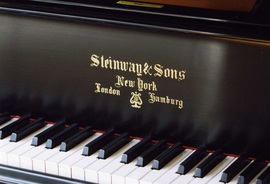
There is uncertainty afoot in the land. Confusion reigns: political confusion, economic confusion and often just plain life confusion. It was in light of all this certain uncertainty that I found myself musing about a most intriguing bit of information that crossed my desk recently: that of all the people who buy Steinway & Sons pianos, something like 25% of them are physicians.
​
Consider two possibilities that may draw so many doctors to the piano in general and to Steinway in particular. ​​First, physicians tend to be achievers, and achievers take on multiple challenges, even as children. So you can imagine more future doctors taking piano lessons than the rest of us and achieving a respectable level of competence, showing early on the perseverance it takes to make it through eight or ten years of medical training.

Pictureimage @ by Brian E. Faulkner
And second, physicians tend to be extraordinarily busy people entwined with the needs of their patients, research, teaching, etc.  And since they are not made of stone, it isn’t always easy for them to let go of their day’s work.  Clearly, some docs relax on the drive home, cocooned within their luxury automobile, while others wind down with a cocktail before dinner - or even a soothing cup of chamomile tea. But a surprising percentage of physicians turn to the piano for relaxation. Just placing their hands on the keys can have a cathartic effect.  And then the music takes them away.

What is there about a piano … especially a Steinway … that can move someone so profoundly? 

For the most part, it has to do with the touch and tone crafted into each instrument. A Steinway simply gives back more, reaches out and connects at a deeper level (people say) than other pianos that cost as much or more. Which makes what a doctor may experience while playing his Steinway at home not much different than what Lang Lang or Martha Argerich may experience onstage.  A concert performer’s experience occurs at a more rarified level, to be sure, but may be no less heartfelt. 

“It’s immersive -- and such good therapy,” one Steinway-playing physician told me.  

Where does this highly personal resonance between player and piano come from?

There are, of course, many design and manufacturing variables to consider in the creation of a Steinway.  But what it comes down to most is … wood … the care with which each piece is selected and the way in which all 12-thousand or so endlessly fussed over parts connect with one another and then speak to the player with a single voice.  The most shaded nuance, the most passionate fortissimo is given birth in a touch of the key and strike of the hammer, then is amplified in the piano’s soundboard heart and shaped by the massive maple rim that helps enrich every note.   

But it is here we must stop and return to the world and its worries.  For it is in that context that a Steinway rewards most eloquently, whether doctor, lawyer, corporate chief -- or even a blog writer.  It’s a great escape for busy minds and weary bodies … and so peaceful.

​Expensive?  Yes.  But for those who can afford it, worth every dime.

​As that same physician says, “It's such good therapy.”
​
TakeAway:  If your brand touches the heart and improves people's lives, there always will be demand for your product.

© 2016 by Brian E. Faulkner.  All rights reserved.
0 Comments

VINYL RECORDS: Marketing A Memory.

5/27/2015

0 Comments

 
Picture- Image © by Brian E. Faulkner -
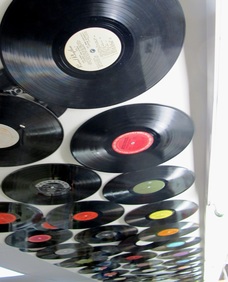
I hear that vinyl is back.  No, not vinyl floors or tacky vinyl car tops: vinyl records -- the grooved discs that music used to come on before cassette tapes and CDs and online streaming.  The kind I grew up listening to.  If you’re of the Baby Boom generation, you likely will recall hoarding your pocket change to buy the latest Elvis or Little Richard or Everly Brothers record. 

Three kinds of buyers appear responsible for the rise in vinyl record sales these days: 
  • purists, people who love the more open, warm sound vinyl reproduction provides;
  • young people, for whom vinyl records are a new, more tactile way to listen to indie bands while discovering the music of previous generations (my 29-year-old daughter has been rummaging around for vinyl albums since she was a teenager);
  • and older folks, for whom vinyl not only is a trip down memory lane but an opportunity to reacquaint themselves with all the music waiting in those old boxes of LPs in the basement.

So it’s no surprise that sales of classic artists like The Beatles and Bob Dylan have been selling well on vinyl – helping drive category sales up 15% during the first three months of 2015, while accounting for only about 2% of total album sales.  Top sellers for 2014 were a mix of classic and new artists: Jack White (who has set some vinyl sales records), Arctic Monkeys, Beck, The Beatles’ Abbey Road, Bob Marley’s Legend compilation album from 1984 and a notable young singer/songwriter from New Zealand who calls herself Lorde – among others.

The times they are a-changin’ warbled Dylan back in 1964, and sometimes the times catch us by surprise, especially when a format like LP or 45 rpm records re-emerge from yesteryear to delight us with their new-found authenticity.

You’d think this resurgence of “old as new” products is mostly about nostalgia, a word from Greek that essentially means an ache for home, and you’d mostly be right.  During times of geopolitical turmoil or unsettling societal change, yearning for “the good ol’ days” is common, although we don’t often reach out for nostalgic cues from much further back than our childhoods – which is why toys (and classic cars) from the '50s and '60s can command big Boomer bucks these days.

Heard a bit of conversation on NPR‘s Morning Edition today where a guest was talking about how people are using notebooks or notepads  more often in solo gathering spots like Starbucks.  I recall one person saying that he uses his laptop or tablet for school stuff, not for writing more thoughtful, reflective things like poetry.  If I’m chewing on some ideas, I’d much rather use a notepad than a computer, although writing blog posts come easily on my laptop.  But if I were taking notes in a class, I’d go for pencil and paper every time.  It’s more fluid, more intuitive – at least for me.   Taking notes on a computer requires you to interact with the technology more than you’d do with pen or pencil.

If nostalgia is about recapturing the feeling one had during a simpler, less complex, less technologically saturated and more thoughtful time – personally or as a people, it’s easy to see why vinyl records are enjoying a renaissance.  

And even the old ones sound so good, despite all the crackles and pops that can leap out of the grooves along with the music.  But you don’t mind the noise, do you?   Because they’re your crackles and pops.  You put them there back in the ‘50s, ‘60s, ‘70s and ‘80s when you were just coming up.

Now that’s a memory!   And memories are marketable.

TakeAway:  Your next new product may be something old --  who knows, maybe formal hats will make a comeback!

Content © by Brian E. Faulkner

0 Comments

Airport Choice Revisited:  Convenience & Experience vs. Price. 

5/6/2015

0 Comments

 
Picture- Image © by Brian E. Faulkner -
Last summer, I suggested in this space that Piedmont Triad International (PTI: airport code GSO) just might offer the world’s most satisfying airport experience.  (http://tinyurl.com/ktd3wrz)  PTI serves the greater Winston-Salem, Greensboro, High Point area of North Carolina. This airport is easy to get to, easy to go through and easy to leave when your flight returns.  And while you’re there, it’s a pleasant, uncrowded, unhurried place; parking is plentiful and close by and rental cars can be had right next to the terminal. There’s even an electric car charging station.  And free WiFi.

Given that kind of experience, I’d expect to pay a little more. However, a recent newspaper article 
noted that “Unless they’re on business trips, many travelers from the Piedmont Triad are chasing airline discounts to Charlotte or Raleigh for their vacations and other trips.”

Dunno about you, but if I were planning a vacation – especially with family in tow – I’d opt for the closest, least crowded airport and invest the few extra bucks per ticket in a more relaxed, hassle-free airport experience.   That is, if I can get to my destination from there without changing planes too many times (even though I’ve noticed on occasion that it costs less to fly to my destination through Charlotte from PTI than to drive to Charlotte and depart from there.  Go figure.)

The Journal article focused on the price advantage of the two more distant airports vs. PTI. It reported an average round trip fare of $10.66 less at Charlotte Douglas International Airport vs. PTI’s average fare, and a price difference between Raleigh-Durham International Airport and PTI of $53.02.  Of course, individual ticket prices may swing higher or lower.  The article failed to point out how small the price difference actually is between PTI and the other two airports, especially considering the comfort and convenience of flying from PTI vs. driving to Raleigh-Durham or Charlotte.  Each alternative is about an hour-and-a-half away (vs. half that or less for PTI), and you’d best add at least another hour to that or risk missing your flight -- even more time during commute times. 

There is a way to lower an airport’s average fare, notes PTI Executive Director Kevin Baker in the article: attract more budget airlines.

“We’re always talking to every low-cost carrier out there to try and lure them to come to our airport,” he told Journal reporter Richard M. Barron, although “there’s only so much we can do.”

Maybe so.  But what about talking up the advantages of his airport more effectively?  I, for one, would toss their current tagline (Fly Easy, Fly PTI) in favor of a variant with a bit more strategic muscle:

“It’s EASIER to FLY PTI!”  
This tagline invites prospective flyers to compare PTI with its more distant alternatives in light of the good dose of extra travel time and hassle that people experience in exchange for the few bucks they save on flights at more distant airports.

​Thinking Beyond Price:

It’s all too easy to sell your product or service on price – no matter what it is.  However, there may be other, more strategic product benefits lurking on the sidelines that prospective customers will rise to even more than a lower price.  Let’s say you’re that airline passenger trying to decide whether to fly from the handy airport nearby or commute nearly two hours to a bigger one.   What’s your choice?  Convenience?  Experience?  Or price?

PTI marketing could ask:

Are you prepared to drive all the way to Charlotte to save $10.66 on your next airline ticket?   With our easy-access, close-in parking, short lines and comfy terminal, it’s easier to fly PTI from anywhere in or around the Triad.  
Sure, you’ll spend an average of ten bucks more on your fare, but you’ll enjoy the experience a whole lot more … and get home faster, too.

Would I spend $100 more?  I’d sure think about it, although some would not.  I’d also like to think that there’s enough people like me to make a difference for PTI.   Because for us, an investment in avoiding the inevitability of parking hassles, long lines and general airport uncertainty is an easy choice, whether flying  for business or pleasure. 

 TakeAway:   Sometimes a higher price can be the better deal.

Content © by Brian E. Faulkner


0 Comments

Subaru Love:  IT'S All About Story.

4/30/2015

0 Comments

 
Picture- Image © Brian E. Faulkner -
Tags:  Subaru, Whole Foods, Trader Joe’s, Nikon, Kodak

Do you own a Subaru?  

If so, you probably love it – because a Subaru is versatile, safe, lasts a long time, is great to haul pets around in, performs well, makes a statement about larger community issues and drives you to adventure. 

People write love letters to Subaru:

Dear Subaru,
This morning was cool and although it had not rained, the road was damp from morning dew. I was driving in the left lane of a two lane highway. I came over a crest in the road to find three cars stopped in the right lane …
Somehow, the driver of that Subaru, a 2013 Legacy sedan, not only avoided an almost certainly serious accident – twice – but escaped without a scratch on either him or his car, thanks to the Subaru’s handling. 
My Subie never skidded uncontrollably. It never failed me. I cleared the entire accident scene completely unscathed. I love my Legacy today, not for helping survive an accident but for completely saving me from having one. Thank you Subaru, you've earned my respect, my gratitude and my loyalty.  
Marketers who want customers to maximize the use and enjoyment of their products will do well to take a page from Subaru’s book.   More than any brand of any product category I can think of, Subaru has consistently and successfully painted a compelling picture of customers in their target market – in their advertising and on their Web site.  The idea, of course, is that if you see yourself reflected in product marketing, you’re likely to want to buy that product, which is one reason why Subaru’s conquest sales are so high.

Subaru buyers are relatively young, well-educated and have higher incomes than the average car buyer.  And they are thrifty; according to a 2011 study, 36% of Subaru customers pay cash.   They support causes, too; check out the first Subaru you come to in a Whole Foods or Trader Joe’s parking lot.  Its bumpers likely will be festooned with stickers heralding all kinds of political and environmental values. 

Last year, my 30-something daughter and son-in-law, who live in the Pacific Northwest, one of Subaru’s strongest markets, bought a slate gray Subaru Forester.  Their family of three fit the car’s profile to a T, and as you might suspect, they did not choose their Subaru on a whim.  They knew what they wanted and went for it, after riding for years in a blue ’78 Volvo 240 wagon (that my daughter now uses to transport her landscaping tools). 

I think people “tune-in” to Subaru, and when they buy one, it seems to be an experience-based decision – plus a dash of emotion.

“The brand has a razor-sharp understanding of its owners,” writes MediaPost automotive reporter Karl Greenberg in an article profiling a Subaru TV spot that ran last September.  You may recall the ad:  a hippie grandmother tries to explain her long-ago “Summer of Love” to a young granddaughter, both of them riding in the back of the family Outback while Mom and Dad look on quizzically in the rear view mirror.  In a single creative sweep, Subaru stretches their appeal over two-plus generations while airing a spot people enjoy – and remember.   The entire family ends up hugging a tree.

Subaru is strong on story.  No matter where you go on their Web site, you’re never far from one:
Dear Subaru,
This is the story of my wonderful parents.  After 65 years of working his whole life, my father and my ‘stay at home’ mom embarked upon a cross-country adventure with their dog Buck, a Subaru Outback and a small teardrop trailer … following their dream to travel the country.  After a lot of planning they set off from the Florida Panhandle all the way to Washington State and back.  I cannot help but think they are using their Outback for the EXACT purpose it was made.  They are wonderful people and deserve to enjoy life …”

Nikon gives cameras to ordinary people and then posts their pictures online, a story without words.  Kodak understood that a long time ago; they didn’t sell film as much as they sold pictures.  Story was at the center of their marketing strategy … and should be at yours.   Because it’s the only way to get into people hearts.  And stay there.

“What makes a Subaru a Subaru?” the company asks.   The answer, of course, is … LOVE.   

TakeAway:  Sell the experience, sell the enjoyment.  Sell the pleasure of using your product.  Then the customers you want most will want you, too.

Content © Brian E. Faulkner

0 Comments

MCdONALD'S & aPPLE uP tHEIR eXPERIENCE.

3/31/2015

0 Comments

 
PictureImage © by Brian E. Faulkner
Years ago, when McDonald’s first started its march to fast food dominance, during the days when you could buy a burger, fries and a drink and still get change back from your quarter, consistency was the company’s stock in trade (yes, the price was under 25-cents, about the cost of a gallon of gas back then).  Another plus – and a critical success cornerstone – was that you could get the same McDonald’s fare about anywhere.  Eventually, the price of a Big Mac even became a statistical measure for global economic well being because of their international availability.

These days, Ray Kroc’s golden-arched vision has come up against a new reality.  Fast food customers expect more in the way of service, décor and food quality.  In short, the same old McDonald’s experience will no longer do, even though the neon glow red and yellow plastic has been gone for several years now after a major restaurant re-do.  But more change is underway and down the road.  Food quality is on the upswing, driven both by consumer demand for fare unsullied by artificial ingredients and by fast casual competitors like Chipotle Mexican Grill that are upping the dining experience, forcing change upon the entire quick serve category.

McDonalds’ new CEO, Steve Esterbrook, calls himself an “internal activist.”  Which means he's all about the business of change.  A Brit, he's known for simplifying the McDonald’s menu and turning the business around, in a world where the company’s business generally is declining. 

“This is where McDonald’s is headed,” Esterbrook said, referring to their  stylish new 500-seat restaurant at the Frankfurt airport, where you can order at the counter or use a number of kiosks that fall easily to hand as you enter the store.  There’s even a sit-down ordering option, thanks to a waiter with a tablet – and your food is brought to you so you don’t have to waste time milling around the counter. 

Picture
McDonald’s isn’t the only iconic business that sees change in its immediate future.  Apple, too, is upping its customer experience to accommodate the more upscale presentation demanded by luxury watch buyers.   The Apple Watch hits stores in about three weeks and reportedly may be had  for as little as $349 (with a sapphire crystal screen) or in 18k at upwards of $10,000 (as rumor has it).  But some marketing mavens are cautioning caution as the brand evolves.  Can Apple stretch itself into the luxury category without losing its everyman base?  Probably not without this store redesign, which – Apple Watch aside -- can’t come too soon for those serious Apple technology buyers who have tired of having to cut through the gadget gawkers to get serious attention – even out here in the burbs.
 
Customer experience is inextricably entwined with brand.  Brand impression, a critical strategic distinction not so readily established, can be sullied in an instant by a buying or service experience that doesn’t match.

As for me, I’d be more inclined to check out McDonald’s given the new décor and ordering options exhibited in their Frankfurt airport store.   However, I’m not in the market for a watch at any price (haven’t worn one in well over 30 years), although I have been conversing with myself about a MacBook Pro purchase for some time (not to mention the iPhone 6 my family keeps after me to buy) and would genuinely appreciate a less carnival-like, more “considerate”  atmosphere in which to make up my mind.

TakeAway:  Where does your product or service stand?  Does your customer experience match the brand impression you’ve created?  

Read about my iPhone 6 dilemma here:
www.brianefaulkner.com/blog/you-gotta-get-an-iphone-dad
Content © by Brian E. Faulkner   

0 Comments

Experience Mustang -- All Over Again.

3/14/2015

0 Comments

 
Picture
While scientists busily try to clone pets and people, an enterprising Orlando firm has re-invented the iconic Ford Mustang.  Their product looks just like the real thing: a 1964.5 Pony car with all the Mustang badges and design cues in place.   http://www.revologycars.com/

For all intents, it is the real thing – only thoroughly updated.

The Ford-licensed product was developed by Tom Scarpello’s Revology Cars in Orlando.  Scarpello, who used to build high performance versions of Ford cars when he worked for the company, loves classic cars but doesn’t like the way they drive.  “A lot of people agree with me,” he says.  “Consumer expectations have advanced and people are finding that carefully and professionally modified classic cars are an exciting alternative.  If the car is built right, the market potential for this type of vehicle is very significant.”  


The “new” Mustang is technologically superior to the original and has great appeal for that reason, unless you’re a purist who can’t imagine cruising around in anything less than the real McCoy.  

“The concept behind the company is to bring a scientific approach to the restoration of classic automobiles, utilizing modern components and manufacturing processes to ‘evolve’ them, to improve their performance, reliability, durability, fuel economy, safety, and comfort, while retaining their essential character and style,” explains Scarpello on the Revologoy Web site.   Open the ashtray and there’s a USB connection.  Turn the window crank, and the power windows go up and down.  Flip on the lights and LEDs illuminate front and back.  Engines, power-trains, suspensions and brakes are sourced from modern vehicles, Revology says, including a Ford manufactured 302 cu. in V8 that puts 265 hp on the ground through either a 4-speed automatic or 5-speed manual transmission.

So, if you’ve got a spare $119K for the fastback – or $122K for the convertible, get in line.  Or, you could re-build your own classic Mustang if that’s your idea of fun, starting with a 50-year-old (or newer) example, which may be anywhere from in barn-find dismal condition to pin-perfect.  Even a shabby example of a base ‘60s era Mustang with a six cylinder engine can set you back a significant pile of dollars, while a decent survivor (a relatively non-neglected, unmodified car that can be put back on the road in reasonable time with less-than outrageous expense) can cost in the many tens of thousands.   Various examples:  http://barnfinds.com/?s=1966+Mustang

Some people buy and restore classic cars for fun and profit then flip them to the next owner (who may not be so handy with a wrench) and go on to the next project.  Others collect them, some of whom are hoarders with barns or fields full of cars rusting away (see one of the examples above) waiting for that day that never comes.  Others buy (and enjoy) daily drivers.  And some purchase only the best examples and show them.

No matter which path you choose, you’re investing in experience.  You’re buying memories – not perfectly straight sheet metal, blemish-free paint and numbers that match.  Maybe your dad or mom drove a Mustang when they were courting and you want to surprise them on their 50th anniversary with a great-performing car that looks like an authentic new Mustang – because it is, complete with a 100,000 mile warranty.  

Experience sells, whether Mustangs or even something seemingly as mundane as groceries.  Products with “experience” built in make you feel good and make you want to come back for more, whether that’s next week when grocery shopping time rolls around again or decades from now when you get a hankerin’ for that classic car you enjoyed so much all those years ago.   Experience is largely about pleasure.  There are companies you look forward to doing business with (even in relatively mundane product categories) and those that leave you cold.   There are tools that fit perfectly in the hand and are a pleasure to use and tools that barely get the job done.  Airline A wraps its welcome around you, while Airline B treats you like cattle.  Brand is a form of experience, a bridge between product and prospect.

Take one look at Revology’s “new” Ford Mustang and you’ll get the idea.

TakeAway:  Does your product or service provide a brand “experience” that makes your customers or clients look forward to doing business with you -- all over again?    

Content © by Brian E. Faulkner
0 Comments

Price! Price! Price!

2/16/2015

0 Comments

 
Picture
Tags:  Greentoe.com, Priceline, Consumer Reports, Nikon, Canon, Olympus, J. C. Penney, B&H, B&H Photo, online discount cameras, smartshop.org

Have you ever thought about the difference between price selling and selling price?


Price selling is discounting.  It’s lazy marketing.  And having sale after sale after sale not only takes a bite out of profit but could be a long-term trap (just ask J.C. Penney).

Selling price is price-as-product. 

An intriguing example of price-as-product popped up on my screen this morning: Greentoe.com.   Their ad snagged me because I’ve been fishing around online for cameras and lenses.  So I clicked through to their site, where they immediately offered “the lowest prices available” on brands like Nikon, Canon, Olympus, etc.

“People like you are saving big on photo gear,” claimed the big green headline (the shade of money).  “Set your price and save up to 20%.  Brand new products.  No grey market.  Authorized retailers.  USA warranty included.” 

Does the advent of Greentoe.com mean I’ll no longer have to contend with my local Best Buy’s lackluster camera department?  (http://tinyurl.com/nywuxcx)  Does it mean I won’t have to risk ordering my next camera from one of those slippery big city camera discounters?

Maybe …

“Greentoe.com is the first and only website that allows you to name your own price for products in five categories: photography, appliances, musical instruments, baby items, and home theater,” reports shopsmart.org, an online Consumer Reports “best deals” resource.   They’re doing for consumer products what priceline.com has done for air travel and booking hotel rooms.  And it has the same sort of intrigue.  Will they accept my bid?   Will it be soooo much lower than the price somebody else paid?

Greentoe’s process is simple: 

(1) Submit an offer, on “thousands of products” (and give them your payment info).

(2) “Hundreds of retailers” then are notified of your offer (a green, orange or yellow gauge helps you determine how likely they are to accept – similar to Priceline).

(3) The first retailer to accept gets the sale; the transaction is between buyer and seller. 

If you know precisely what item you want, Greentoe.com may be your cup of tea – that is, if their retail partners have what you’re looking for.  The site’s selection of musical instruments and pro audio equipment is far from comprehensive, but it’s not meant to be.  They know that brick-and-mortar stores always have aged merchandise or overstocks they need to sell, so greentoe.com matches them up with customers who live hundreds or thousands of miles away.   Same for TVs, appliances and other products.

Their customers don’t have to be lucky or do the legwork, the company states in its well written and informative blog
, they “just have to have a little luck to find that deal.”   Greentoe provides the luck.

There is something else.   Once you’ve punched in your payment card numbers, there’s no turning back, so if you’re at all queasy about things like that – or don’t make purchase decisions easily (like me), it might be best to buy elsewhere. 

Heretofore, the place I most likely would have picked to buy a camera is New York’s B&H Photo-Video, especially if I needed help choosing the right one.  B&H has it all:  vast selection, attentive service, technical expertise, free advice and competitive prices.  And, if you live anywhere nearby or are visiting Manhattan, you get to handle the goods before making a purchase decision.  Walking into their 70,000 square foot their store is like entering a dream world of professional photo, video and audio goodies.

You can buy cheaper than B&H, but probably not as well. 

To be sure, there are other excellent purveyors of professional photo, video and audio products – online and off, and some may have as compelling a presentation as B&H, but the positioning of that big store at 34th & 9th has always fascinated me.   They’re not only the largest independent (non-chain) photo-video retailer in America, they also communicate their competitive advantages clearly and set price accordingly -- unlike all too many businesses that only play the price card.   B&H.com appears to command a slight price premium over some other online camera sources, and if so, they more than earn their margins with their compelling added-value.

Greentoe.com’s selling proposition also is compelling, however, so I will keep them in mind when it comes time to buy whatever camera I decide on.  Who knows?  My bid price just might outweigh the loyalty I feel to B&H for sending me all those informative catalogs over the years.  But then again, during the time in my life when I sold audio equipment, it always rankled me when I helped educate a prospect only to see him buy from some discounter instead of me. 

It’s so easy to discount, which is the unfortunate first impulse of many businesses.  In most situations, price selling is mind-numbing, profit crushing and unnecessary – unless, like Greentoe.com, price is your product.

TakeAway:  Does your business or brand have competitive advantages that will attract more qualified customers and allow you to command better margins?  Or are you content to sell principally on price?

Content © by Brian E. Faulkner

0 Comments

Brands Are Not Your Friends ... Sometimes.

2/10/2015

0 Comments

 
Picture
Tags:  gawker.com, Twitter, Coca-Cola, Coke, AdWeek, Pepsi, Mountain Dew, Maytag
The provocative headline “Brands Are Not Your Friends” popped up on my iPad yesterday evening.   So I had to check it out.

The gist of the article (from blog site gawker.com) was that people should not be sucked into treating brands as “Friends” on social media, because brands “exist solely to distract, deceive, and manipulate us out of our money.”

Their example was Coca-Cola’s “MakeItHappy” Twitter campaign aired during the Super Bowl.  According to AdWeek.com, the brand’s goal was to encourage Twitter users to “mark negative tweets with the #MakeItHappy hashtag. Then, Coke turned those words into cute art images using ASCII lettering code.”

All well and good … creative and harmless you might say, and very much in line with the frothy, friendly good-time image Coke likes to project.   But Gawker apparently was nearly struck dumb with the perceived idiocy of the campaign, which they presumed was designed to “trick you into buying more Coke,” although company marketers likely would not have put it that way. 

So Gawker, which appears to trade in provocative takes on celebrities and media, came up with some digital skullduggery, which I will allow AdWeek’s writer to explain out of my fear of inaccurately describing something I barely understand:

“Gawker created a Twitter bot, @MeinCoke, which tweeted (quotes from) Mein Kampf at Coca-Cola to see if the brand would turn lines from Hitler's autobiographical manifesto into art.”  It worked, and Coke quit the campaign.

“It's unfortunate that Gawker is trying to turn this campaign into something that it isn't,” a Coca-Cola spokesperson told AdWeek. “Building a bot that attempts to spread hate through #MakeItHappy is a perfect example of the pervasive online negativity Coca-Cola wanted to address with this campaign."

All this collective mindlessness got me to thinking about brands and whether they are, in fact, our friends.  And my conclusion is … sometimes.   Is Coca-Cola my friend?   Not really.  Their product does not nourish and even may be harmful, given the 800 cans of soft drinks that American males consume every year, according to recent stats.  Consumption by both males and females reportedly has been rising since the ‘70s. 

My point here is not to make trolls out of Coca-Cola or any other soft drink marketer; we are free to make, sell and consume most anything we want here in this country.   And if we consider some products to be harmful, we also are free to not consume them.

In synch with what I have termed Marketable Truth in blog posts on this site and in my consulting work, it may be useful to have consumers decide whether brands actually keep their promises.  If somebody sells you a tool and it breaks, their brand claim is not authentic – but if it lasts for 25 years like our Maytag washer did, it earns a high score.  If a retailer claims great service but doesn’t deliver, they get a low score, which may prompt them to improve. 

So why not place brands on a “promise continuum”?   Call it the Brand Performance Index (or the Real Thing Index, should you prefer) – and you be the judge.  

Products like fresh fruits and vegetables likely would score high, except maybe for broccoli if you’re under 10 or are George H. W. Bush.  Soft drinks would score low -- or would they?   They might score high if people believe they’re getting the refreshing promise they expected from their Coke or Pepsi or Mountain Dew, or even a lifestyle boost.  Same goes for my favorite single malt whiskey!

So it’s up to us to decide, not some marketer … or even Michael Bloomberg.  Brand promise is best measured by consumer experience.

TakeAway:  How would your brand score on the Real Thing Index?

Content © by Brian E. Faulkner


0 Comments

THe Real Thing: (not Coca-COla)

12/20/2014

0 Comments

 
PictureImage © by Brian E. Faulkner
Popped into a music store yesterday to buy a gift for my guitar-playing son and hadn’t been there more than a minute before I spied what looked at first glance like a Martin D-45 marked down to around $300.  If so, that would be the deal of the century, and should I have stumbled on such a rarity, its purchase, no doubt, would have made me feel less bummed over having sold my '63 Martin 00018 twenty years ago to buy an alternator for my old Chevy Celebrity.

The D-45, for those not acquainted with premium-quality guitars, is C. F. Martin’s flagship model, complete with abalone inlays, fancy purfling, East Indian rosewood sides and back and a sound that stands up and speaks with both sweetness and authority. 


The pretender in that guitar shop didn’t even come close, although it did have some attractive inlay work.  Apparently, a previous shop owner (now deceased) had a bunch of guitars made up in Korea to look like the best of the best American instruments and had his name put on them.  The guitar on display was one of the few would-be Martins or Gibsons or Fenders that hadn’t been sold over the years.

Guitars, like pianos, invite you to play them – or not.  It’s either a match made in heaven or a block of wood with strings on it (a guitar-shaped object, as the derision goes).   This particular guitar felt heavy, played thick and did not sing.  It was more of a decoration than a serious musical instrument – something you’d hang on the wall of a Nashville-themed restaurant.

Brands are a lot like that.  The best ones sing.  They wrap you into an experience that you look forward to – whether you buy a product for pleasure, utility or both (like the Black & Decker rechargeable lawnmower I finally bought last year).  I never have been much of a guitarist, but I always looked forward to playing my Martin.  I liked its song.  And it made me feel more accomplished than I actually was.   

I paid $300 for that guitar in 1970.  Today, it would bring around $3,000, maybe more.  A big D-45 from the same era could fetch upwards of twice that (the first one was custom made for Gene Autry in 1933).  These days, MSRP on a D-45 fresh from Nazareth is close to $11,000 -- and worth every dime.

I once had an acquaintance with a D-45 for sale.  He advertised it in the classifieds (in the part of North Carolina where a D-45 could be considered a six-string holy grail).  No takers.  So he doubled the price.

It sold lickety-split!  That guitar was the real thing – and (finally) priced accordingly.

It’s tempting to suggest that in order to sell something lickety-split it needs to sing like a Martin D-45 and be as costly, but ain't necessarily so.  A satisfying experience (like I used to get from my old Martin 00018 and still get from my lawnmower) can occur in all product categories and at all price levels. With guitars, that ranges from collector instruments on down through a student’s first guitar, which should NOT be a block of wood but have a sound that draws the ear in and strings that play with enough ease to encourage.  Too many parents make the mistake of buying a “bargain” instrument for their child to learn on and then wonder why the thing ends up stuck back in the closet after a couple of months. 

Quality, of course, can be maddeningly difficult to get a grip on.  One of my least favorite definitions is the industrial-bland “conformance to requirements.” 

Bah!

True quality should delight and amaze.  It should make you want what it’s got, whether resident in a fine guitar, a beautiful set of gears for a transmission or something as simple as a flashlight that feels good and works every time, a tool that you can use with confidence while searching for that old guitar you know must be back there in the closet somewhere …

TakeAway:  Be the real thing, the brand or product that people look forward to using (or building into the things they make) – no matter what you’re selling.

Content © by Brian E. Faulkner 


0 Comments

Pick Up The Phone And Smile: An Unusually Satisfying Business Experience.

12/2/2014

0 Comments

 
Picture
Had occasion today to call a hotel in Orlando.   Suzan answered the phone, and she sounded so enthusiastic that it immediately made me feel that she – and everybody else at the Grand Bohemian -- was delighted that I’d called.  Not just glad ... delighted!   What a rare experience these days when so many businesses care only enough to plug you into their endless, impersonal and oh-so-frustrating automated answering systems.  Either that or the person who answers the phone gives you the impression they’d rather finish filing their nails than talk to you.

"Good afternoon, and thank you for calling the Gran Bohemian Hotel -- this is Suzan at your service."  The way it should be done.

Suzan passed me along to Marion, who was equally enthusiastic.  She, in turn, connected me to the secretary of the gentleman who owns the hotel – just like that.  Impressive, especially after having tried to contact business execs whose phone setups clearly suggest that they don’t want to be found.

I had not been aware of Richard Kessler and his 10 themed hotels, elegantly branded as The Kessler Collection.  But I will long recall the exemplary welcome I received on the other end of his phone.  He clearly recognizes the value of investing in the people it takes to enliven his properties, known for their “distinctive architecture, rare art and music, and exemplary service,” which I have no doubt runs like a golden thread through the entire business.  

The Kessler experience reminded me of a hotel stay in Columbia, S.C. going on a month ago: the Clarion on Gervais Street.  To tell the truth, we almost turned around and went somewhere else when we saw the property.  The entrance was temporary and rather uninviting.  A worn carpet led the way to the front desk.   The place was under renovation, and management clearly had decided to do what business it could while one part of the facility was being torn down. 

But the front desk folks welcomed us warmly, made good noises about our grandchildren (who were exploring every corner of the lobby as only a trio of curious toddlers can do) and explained the situation.  The elevator was wobbly and the hallway carpets were grungy.  The door to our room opened reluctantly and banged angrily against its metal frame.   It was late and we were tired, so we decided to stay and ask for a discount at checkout time.  However, by then the hotel staff had completely won us over – from several shifts of front desk people to the woman who cleaned our room. 

Despite the less-than-perfect accommodations, we left smiling.  There was no need for a discount.  Plus, the kids found it fascinating to look out the window of our rooms in the morning as a power shovel demolished the building across the way.

The two very different hotels shared a common characteristic: a great experience, thanks not only to good people but also to management with the wisdom to hire, train and keep them.

TakeAway:  Good people with great attitudes can make a huge customer experience difference – and create loyal brand advocates.

Content © by Brian E. Faulkner
Tags:  Grand Bohemian Hotel, Orlando, The Kessler Collection, Clarion


0 Comments
<<Previous


    sample blog:

    This is a sample blog  for writer Brian E. Faulkner.  It presents stories about brands that do (or don't) communicate competitive advantage effectively. Stories have been gleaned from the business press, personal experience and occasional interviews. New articles are added from time to time, and every so often there will be a post of general interest -- about things like success, passion, social trends, etc. 

    Author

    Brian Faulkner is a writer and strategic communication consultant who helps business clients explain their competitive advantage in compelling and enduring ways.
     
    He also is a five-time Emmy award winning Public Television writer & narrator for a highly-rated and well-loved magazine series.

    Picture
    Image © by Brian E. Faulkner

    Categories

    All
    Advertising
    Authenticity
    Brand Branding
    Brand & Branding
    Brand Names
    Business Culture
    Competitive Advantage
    Competitive Advantage
    Competitive Factors
    Content
    Creativity
    Culture
    Customer Satisfaction
    Differentiation
    Experience
    Flexibility
    Future
    Innovation
    Key Message
    Leadership
    Luxury
    Marketable Truth
    Marketing
    Passion
    Politics
    Positioning
    Price
    Quality
    Sales
    Service
    Small Business Marketing
    Story
    Strategic Thinking
    Taglines
    Team
    Technology
    Trends
    Values
    Vision

    Archives

    July 2019
    January 2019
    November 2016
    February 2016
    October 2015
    September 2015
    August 2015
    July 2015
    June 2015
    May 2015
    April 2015
    March 2015
    February 2015
    January 2015
    December 2014
    November 2014
    October 2014
    September 2014
    August 2014
    July 2014
    June 2014
    May 2014
    April 2014
    March 2014
    February 2014
    January 2014
    December 2013
    November 2013
    October 2013
    September 2012
    October 2011
    March 2011

    RSS Feed

Content © by Brian E. Faulkner.   All rights reserved.