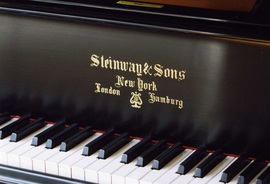
 image © by Brian E. Faulkner
 There is uncertainty afoot in the land. Confusion reigns: political confusion, economic confusion and often just plain life confusion. It was in light of all this certain uncertainty that I found myself musing about a most intriguing bit of information that crossed my desk recently: that of all the people who buy Steinway & Sons pianos, something like 25% of them are physicians.
Consider two possibilities that may draw so many doctors to the piano in general and to Steinway in particular. First, physicians tend to be achievers, and achievers take on multiple challenges, even as children. So you can imagine more future doctors taking piano lessons than the rest of us and achieving a respectable level of competence, showing early on the perseverance it takes to make it through eight or ten years of medical training.
Consider two possibilities that may draw so many doctors to the piano in general and to Steinway in particular. First, physicians tend to be achievers, and achievers take on multiple challenges, even as children. So you can imagine more future doctors taking piano lessons than the rest of us and achieving a respectable level of competence, showing early on the perseverance it takes to make it through eight or ten years of medical training.
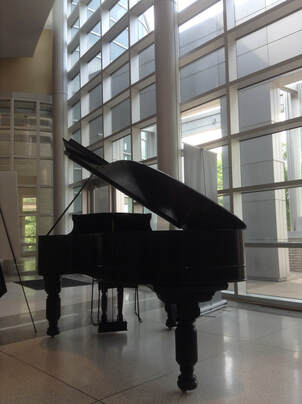
 image @ by Brian E. Faulkner
 And second, physicians tend to be extraordinarily busy people entwined with the needs of their patients, research, teaching, etc. And since they are not made of stone, it isn’t always easy for them to let go of their day’s work. Clearly, some docs relax on the drive home, cocooned within their luxury automobile, while others wind down with a cocktail before dinner - or even a soothing cup of chamomile tea. But a surprising percentage of physicians turn to the piano for relaxation. Just placing their hands on the keys can have a cathartic effect. And then the music takes them away.
What is there about a piano … especially a Steinway … that can move someone so profoundly?
For the most part, it has to do with the touch and tone crafted into each instrument. A Steinway simply gives back more, reaches out and connects at a deeper level (people say) than other pianos that cost as much or more. Which makes what a doctor may experience while playing his Steinway at home not much different than what Lang Lang or Martha Argerich may experience onstage. A concert performer’s experience occurs at a more rarified level, to be sure, but may be no less heartfelt.
“It’s immersive -- and such good therapy,” one Steinway-playing physician told me.
Where does this highly personal resonance between player and piano come from?
There are, of course, many design and manufacturing variables to consider in the creation of a Steinway. But what it comes down to most is … wood … the care with which each piece is selected and the way in which all 12-thousand or so endlessly fussed over parts connect with one another and then speak to the player with a single voice. The most shaded nuance, the most passionate fortissimo is given birth in a touch of the key and strike of the hammer, then is amplified in the piano’s soundboard heart and shaped by the massive maple rim that helps enrich every note.
But it is here we must stop and return to the world and its worries. For it is in that context that a Steinway rewards most eloquently, whether doctor, lawyer, corporate chief -- or even a blog writer. It’s a great escape for busy minds and weary bodies … and so peaceful.
Expensive? Yes. But for those who can afford it, worth every dime.
As that same physician says, “It's such good therapy.”
TakeAway: If your brand touches the heart and improves people's lives, there always will be demand for your product.
© 2016 by Brian E. Faulkner. All rights reserved.
What is there about a piano … especially a Steinway … that can move someone so profoundly?
For the most part, it has to do with the touch and tone crafted into each instrument. A Steinway simply gives back more, reaches out and connects at a deeper level (people say) than other pianos that cost as much or more. Which makes what a doctor may experience while playing his Steinway at home not much different than what Lang Lang or Martha Argerich may experience onstage. A concert performer’s experience occurs at a more rarified level, to be sure, but may be no less heartfelt.
“It’s immersive -- and such good therapy,” one Steinway-playing physician told me.
Where does this highly personal resonance between player and piano come from?
There are, of course, many design and manufacturing variables to consider in the creation of a Steinway. But what it comes down to most is … wood … the care with which each piece is selected and the way in which all 12-thousand or so endlessly fussed over parts connect with one another and then speak to the player with a single voice. The most shaded nuance, the most passionate fortissimo is given birth in a touch of the key and strike of the hammer, then is amplified in the piano’s soundboard heart and shaped by the massive maple rim that helps enrich every note.
But it is here we must stop and return to the world and its worries. For it is in that context that a Steinway rewards most eloquently, whether doctor, lawyer, corporate chief -- or even a blog writer. It’s a great escape for busy minds and weary bodies … and so peaceful.
Expensive? Yes. But for those who can afford it, worth every dime.
As that same physician says, “It's such good therapy.”
TakeAway: If your brand touches the heart and improves people's lives, there always will be demand for your product.
© 2016 by Brian E. Faulkner. All rights reserved.


 RSS Feed