A BLOG ABOUT COMMUNICATING COMPETITIVE ADVANTAGE
  • Brian Faulkner
  • Blog
  • CONTACT

Communicating Powerful Product Benefits.

9/2/2015

1 Comment

 
Picture- Images © 2015 by Brian E. Faulkner -
I was brought up short in the supermarket the other day by a bag of pretzels, which is not typically on my radar.  Last time I had a pretzel probably was some time in 1978.

But this bag of pretzels intrigued.  Yes, it had snappy packaging, done up in colors to attract the eye.   What was more intriguing, however – and more important in convincing me to stop for a closer look, was the product’s prominent positioning. 

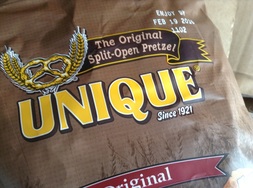
The first word that caught my eye was “UNIQUE” – equal in weight to the product’s name: Splits.  A banner at the top of the bag proclaimed “The Original Split-Open Pretzel.” 

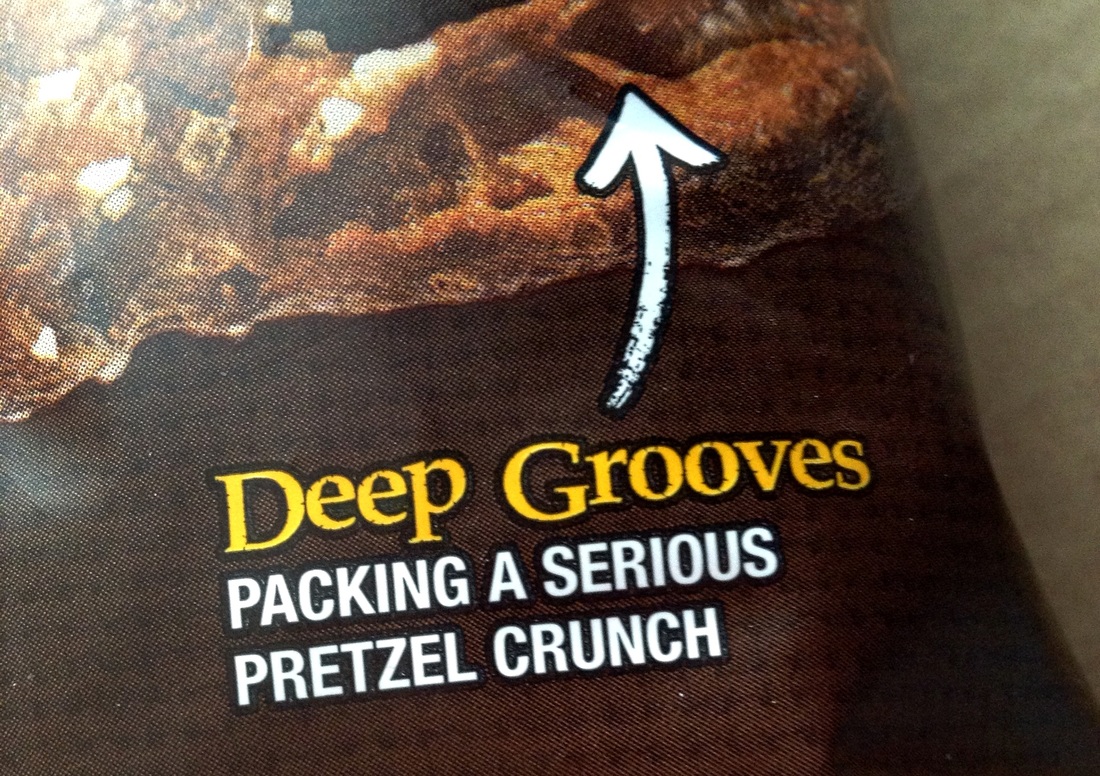
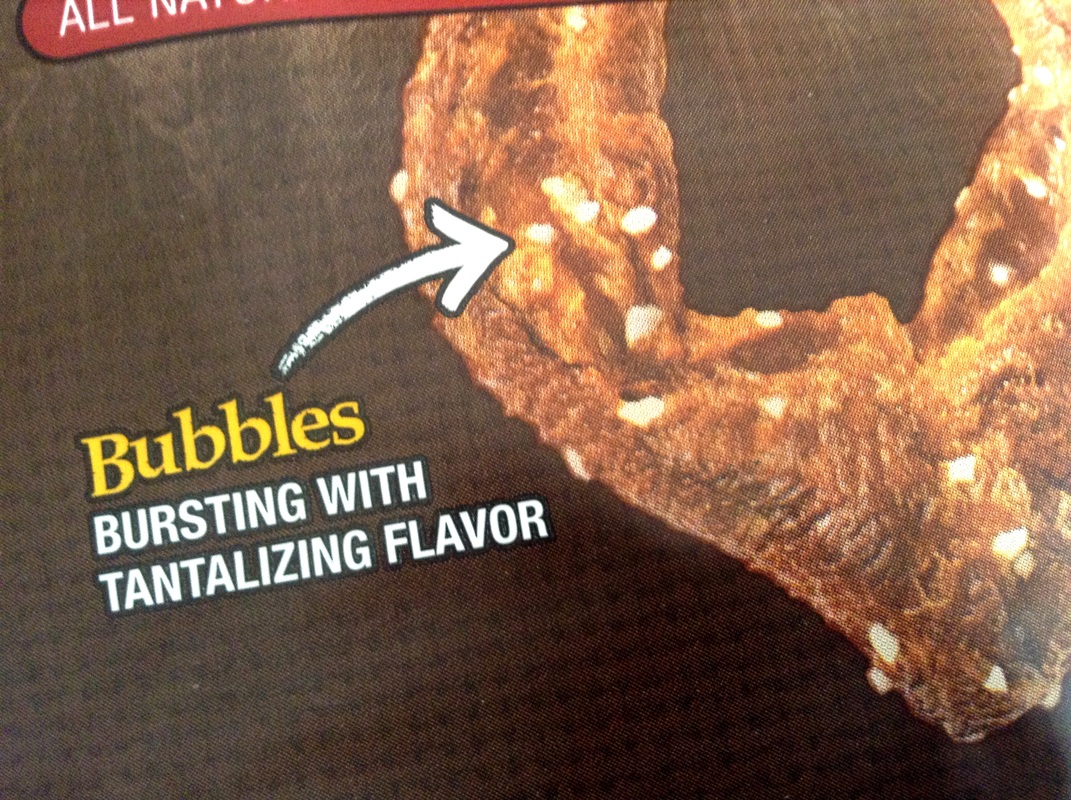
Since I’d never heard of a split-open pretzel and had no idea whether being split-open was a marketable pretzel attribute, I read on.  Further down the package, three prominent arrows pointed to a big pretzel, along with a few short lines of text for each benefit:

Bubbles: Bursting with Tantalizing Flavor.
Deep Grooves: Packing a Serious Pretzel Crunch
Beneath The Surface: Hollow Pockets Create a Crisply, Flavorful Bite.
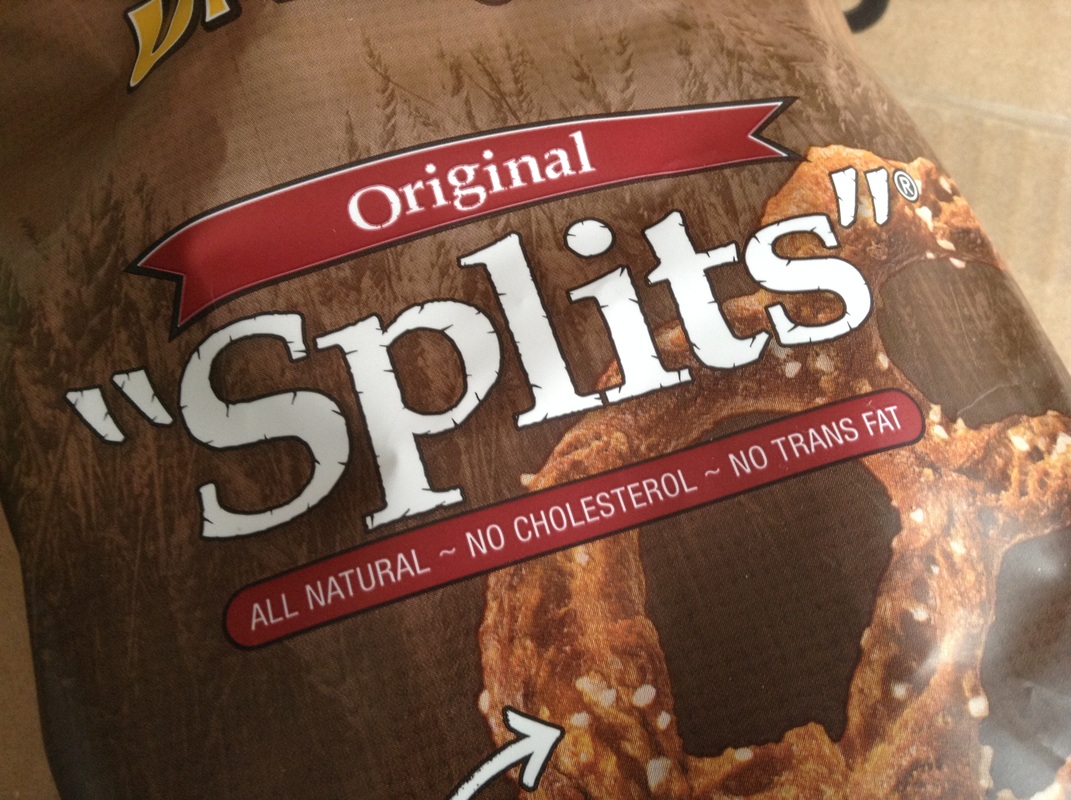
It’s abundantly clear from their key message that Unique Splits Pretzel Bakery of Reading, PA has decided that slightly bulging surfaces, grooves and tiny pockets of air buried in their pretzel would make them more crunchy and appealing.   True or not, they got my attention!  And the taste test later at home convinced me that they had a good pretzel, although the added value of the benefits they cited were lost on me, although I’m ready to admit that a pretzel aficionado may have picked up on them immediately.

The benefits don’t stop there.  The Splits package also proclaims that their product has more flavor, fewer ingredients (no sugars, malts, preservatives, colors, trans fats) … and smarter baking.

“The Spannuth Family started baking hard and soft pretzels back in the late 1800s,”according to their Web site and a blurb on the back of the package.  “The demand for our hard pretzels increased rapidly because of our ‘Unique’ baking process” that allowed the raw pretzel to “burst open,” creating bubbles and crevices that are “crispy, yet crunchy, and filled with flavor.”  Which is why they started calling them “Splits”. 

Splits come in multitudinous varieties, too: multi-grain, extra dark, unsalted, chocolate covered (yum!) and my future favorite, Bacon Cheddar Flavor Shocked “Shells” (they’re hollow, which makes them more like a potato chip than a pretzel).

If the pretzel itself isn’t the non plus ultra of pretzels (at least for me), the company’s positioning and benefits presentation -- their product story -- is close to perfect and certainly approach “UNIQUE”.  

TakeAway:  Don’t be hesitant about stepping forward with your product benefits – especially if they clearly set your offering apart from competitors. 

Content © 2015 by Brian E. Faulkner   

1 Comment

Car Insurance Seen in a Whole New LIght.

7/27/2015

0 Comments

 
Picture
For some time now, I've been aware of -- and impressed by -- Liberty Mutual's Whole New Light TV campaign.  Every time I see one of their spots, which feature everyday folks musing by a shoreline with the Statue of Liberty in the background, I pay attention. The ads work because of their simplicity, because of  story, because of the “real” talent they’ve chosen and because each spot presents a common insurance frustration that viewers can identify with immediately:

“You’re driving along, having a perfectly nice day, when out of nowhere a pickup truck slams into your brand new car.  One second it wasn’t there, and the next second – BOOM! – you had your first accident.  Now you have to make your first claim.  So you talk to your insurance company, and – BOOM! – you’re blindsided for a second time: They won’t give you enough money to replace your brand new car. 


        (pregnant pause)

Don’t those people know you’re already shaken up?”

I love the reference to “those people”.  We all know who they are.

The story goes on:  Liberty Mutual not only replaces the new car but also includes the value of depreciation.  Another spot in the series offers to replace a policyholder’s older car with one a whole model year newer. 

“You should feel good about your choice of insurance,” Liberty Mutual’s Web site informs us.  “That’s why our new campaign aims to shine a light on this otherwise confusing category.”

Amen to that! Insurance, whether auto, health, homeowner or life, all too often seems like a costly crap shoot, despite the assuring words used to sell us our policies.  So it’s refreshing to see a straight-talking sales pitch based on credible slice-of-life situations – without yammering on so much about price (the up to $423 you can save to switch is slipped in toward the end of the spot -- frosting on the cake compared to the main benefit). 

If I hadn’t experienced such consistently good customer service from my State Farm agent over the years, which is a personal rather than corporate competitive appeal, I’d be tempted to give Liberty Mutual a shot at my business because of their common sense advertising – but would be less likely to change companies for a 15% price difference, even if offered up by a cute green gecko. 

Pure and simple, Liberty Mutual has done a superb job of communicating their competitive advantage.  Their tagline is so strong that price may not even matter: car insurance seen in a whole new light. 

TakeAway:  Create an authentic and credible competitive advantage.  Then, present it in terms that people can rally around; they will be more likely to want to buy your product or service.

Content © by Brian E. Faulkner


0 Comments

TaglineS 101: Nobody Says It Better Than Dr. Hansen.

6/1/2015

0 Comments

 
Picture- Image © by Brian E. Faulkner -
Tags:  Carolina Men's Clinic, R. J. Reynolds Tobacco Company, Camel cigarettes.
Driving north from Charlotte on 1-77 last week my ear caught a radio commercial for The Carolina Men’s Clinic, which is said to be unusually effective at helping men overcome their E.D. issues.  I listened all the way through the spot because I was too tired to reach over and change the station -- stuck in the predictable afternoon clot of traffic where lanes constrict from three to two, an event so normal that the traffic reporters pretty much ignore it.   

I find E.D. commercials particularly irksome, whether on radio or TV, especially since I’m not in the market for release from this particular misery.  But what grabbed my attention this time was the clinic’s claim that “even urologists trust Dr. Hansen to fix their E.D.” 

What a great line, akin to a shoe store bragging about how many podiatrists shop there.   I liked the line so much that I laughed out loud and began listening for the clinic’s spot during subsequent trips to Charlotte.

I have no idea how well the good doc’s treatment works (they claim a 92% success rate vs. a substantial failure rate for the branded pills hawked on TV) and remain mystified how a board certified family practice physician with a background in osteopathy established a clinic to treat men with sexual dysfunction in the first place.   It may be as simple as finding a need and filling it; the need certainly seems to be there.

Another thing I liked about his spot was the promise of a non-intimidating experience -- plus proof in the pudding: treatment guaranteed to work or you get your $199 fee back.  Dr. Hansen may be effective (or not), but either way there’s a lesson here to learn about communicating competitive advantage: 

     (1)  Understand what sets your product or service apart from everybody else’s.

     (2)  State your difference in a few compelling, memorable, authentic words.

     (3)  If possible, have your tagline tell a story.

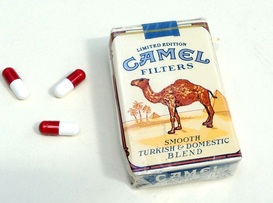
When I was a young teen being led astray by the tobacco industry, an R. J. Reynolds Tobacco Company ad claimed that doctors preferred smoking Camel cigarettes.   I ended up smoking them, too, lured in part by my parents’ example and by RJR's compelling ad, even though their proposition made no sense.  But lots of people smoked in those days; it was socially acceptable – even expected.   So how bad could it be if More Doctors smoke Camels than any other cigarette (according to a nationwide survey)?   T
he toughest guys and most elegant women in the movies all smoked ...

I don’t know how well Dr. Hansen’s bit of clever copywriting is working for him, but the lesson here is clear:  his radio spot DID get my attention and DID make me remember what sets the Carolina Men’s Clinic apart, thanks to a handful of ear-catching, memorable words.     

Dr. Hansen doesn’t use the “urologist” claim as a formal tagline, but dontcha think he should?

TakeAway:  A tagline that tells a solid strategic story gathers ears and changes minds.


Content © by Brian E. Faulkner

0 Comments

Airport Choice Revisited:  Convenience & Experience vs. Price. 

5/6/2015

0 Comments

 
Picture- Image © by Brian E. Faulkner -
Last summer, I suggested in this space that Piedmont Triad International (PTI: airport code GSO) just might offer the world’s most satisfying airport experience.  (http://tinyurl.com/ktd3wrz)  PTI serves the greater Winston-Salem, Greensboro, High Point area of North Carolina. This airport is easy to get to, easy to go through and easy to leave when your flight returns.  And while you’re there, it’s a pleasant, uncrowded, unhurried place; parking is plentiful and close by and rental cars can be had right next to the terminal. There’s even an electric car charging station.  And free WiFi.

Given that kind of experience, I’d expect to pay a little more. However, a recent newspaper article 
noted that “Unless they’re on business trips, many travelers from the Piedmont Triad are chasing airline discounts to Charlotte or Raleigh for their vacations and other trips.”

Dunno about you, but if I were planning a vacation – especially with family in tow – I’d opt for the closest, least crowded airport and invest the few extra bucks per ticket in a more relaxed, hassle-free airport experience.   That is, if I can get to my destination from there without changing planes too many times (even though I’ve noticed on occasion that it costs less to fly to my destination through Charlotte from PTI than to drive to Charlotte and depart from there.  Go figure.)

The Journal article focused on the price advantage of the two more distant airports vs. PTI. It reported an average round trip fare of $10.66 less at Charlotte Douglas International Airport vs. PTI’s average fare, and a price difference between Raleigh-Durham International Airport and PTI of $53.02.  Of course, individual ticket prices may swing higher or lower.  The article failed to point out how small the price difference actually is between PTI and the other two airports, especially considering the comfort and convenience of flying from PTI vs. driving to Raleigh-Durham or Charlotte.  Each alternative is about an hour-and-a-half away (vs. half that or less for PTI), and you’d best add at least another hour to that or risk missing your flight -- even more time during commute times. 

There is a way to lower an airport’s average fare, notes PTI Executive Director Kevin Baker in the article: attract more budget airlines.

“We’re always talking to every low-cost carrier out there to try and lure them to come to our airport,” he told Journal reporter Richard M. Barron, although “there’s only so much we can do.”

Maybe so.  But what about talking up the advantages of his airport more effectively?  I, for one, would toss their current tagline (Fly Easy, Fly PTI) in favor of a variant with a bit more strategic muscle:

“It’s EASIER to FLY PTI!”  
This tagline invites prospective flyers to compare PTI with its more distant alternatives in light of the good dose of extra travel time and hassle that people experience in exchange for the few bucks they save on flights at more distant airports.

​Thinking Beyond Price:

It’s all too easy to sell your product or service on price – no matter what it is.  However, there may be other, more strategic product benefits lurking on the sidelines that prospective customers will rise to even more than a lower price.  Let’s say you’re that airline passenger trying to decide whether to fly from the handy airport nearby or commute nearly two hours to a bigger one.   What’s your choice?  Convenience?  Experience?  Or price?

PTI marketing could ask:

Are you prepared to drive all the way to Charlotte to save $10.66 on your next airline ticket?   With our easy-access, close-in parking, short lines and comfy terminal, it’s easier to fly PTI from anywhere in or around the Triad.  
Sure, you’ll spend an average of ten bucks more on your fare, but you’ll enjoy the experience a whole lot more … and get home faster, too.

Would I spend $100 more?  I’d sure think about it, although some would not.  I’d also like to think that there’s enough people like me to make a difference for PTI.   Because for us, an investment in avoiding the inevitability of parking hassles, long lines and general airport uncertainty is an easy choice, whether flying  for business or pleasure. 

 TakeAway:   Sometimes a higher price can be the better deal.

Content © by Brian E. Faulkner


0 Comments

Don't Mess With Your Brand Story.

4/29/2015

0 Comments

 
PictureImage © by Brian E. Faulkner
Tags: Microsoft, NPR, George Zimmer, Men’s Wearhouse, Joseph Abboud, Jos. A. Bank, Ford Motor Company, GM, Cadillac, Buick, Ford, Lincoln, Apple, Coca-Cola, New Coke
Every brand, company, product or service has a story – just like people.  People’s stories are a combination of image and reputation, which can be anything from well focused to wildly irresponsible.   Some businesses may be well-positioned (in a controlled, strategic sense) while others cast their reputation to the wind, allowing the marketplace to define who they are and what they represent.   Call it default positioning.   The example that most often comes to my mind is Microsoft, which hasn’t done a great positioning job.  There are many “Microsofts” out there, depending on who's doing the talking.  

Heard an interview with George Zimmer on NPR this morning.  His topic was paying people more, even at the expense of company profits.  But what grabbed my attention was his distinctive gravelly voice, the one he used on television when he was boss of The Men’s Wearhouse – you know the one:  

“You’re going to like the way you look. “I guarantee it!”  

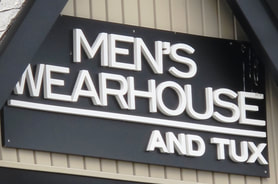
Every spot had a story, and as leader-spokesperson, Zimmer was deeply imbedded in the Men’s Wearhouse image -- along with that famous tagline.  I can’t help but notice that the Men’s Wearhouse strategic positioning has become less distinctive since Zimmer was forced out, supposedly because of management disagreements.  Something’s missing from their advertising, and it’s not just Zimmer.   Despite the few recent Men’s Wearhouse spots featuring signature suit designer Joseph Abboud, their marketing seems focused more on price, like their long-time competitor, Jos. A. Bank, which Men’s Wearhouse purchased early in 2014 after a turbulent takeover battle.   

The takeaway here is that a strong brand story should not be discarded so readily, although I’m sure the Men’s Warehouse board thought long and hard about the strategic consequences of dumping Zimmer.   I find it discouraging, however, that they’ve fallen back on price advertising after such success with set-apart positioning, although it must be working or they wouldn’t do it.  But I’ll bet their margins aren’t as good as when Zimmer was hawking the wares, because price was hardly mentioned in his spots and, as I recall, Wall Street liked the stock.

I have several friends and acquaintances, each with a business in the same retail category.  Two of them ride a high-price wave supported by a brand story that's more than 150 years old.  They don’t have to sell on price and, as a result, get high margins.  Another friend sells the same type of high-end merchandise at market prices, although different brands.  His business story has been established for well over 50 years; customers seek him out because of his quality reputation.  Still others I know in that same business always seem to be wrestling with price.  They don’t command the margins they could because their business stories are indistinct.  They don’t have a Marketable Truth© to stand on. 

Both Ford Motor Company and GM currently are wrestling with their image stories.  GM is in the latter stages of rebooting its Cadillac brand to compete with the best German luxury performance sedans; they've had enough success that Cadillac is no longer seen as exclusively for oldsters seeking a luxury nameplate and plush ride.   Buick, another GM brand that used to have a fuddy-duddy image, is experiencing a surprising sales renaissance driven by rising demand in China, where the brand has become a status symbol.  Different time, different story.

Ford also is into a bit of image retooling of late.  Lincoln (finally!) is thinking about abandoning its confusing alphabet soup model designations in favor of real names like Continental and possibly even Zephyr.   All while Ford grapples with a negative quality blip brought about in recent years by a dashboard communication and entertainment system that has proven troublesome and hard to use – so much so that auto enthusiast Web sites are recommending that people wait ‘til a redesigned system comes out on the 2016 models later this year to purchase their new Fords and Lincolns.   

When I think of brand image, however, I think most often about Apple.  They were an upstart at first, but gradually built a business, operating system and reputation that out-shined the king of personal computers at that time, the venerable IBM.  Will gutsy moves into new product categories like luxury watches and even automobiles sour Apple’s reputation?  Not likely, because they’ve told and retold their brand story so well – and so long – that they’re as close to invincible as any business or brand out there.

Even so, in this day of social-driven media, there are new voices everywhere, and some percentage is quick to broadcast bad news.  One exemplary misstep marketers are quick to recall is the New Coke debacle of 1985, when Coca-Cola almost lost its way -- and that was before the Internet became so widely available.  This very day, April 29, 2015, online rumblings are afoot about a second brand of listeria-laden ice cream and a major beer maker’s label that seems to make light of rape.

Reputation or image -- call it what you will -- can bite you in the backside any minute … but also can help lead you to greatness.  All the more reason to consider whether your brand, business, product or service is solidly positioned in today’s uber-competitive, uber-critical world.

 TakeAway:  Shape your strategic position carefully.  And guard your brand story for dear life.

Content © by Brian E. Faulkner        
Marketable Truth © by Brian E. Faulkner


0 Comments

Price! Price! Price!

2/16/2015

0 Comments

 
Picture
Tags:  Greentoe.com, Priceline, Consumer Reports, Nikon, Canon, Olympus, J. C. Penney, B&H, B&H Photo, online discount cameras, smartshop.org

Have you ever thought about the difference between price selling and selling price?


Price selling is discounting.  It’s lazy marketing.  And having sale after sale after sale not only takes a bite out of profit but could be a long-term trap (just ask J.C. Penney).

Selling price is price-as-product. 

An intriguing example of price-as-product popped up on my screen this morning: Greentoe.com.   Their ad snagged me because I’ve been fishing around online for cameras and lenses.  So I clicked through to their site, where they immediately offered “the lowest prices available” on brands like Nikon, Canon, Olympus, etc.

“People like you are saving big on photo gear,” claimed the big green headline (the shade of money).  “Set your price and save up to 20%.  Brand new products.  No grey market.  Authorized retailers.  USA warranty included.” 

Does the advent of Greentoe.com mean I’ll no longer have to contend with my local Best Buy’s lackluster camera department?  (http://tinyurl.com/nywuxcx)  Does it mean I won’t have to risk ordering my next camera from one of those slippery big city camera discounters?

Maybe …

“Greentoe.com is the first and only website that allows you to name your own price for products in five categories: photography, appliances, musical instruments, baby items, and home theater,” reports shopsmart.org, an online Consumer Reports “best deals” resource.   They’re doing for consumer products what priceline.com has done for air travel and booking hotel rooms.  And it has the same sort of intrigue.  Will they accept my bid?   Will it be soooo much lower than the price somebody else paid?

Greentoe’s process is simple: 

(1) Submit an offer, on “thousands of products” (and give them your payment info).

(2) “Hundreds of retailers” then are notified of your offer (a green, orange or yellow gauge helps you determine how likely they are to accept – similar to Priceline).

(3) The first retailer to accept gets the sale; the transaction is between buyer and seller. 

If you know precisely what item you want, Greentoe.com may be your cup of tea – that is, if their retail partners have what you’re looking for.  The site’s selection of musical instruments and pro audio equipment is far from comprehensive, but it’s not meant to be.  They know that brick-and-mortar stores always have aged merchandise or overstocks they need to sell, so greentoe.com matches them up with customers who live hundreds or thousands of miles away.   Same for TVs, appliances and other products.

Their customers don’t have to be lucky or do the legwork, the company states in its well written and informative blog
, they “just have to have a little luck to find that deal.”   Greentoe provides the luck.

There is something else.   Once you’ve punched in your payment card numbers, there’s no turning back, so if you’re at all queasy about things like that – or don’t make purchase decisions easily (like me), it might be best to buy elsewhere. 

Heretofore, the place I most likely would have picked to buy a camera is New York’s B&H Photo-Video, especially if I needed help choosing the right one.  B&H has it all:  vast selection, attentive service, technical expertise, free advice and competitive prices.  And, if you live anywhere nearby or are visiting Manhattan, you get to handle the goods before making a purchase decision.  Walking into their 70,000 square foot their store is like entering a dream world of professional photo, video and audio goodies.

You can buy cheaper than B&H, but probably not as well. 

To be sure, there are other excellent purveyors of professional photo, video and audio products – online and off, and some may have as compelling a presentation as B&H, but the positioning of that big store at 34th & 9th has always fascinated me.   They’re not only the largest independent (non-chain) photo-video retailer in America, they also communicate their competitive advantages clearly and set price accordingly -- unlike all too many businesses that only play the price card.   B&H.com appears to command a slight price premium over some other online camera sources, and if so, they more than earn their margins with their compelling added-value.

Greentoe.com’s selling proposition also is compelling, however, so I will keep them in mind when it comes time to buy whatever camera I decide on.  Who knows?  My bid price just might outweigh the loyalty I feel to B&H for sending me all those informative catalogs over the years.  But then again, during the time in my life when I sold audio equipment, it always rankled me when I helped educate a prospect only to see him buy from some discounter instead of me. 

It’s so easy to discount, which is the unfortunate first impulse of many businesses.  In most situations, price selling is mind-numbing, profit crushing and unnecessary – unless, like Greentoe.com, price is your product.

TakeAway:  Does your business or brand have competitive advantages that will attract more qualified customers and allow you to command better margins?  Or are you content to sell principally on price?

Content © by Brian E. Faulkner

0 Comments

Budweiser Scores With Super Bowl Ad.

2/2/2015

0 Comments

 
I’m not one for gushy ads, so when I watched Super Bowl XLIX yesterday, I looked for spots with solid strategic bite.  Not lifestyle stuff.  Not cuddly cute.  Not outrageously obscure (there was more than a few of those). I was on the lookout for ads with a clear benefits story -- although, like most everybody else on the planet, I did enjoy watching the Budweiser puppy find his way back home.

Yeah, yeah … I know it’s all about entertainment and ego, but Tom Brady and company provided enough of that to even satisfy my dad, a dedicated Patriots fan who’s been gone nearly four years now. Wherever he’s hanging out these days, I’d bet that last minute interception by Malcom Butler raised him and inch or two off his recliner! 
I didn’t see ALL the ads, no doubt, given several beverage refill breaks and more than a few old-man visits to the smallest room in the house.  But there were several spots that caught my marketer’s eye, especially Brewed the Hard Way, one of two other Bud ads that ran during the evening.

“Brewed” popped up in the third quarter as viewers were wondering which way the Tilt-A-Whirl game was going to go.  By then, we’d been served more than our share of emotionally-saturated spots, some truly inexplicable ads and a few that tried hard to sell something it was not – that means you, Toyota Camry.  And things had pretty much come back to earth after Katy Perry’s 12-minute entertainment extravaganza.

With a hard-driving fuzz guitar underlay and shots of Bud being made -- and enjoyed, flashes of text declared Budweiser a “macho beer, not brewed to be fussed over”, a brew for “drinking, not dissecting.”  Bud, the spot declared, is for “people who like to drink beer brewed the hard way.  Let them sip their pumpkin peach ale.  We’ll be brewing us some golden suds …"

“This is an affirmation of what Budweiser is, not an attack on what it isn't,” Brian Perkins, Budweiser’s VP of Marketing, told Robert Haynes-Perkins of the NY Drink Examiner.  “We're hoping to touch a chord with the person who wants the truth about how we make Budweiser and why it's great.

“We love craft beer” (and Anheuser-Busch acquires and sells some),” Perkins told the reporter.  "I think that the prevailing dialectic is that small must be better, and big must be bad.  That's the generally accepted trend. For us, big is good. It's not arrogant, it's just saying that it's great to brew a beer that so many people enjoy … it doesn't mean there's less care, less quality or less passion from the people who make it."

That’s tapping into the brand's Marketable Truth©.  And even though it scored only 5.15 (out of 10) on USA Today’s Ad Meter, I thought the ad was a strategic touchdown with its Brewed The Hard Way tagline.

There were a few other Super Bowl ads with solid positioning (of those I actually saw). 

GM’s new Colorado truck ads scored in my book by telling a story that revealed the cool truck guy vs. the less cool compact car guy.  The benefits story was subtle, but it worked -- although it only placed #39 on USA Today’s list.

I also like Sprint’s “Apology” ad (#34) because it directly called out the other carriers for being “really expensive,” offered to cut people’s wireless rates in half compared to Verizon and AT&T and gave them a way to make that happen.  They also used a whiny goat and a braying donkey to make a visual point about their competitor’s pricing.

And then there was GoDaddy’s “Working” spot (#55), which presented a direct, no-nonsense benefits story vs. the in-your-face, sexually charged approach they’ve used in previous Super Bowl ads.  It didn’t score very well with the public, however, which no doubt would like to have gazed upon Danica Patrick one more time or scored a smooch from Bar Rafaeli.  

Clearly, the ads I appreciated for their strategic punch were not favorites in the eyes of viewers who were more interested in being entertained than being convinced on the spot to change their mind about a product or buy something on the strength of product benefits.  

Fortunately for Budweiser, the public will be seeing more of “Brewed”. 

TakeAway:  In the long run, benefits-laden, positioning-driven advertising wins over creative fluff – unless, of course, a spot has both, like Apple’s famous “1984” MacIntosh ad during Super Bowl XVIII.   Little did anyone viewing that game know how much the world was about to change.


Content © by Brian E. Faulkner              

Marketable Truth © by Brian E. Faulkner

0 Comments

Buick's Da Bomb!

1/17/2015

0 Comments

 
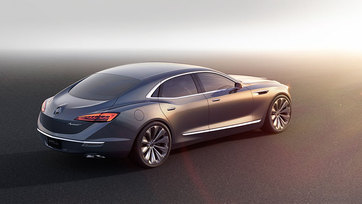
PictureBuick Avenir Concept Car (GM Image)
Two things: 

(1)  When I was a kid I thought Buicks were clunky. 
(2)  Until now, I have never once used the words “Da Bomb” in a sentence.

For some reason I most recall the ’58 Buick, a whale of a car festooned with chrome.  It wasn’t as stylish as the ’58 Chevy (my two lively great aunts drove a sleek black Impala convertible that my brothers and I lusted after).  One of our boring neighbors had a boring ’58 Buick.  So clunky seems about right.

Fast forward “many” years, where I find a dark green 2000 Buick LeSabre parked in my garage.  We inherited it from my father, who picked it out of a Florida car dealer’s reject row in 2005.  It was a low mileage car with a few scratches and minor dents and a small handful of annoying maintenance issues the dealer didn’t want to address.  That (and the price) suited Dad because he was tired of babying his near-mint, always garaged black ’78 Oldsmobile Cutlass, which had of late been demolished in an accident (not Dad’s fault).  He drove the Buick for four years, adding dents and dings of his own as his eyesight deteriorated. 

Dad was never much of a car guy, even though he worked in the business.  He never bought a new car, preferring older models with plenty of life left in them on which somebody else had assumed much of the depreciation.  Even so, he would have liked the looks of Buick’s new concept car, the Avenir, making rounds on the Internet this week.

It’s “Da bomb!” – a gorgeous, curvaceous sculpture in sheet metal if I’ve even seen one, with flowing lines reminiscent of luxury marques from the ‘30s.  It caught my eye immediately.  Even the performance-at-all-costs mavens at online auto site Jalopnik.com (a typical headline: “Watch This Screaming 911 Porsche Rally Car Demolish Mountain Roads”), acclaimed Avenir as “The Gorgeous RWD Buick We’ve Been Waiting For”.

“Buick, for once, has the hottest new car in Detroit,” headlined Yahoo Finance, despite the aggressive supercars, hefty pickups and extended range electric models that largely dominated publicity stemming from this year’s North American International Auto Show.   

“After growing Buick sales 11% in the U.S. last year, GM is trying to capitalize on the brand’s momentum,” reported CNBC auto writer Phil LeBeau, even though “momentum” is not a word that would have been used to describe Buick sales until more recent years.  The brand was all but written off by the time of GM’s 2009 bankruptcy, and speculation was that it wouldn’t be long before Buick followed the fate of sister-brand Oldsmobile, discontinued in 2004. 

If not for the Chinese, that may well have been the car’s fate.   

“General Motors isn’t thinking of the U.S. with the Avenir,” said Dave Sullivan, an analyst with AutoPacific, quoted in Rick Newman’s Yahoo article, “it’s thinking of the Chinese market.”  And placing a halo over the Buick brand -- using marketing words like this: 

“The Pinnacle of Buick Luxury, Design and Technology … a sophisticated and intuitive expression of the premium automotive experience,”
a position now largely occupied by the likes of Mercedes-Benz, BMW, Lexus and Audi.

But Buick is already Da Bomb in China, where it’s enjoyed distribution for over 100 years.  The brand is GM’s biggest seller there, accounting for around 14% of China’s new car sales.   Sullivan reports sale of 3.5 million GM-partnered automobiles in China during 2014, “where people have been salivating for a car like this,” vs. only 2.9 million GM brand cars sold in the U.S.   For this American automaker, the tail (growth of their brands in China) is wagging the dog with a proliferation of attractively styled new Buicks that appeal on both sides of the Pacific, of late even including an innovative -- and attractive --  new 2+2 convertible called the Cascada.

So what about me?

Well, I’m a lot like my Dad.  I’d be more likely to wait on the Avenir until some 3-5 year old models become available.  But then there’s that “LUXURY INTERIOR … REIMAGINED”, as Buick puts it.  To my eye, the Avenir interior looks more like some stylist’s exercise in excess than a comfy place in which to enjoy and drive the vehicle -- just the opposite of the car’s conservatively classy exterior design. 

But, as my mirror reminds me, I’m not thirty (or forty or fifty) anymore. 

So give me the concept car exterior plus the simple, analog gauge-rich interior from my dad’s LeSabre and I’ll go for it --  Lord willing, maybe somewhere around 2020.  Or, maybe I'd go for Buick's new Cascada convertible, a production model you're likely to see on the road sometime soon.  I've always loved a drop-top, and on this new Buick (their first convertible in 25 years), you can raise the top at the first hint of rain and put it back down when the sun comes out -- while traveling up to 31 mph!

TakeAway:  Your customers will tell you where your brand ultimately can go.  Listen to what they have to say and build your future on that.

Content © by Brian E. Faulkner


0 Comments

Does Coach Have An Image Problem?

1/8/2015

0 Comments

 
PictureImage © by Brian E. Faulkner
Got to thinking about Coach, Inc.’s brand image today after reading an article that questioned the company’s potential acquisition of fashion footwear brand Stuart Weitzman to complement their own nascent shoe line, reportedly the first of an array of “lifestyle” products to take them beyond handbags. 

Krystina Gustafson speculates in her CNBC.com article that, while Weitzman will add to overall Coach sales, it may not do much for the brand’s image, which needs some propping up.  She also quotes Robert Konik, an analyst with the global investment banking firm Jeffries, who suggests (in a note to investors) that Coach has, indeed, lost some of its pricing power. 

The brand may have at long last fallen out of favor with high end shoppers, Gustafson adds, because of “stale product, over-distribution and damaged brand equity from its high presence at outlet malls.”

Back in the late ‘80s, I helped their president, Lew Frankfort, with a Coach positioning speech he presented to an audience of marketing and sales reps.  Frankfort led development of the Coach business from the early ‘80s until his retirement late last year as executive chairman, during which he was instrumental in expanding the fashion leather handbag’s company’s revenue and global footprint by many orders of magnitude. 

My brief connection with him occurred during the company’s Sara Lee days, when the Chicago-based food and apparel giant was making acquisitions and launching initiatives in direct retail.  The corporation’s desire back then, via their Sara Lee Direct division, was to maximize the potential of its well-known brands, and what they discovered through research (if I recall correctly, conducted by McKinsey) was that if Coach products were sold in high end department store boutiques as well as Coach-owned retail stores, aggregate sales would increase.  That appears logical enough at first glance, but the fear was that department store sales would eat into Coach store sales – and begin eroding their price premium.  At that time, their flagship Manhattan store was said to do more sales per square foot than any other retailer in America.

But department store sales of Coach bags did not cannibalize sales in the company’s own stores.  And soon, the logic went, why not try outlet malls, since Sara Lee Direct already was knee deep in building off-price stores for its Hanes, L’eggs and Bali brands.  So Coach stores began turning up at the better outlet malls, a presence that remains today.

But there’s the rub.   Without denying the considerable growth of Coach, Inc. over the years, a portion of which clearly must have come from its outlet mall business, one does wonder whether their exalted brand name has been diminished by its continued presence in discount retail settings, where the merchandise isn’t always the same as that you’d find in New York, Beverly Hills or Tokyo.  For instance, in the third quarter of 2010, “87-percent of the merchandise at Coach outlet stores was manufactured for the outlet,” according to a 2011 article at palmbeachpost.com. “The rest was made up of items that came from the retail stores - perhaps excess inventory, or returns, or items that were no longer in season.”

“The outlet bag is just not the same quality, won't have the same details, as the one at the retail store for $1,200," noted Howard Davidowitz, chairman of national retail consulting and investment banking firm Davidowitz & Associates Inc., in the article -- although you still can cop a deal at your nearest Coach outlet store from time to time.  “A pink Mia handbag from Coach’s Madison collection was found on discount for $175 recently at the Vero Fashion Outlet," the same article noted,"plus an additional 20 percent off that was being offered on everything in the store for a final price of $140. That same handbag was available by special order at the Coach retail store in The Gardens Mall — still at the full original price of $358.”

Even so, I must admit that seeing a Coach store in an outlet mall these days rather disappoints me.   

The CNBC article notes that a pair of Stuart Weitzman pumps sell at a considerable premium over a Coach branded pair (assuming equal product style and quality, one would think).  So apparently Coach does, indeed, have some pricing headroom to make up because of the downward pull on their premium image, an opportunity that they’ve created for themselves by associating the brand with outlet settings for so many years.  

Meanwhile, I will continue to enjoy use of the Coach Bleeker Flap Briefcase I acquired back in the ‘80s.  It’s been through the wars -- including one minor flood that devastated its contents, and it still looks and performs great.  Let’s hope the company’s image does that well over the long run as Coach grows into those “lifestyle” products.

TakeAway:  If you’re marketing a premium product, stick with a price that commands -- and builds on -- your brand’s premium positioning.   

For additional discussion about sticking to premium product pricing, using Godiva chocolates as an example:  http://www.brianefaulkner.com/blog/godivas-alluring-words-enduring-promise  

Content © by Brian E. Faulkner

Sources:  http://www.cnbc.com/id/102314069
http://www.palmbeachpost.com/news/business/outlet-stores-are-you-getting-a-good-deal-or-just-/nLpgZ/


0 Comments

How To Win BIG in 2016: A Tagline For Tomorrow. 

11/5/2014

0 Comments

 
PictureImage © by Brian E. Faulkner
Despite its overwhelming success, the Republican 2014 campaign was a sorry example of strategic positioning.  Yes, the Republicans improved their ground game and voter motivation differed markedly than in 2010 or 2012.  And yes, there was considerable angst afoot about the president and his policies, his slide toward extra-Constitutional thinking and his enthusiasm for progressive social initiatives that cut deep into traditional American culture. 

But absent the “Nobama” ax the Republicans swung with such gusto, there was a clear lack of strategic underpinning to their midterm messaging.  Instead, they allowed the president to make their case for them.  He saved the Republicans the trouble of building a brand -- a short-term plus but a long-term minus.

The Democrats had more substance to build on (they always seems to think further down the road than the Republicans), but their 2014 messaging wasn’t all that cohesive, either – at least overtly.  However, it was clear to the electorate that the Democrats mostly stood for Obama and his ways, despite some candidates who fled toward the exits in fear of even mentioning the president’s name.   Love him or loathe him, the 2014 midterm was a referendum on Mr. Obama, including his carriage, his approach to a frightful list of geopolitical and geo-economic conundrums, his penchant for  social reconstruction and his claim to “protect the middle class” – a phrase I would forever ban from all political discourse, not because it isn’t important, not because it isn’t needed or worthy or possible, but because it has been beaten into utter meaninglessness by overuse.

So, as the endless phalanx of political ads finally fades to black, leaving the talking heads to chew things over, this observer has a suggestion for both political parties as they slog toward 2016: come up with a magnetic, meaningful word picture of the years ahead.  Recast The American Story in its many manifestations, from Main Street to Wall Street to the Arab Street.  Create a message that people can get a grip on, hang their hats on -- or cast aside in favor of the other guy’s take on things.

Democrat or Republican, what’s needed is a hard-working tagline that acts as a stand-in for party "market positioning".  Which should include the following characteristics:

  1.  Simple – uses as few words as possible.
  2.  Direct – makes a strong, unambiguous declaration.
  3.  Compelling – connects to both head and heart.      
  4.  Personal – speaks to people’s wants and needs.
  5.  Strategic – sets your message (or brand) apart.
  6.  Authentic – grounded in Marketable Truth©.   
  7.  Meaningful – presents tangible benefits.   
  8.  Visual – attracts eye and ear.
  9.  Memorable – sticks in the mind.
10.  Enduring – remains true, even in the face of change.

Readers of this blog know that my subject is communicating competitive advantage.  I am no political commentator, but there clearly are parallels between positioning a business, product or brand to advantage and doing so for a political party or candidate.  If you spread out the pieces and parts of your belief on a tabletop, you should be able to re-assemble them in a more strategically useful, more refreshing and attractive way, regardless of which political party plucks your heartstrings and moves your feet toward the voting booth. 

Use the list of qualities above to guide you in creating a key message, a compact, well-crafted expression of competitive advantage that helps assure consistency in every communication you make – commonly expressed as a tagline.  Then lay out a plan to tell your American Story.  Start disseminating your message at least by November of 2015.  And stick with it.   Modify the accents, if needed, but not the core message as party and candidates move together toward November of 2016:

Short, Compelling & Strategic Tagline

- supporting initiative #1
- supporting initiative #2
- supporting initiative #3
- supporting initiative #4
- etc.

Can it be all that simple?   Seems so to me.  And it just might save us from suffering through two more years of verbal mush, the kind we’ve become all too accustomed to as our national political campaigns unfold. 

Content © by Brian E. Faulkner.    Marketable Truth © by Brian E. Faulkner  


0 Comments
<<Previous


    sample blog:

    This is a sample blog  for writer Brian E. Faulkner.  It presents stories about brands that do (or don't) communicate competitive advantage effectively. Stories have been gleaned from the business press, personal experience and occasional interviews. New articles are added from time to time, and every so often there will be a post of general interest -- about things like success, passion, social trends, etc. 

    Author

    Brian Faulkner is a writer and strategic communication consultant who helps business clients explain their competitive advantage in compelling and enduring ways.
     
    He also is a five-time Emmy award winning Public Television writer & narrator for a highly-rated and well-loved magazine series.

    Picture
    Image © by Brian E. Faulkner

    Categories

    All
    Advertising
    Authenticity
    Brand Branding
    Brand & Branding
    Brand Names
    Business Culture
    Competitive Advantage
    Competitive Advantage
    Competitive Factors
    Content
    Creativity
    Culture
    Customer Satisfaction
    Differentiation
    Experience
    Flexibility
    Future
    Innovation
    Key Message
    Leadership
    Luxury
    Marketable Truth
    Marketing
    Passion
    Politics
    Positioning
    Price
    Quality
    Sales
    Service
    Small Business Marketing
    Story
    Strategic Thinking
    Taglines
    Team
    Technology
    Trends
    Values
    Vision

    Archives

    July 2019
    January 2019
    November 2016
    February 2016
    October 2015
    September 2015
    August 2015
    July 2015
    June 2015
    May 2015
    April 2015
    March 2015
    February 2015
    January 2015
    December 2014
    November 2014
    October 2014
    September 2014
    August 2014
    July 2014
    June 2014
    May 2014
    April 2014
    March 2014
    February 2014
    January 2014
    December 2013
    November 2013
    October 2013
    September 2012
    October 2011
    March 2011

    RSS Feed

Content © by Brian E. Faulkner.   All rights reserved.