A BLOG ABOUT COMMUNICATING COMPETITIVE ADVANTAGE
  • Brian Faulkner
  • Blog
  • CONTACT

It Used To Be Easy!

10/23/2015

0 Comments

 
Picture
Remember when all you had to do is make one call to Ma Bell to get your phone and its installation underway?  In short order, a guy (almost invariably a guy) showed up at your house and hooked up the phone to a jack he installed on the wall.  Then plugged in the phone he'd brought with him. It’s still that way, in part -- that is, if you have a simple residential setup and don’t expect too much.

But if you have a small business, it’s an entirely different proposition these days, especially if you’re blissfully unaware of the changes time has wrought in the phone business – even when it comes to the phone that sits on your desk, stays put and doesn’t fit in your pocket or purse, take pictures, track your whereabouts or have that super-smart (but clearly very tiny) young woman inside the thing answer most any question you care to come up with.  

The changes began in the early ‘80s, when the government broke ginormous AT&T Corporation into an array of regional Baby Bells.  That led to more competition – especially as the underpinnings of the communications business became so utterly transformed by digital technology over the next 20-plus years, vastly enlarging the competitive playing field and enabling an infinite variety of whiz-bang phone features.
    
Recently, I had the opportunity to help start a retail store (one reason why the frequency of my blog posts has decreased so much in the last few months).  We began with four blank walls and a carpeted floor, did some minor construction work, applied some paint and started inquiring about a phone system, which seemed relatively straightforward on the surface. But it turned out more like comparing apples and kumquats; they both grow on trees but there the similarity ends.

First up was Time Warner Cable, not one of my favorites.  However, the lady who represented them on the phone was delightful and well acquainted with her system’s many features.  She also was eager and efficient about giving me a quote, which I thought included the phones.  We also conversed with Vonage, who clearly did include the phones. The competitors' prices were similar, as were many operational features, which lulled me into thinking that they were more alike than not.  So we decided to go with TWC, arranged for installation and went about tackling other tasks.

It wasn’t long before the TWC tech showed up and hid himself away in our utility closet for a while, busily making sense of the jumble of wires and connectors the previous tenants had left behind.  When he was ready to go, he told me what our phone numbers were and how to access the Wi-Fi, after which he packed up his tools and got ready to hit the door.

“Where are the phones?” I asked in complete and total ignorance. 

“We don’t provide the phones.”

“What?!”

“We just connect the phone lines up to your system here.”

“WHAT?!”

“You’ve got to buy the phones from somebody else.”

He might well have told me that I had to materialize the phones out of thin air.

“And what about the wall jacks?” I asked, not really wanting to hear the answer.

“You’ll have to call in an electrician to do that,” he said, climbing into his truck and heading off to lunch.  “Good luck!”

So we called in an electrician, who did a masterful job pulling bright blue wires from the utility closet through the walls to the two desks that were supposed to have phones on them. Then he, too, headed off into the lovely autumn weather, leaving the ends of the blue wires sticking out of the wall at both spots, with a small pile of wallboard dust on our just-cleaned carpet as if to prove that he’d been there and done something.

I never did get to talk to that guy, but I’m sure had I inquired about where the wall jacks were, he would have informed me in the matter-of-fact way that tech people sometimes talk to non-tech people that “We don’t do wall jacks.  You’ll have to call somebody else.”
I should have known.  So then I got busy Googling up an IT person who might consider installing two wall jacks in a tiny retail store.  And actually found one, who proved both helpful and instructive; he even straightened out some stuff in the utility closet that he declared hadn’t been done quite right by TWC.

Kazaam!  We were almost in business.

So I called the helpful TWC sales person with the pleasing manner and asked her how I’d missed that they didn’t supply the phones.

“Oh, a lot of people ask that,” she said. “You can get phones at the Big Box store if you like. We only provide the phone lines and the phone system – not the phone itself.”

That’s when it hit me that the features TWC sold as part of their “Business Class Phone” reside in their software, not in the instrument that sits on your desk.  I almost felt shamed to have missed that bit of information, but then again, isn’t it logical to assume that if your product is called Business Class Phone that you’d actually be INCLUDING one as part of the deal?
​
Apparently not.  You’re actually buying Business Class Software!  And I did, indeed, head across the street to Office Depot and buy a phone, which works just like TWC advertised.

Then I got thinking what would have transpired had the nice TWC sales lady communicated all that stuff up front? Would that have been a competitive advantage for her company? Would my experience have borne out the Marketable Truth© of their tagline (Enjoy Better)? Probably not – and to give Vonage credit (The Business of Better), they did tell me in advance that they didn’t provide the phone lines, only the phones themselves (plus their version of feature-laden software).

Of course, none of this confusion should rest on my broad shoulders, right?  Believe that and I’ve got a copier story to tell you, too … maybe next time!

Marketable Truth © by Brian E. Faulkner         Content © by Brian E. Faulkner

0 Comments

Car Insurance Seen in a Whole New LIght.

7/27/2015

0 Comments

 
Picture
For some time now, I've been aware of -- and impressed by -- Liberty Mutual's Whole New Light TV campaign.  Every time I see one of their spots, which feature everyday folks musing by a shoreline with the Statue of Liberty in the background, I pay attention. The ads work because of their simplicity, because of  story, because of the “real” talent they’ve chosen and because each spot presents a common insurance frustration that viewers can identify with immediately:

“You’re driving along, having a perfectly nice day, when out of nowhere a pickup truck slams into your brand new car.  One second it wasn’t there, and the next second – BOOM! – you had your first accident.  Now you have to make your first claim.  So you talk to your insurance company, and – BOOM! – you’re blindsided for a second time: They won’t give you enough money to replace your brand new car. 


        (pregnant pause)

Don’t those people know you’re already shaken up?”

I love the reference to “those people”.  We all know who they are.

The story goes on:  Liberty Mutual not only replaces the new car but also includes the value of depreciation.  Another spot in the series offers to replace a policyholder’s older car with one a whole model year newer. 

“You should feel good about your choice of insurance,” Liberty Mutual’s Web site informs us.  “That’s why our new campaign aims to shine a light on this otherwise confusing category.”

Amen to that! Insurance, whether auto, health, homeowner or life, all too often seems like a costly crap shoot, despite the assuring words used to sell us our policies.  So it’s refreshing to see a straight-talking sales pitch based on credible slice-of-life situations – without yammering on so much about price (the up to $423 you can save to switch is slipped in toward the end of the spot -- frosting on the cake compared to the main benefit). 

If I hadn’t experienced such consistently good customer service from my State Farm agent over the years, which is a personal rather than corporate competitive appeal, I’d be tempted to give Liberty Mutual a shot at my business because of their common sense advertising – but would be less likely to change companies for a 15% price difference, even if offered up by a cute green gecko. 

Pure and simple, Liberty Mutual has done a superb job of communicating their competitive advantage.  Their tagline is so strong that price may not even matter: car insurance seen in a whole new light. 

TakeAway:  Create an authentic and credible competitive advantage.  Then, present it in terms that people can rally around; they will be more likely to want to buy your product or service.

Content © by Brian E. Faulkner


0 Comments

TaglineS 101: Nobody Says It Better Than Dr. Hansen.

6/1/2015

0 Comments

 
Picture- Image © by Brian E. Faulkner -
Tags:  Carolina Men's Clinic, R. J. Reynolds Tobacco Company, Camel cigarettes.
Driving north from Charlotte on 1-77 last week my ear caught a radio commercial for The Carolina Men’s Clinic, which is said to be unusually effective at helping men overcome their E.D. issues.  I listened all the way through the spot because I was too tired to reach over and change the station -- stuck in the predictable afternoon clot of traffic where lanes constrict from three to two, an event so normal that the traffic reporters pretty much ignore it.   

I find E.D. commercials particularly irksome, whether on radio or TV, especially since I’m not in the market for release from this particular misery.  But what grabbed my attention this time was the clinic’s claim that “even urologists trust Dr. Hansen to fix their E.D.” 

What a great line, akin to a shoe store bragging about how many podiatrists shop there.   I liked the line so much that I laughed out loud and began listening for the clinic’s spot during subsequent trips to Charlotte.

I have no idea how well the good doc’s treatment works (they claim a 92% success rate vs. a substantial failure rate for the branded pills hawked on TV) and remain mystified how a board certified family practice physician with a background in osteopathy established a clinic to treat men with sexual dysfunction in the first place.   It may be as simple as finding a need and filling it; the need certainly seems to be there.

Another thing I liked about his spot was the promise of a non-intimidating experience -- plus proof in the pudding: treatment guaranteed to work or you get your $199 fee back.  Dr. Hansen may be effective (or not), but either way there’s a lesson here to learn about communicating competitive advantage: 

     (1)  Understand what sets your product or service apart from everybody else’s.

     (2)  State your difference in a few compelling, memorable, authentic words.

     (3)  If possible, have your tagline tell a story.

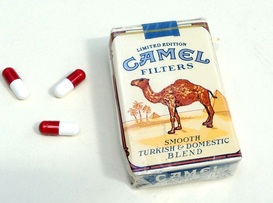
When I was a young teen being led astray by the tobacco industry, an R. J. Reynolds Tobacco Company ad claimed that doctors preferred smoking Camel cigarettes.   I ended up smoking them, too, lured in part by my parents’ example and by RJR's compelling ad, even though their proposition made no sense.  But lots of people smoked in those days; it was socially acceptable – even expected.   So how bad could it be if More Doctors smoke Camels than any other cigarette (according to a nationwide survey)?   T
he toughest guys and most elegant women in the movies all smoked ...

I don’t know how well Dr. Hansen’s bit of clever copywriting is working for him, but the lesson here is clear:  his radio spot DID get my attention and DID make me remember what sets the Carolina Men’s Clinic apart, thanks to a handful of ear-catching, memorable words.     

Dr. Hansen doesn’t use the “urologist” claim as a formal tagline, but dontcha think he should?

TakeAway:  A tagline that tells a solid strategic story gathers ears and changes minds.


Content © by Brian E. Faulkner
0 Comments

A Mercedes by Another Name.

5/22/2015

1 Comment

 
Picture- Image © by Brian E. Faulkner -
Tags:  Mercedes-Benz, Steinway & Sons, Daimler Motor Company, Daimler-Benz
While researching the origin of the current Mercedes-Benz tagline, I was reminded how close the car came to being called something else – at least here in America.

Were it not for a promising young man’s extended illness, Mercedes most likely would have been called by a name that had nothing to do with automobiles, a name known around the world by the time Gottlieb Daimler rolled out his high-speed internal combustion-powered automobile in 1886. Carl Benz developed his own car the same year, but the business entities that survived the inventors didn’t come together as Daimler-Benz AG until 1926.

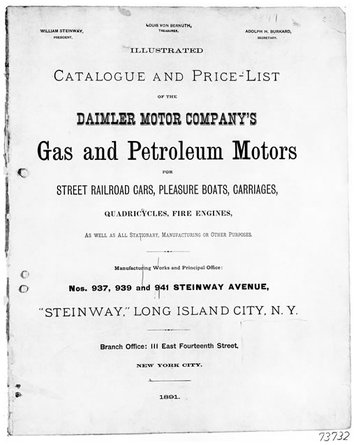
In addition to automobiles, Daimler built engines for boats and industrial applications.   That caught the eye of one William Steinway, of the famed piano family.  He got in touch with Daimler, and on October 6, 1888, the Daimler Motor Company was organized in New York, where Steinway & Sons had already been in business for 35 years.

Steinway was convinced he could sell Daimler’s engines in the United States and acquired the rights to manufacture and market them for use in such things as cream separators, sewing machines, pumps, ventilating fans, printing presses and other applications that required a single-cylinder stationary engine. 

Picture
In 1893, Steinway experienced Daimler’s “motor carriage” for himself and began to envision a motorized America.  So he set about developing his own automobile, one more adapted to American road conditions because he thought Daimler’s car too light for the “rough cobblestone streets we have in this country.”

“The cars which we intend to produce for the American market will be capable of carrying between two and four people and will be driven by engines with between 2½ and 3½ hp,” Steinway told a newspaper reporter in 1895. “Each car will have four different speed settings: 3½, 6, 9, and 14 miles per hour.”

However, this perspicacious man’s dream was not to be.  He died at age 35 in November of the following year after a stubborn period of undiagnosed illness (probably tuberculosis).  By that time he’d invested a frustrating amount of additional capital in the car company to offset continuing losses, so it’s likely he would have pulled out anyway.  After William’s death, Daimler Motor Company’s holdings, including a factory built on Steinway’s land, was sold to newly organized Daimler Manufacturing Company, which in 1905 produced an “American Mercedes” based on the German model. This car was on the market for only eight years before its factory was destroyed by fire.  

So had William Steinway lived and helped Daimler Motor Company overcome its ongoing financial problems, the American Mercedes just might have been called a Steinway ... which no doubt would have worked out fine, because both brands exemplify the best in their categories to this day. 

Best is subjective, of course, but Steinway & Sons instruments are the pianos on which the overwhelming number of concert artists choose to perform – or aspire to perform, as they have almost since day one.   William’s father, Heinrich Engelhard Steinweg, emigrated to New York from Germany during mid century, founded his business in a Manhattan loft, changed his name to Henry Steinway and set a quality standard that has endured through successive generations.   His maxim was “Build the best piano possible.  Sell it at the lowest price consistent with quality.” 

And although the company has passed through a number of different owners since it was purchased from the Steinway family by CBS in 1972, Steinway & Sons remains at the top of the piano hierarchy and is the brand to which other fine pianos are most often compared.   The company now is owned by American hedge fund manager John Paulson, a long-time admirer of its products.   His stated goal is to assure Steinway & Sons’ "continuing greatness."

Henry and William clearly would have agreed on that.

Mercedes-Benz’ latest tagline also reflects the philosophy of its founder, as well as the quality bedrock on which the brand stands as it moves deeper into the 21st century.  

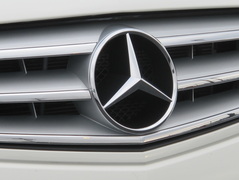
You may recall the TV spot where Gottlieb Daimler nods off at his desk and dreams about the Mercedes-Benz of the future, with its now-familiar look, technology and style.  As Daimler is awakened by a lovely assistant, we see a handwritten phrase scratched on the notepad beside him: The best or nothing -- underlined with a flourish.   Though Mercedes-Benz has experienced some quality issues in recent years (not unlike Steinway), the brand is still held in high esteem, evidenced by frequent references to the “Mercedes of this” and the “Mercedes of that” as the marketers of other high-end product seek to compare their offerings to the car with the three pointed star.   

“In the end, all any of us has is our good name,” a Mercedes print ad declared a while back.   That’s true of Mercedes-Benz and true of Steinway & Sons.   The two vaulted brands that nearly became kissin’ cousins a hundred-odd years ago have prospered -- and will continue to prosper -- in large part because of the quality foundation put in place by their founders.

TakeAway:  Build your brand on bedrock quality and your reputation will follow, helping smooth the way over the inevitable bumps you encounter on your road to success.

Content © by Brian E. Faulkner

1 Comment

Airport Choice Revisited:  Convenience & Experience vs. Price. 

5/6/2015

0 Comments

 
Picture- Image © by Brian E. Faulkner -
Last summer, I suggested in this space that Piedmont Triad International (PTI: airport code GSO) just might offer the world’s most satisfying airport experience.  (http://tinyurl.com/ktd3wrz)  PTI serves the greater Winston-Salem, Greensboro, High Point area of North Carolina. This airport is easy to get to, easy to go through and easy to leave when your flight returns.  And while you’re there, it’s a pleasant, uncrowded, unhurried place; parking is plentiful and close by and rental cars can be had right next to the terminal. There’s even an electric car charging station.  And free WiFi.

Given that kind of experience, I’d expect to pay a little more. However, a recent newspaper article 
noted that “Unless they’re on business trips, many travelers from the Piedmont Triad are chasing airline discounts to Charlotte or Raleigh for their vacations and other trips.”

Dunno about you, but if I were planning a vacation – especially with family in tow – I’d opt for the closest, least crowded airport and invest the few extra bucks per ticket in a more relaxed, hassle-free airport experience.   That is, if I can get to my destination from there without changing planes too many times (even though I’ve noticed on occasion that it costs less to fly to my destination through Charlotte from PTI than to drive to Charlotte and depart from there.  Go figure.)

The Journal article focused on the price advantage of the two more distant airports vs. PTI. It reported an average round trip fare of $10.66 less at Charlotte Douglas International Airport vs. PTI’s average fare, and a price difference between Raleigh-Durham International Airport and PTI of $53.02.  Of course, individual ticket prices may swing higher or lower.  The article failed to point out how small the price difference actually is between PTI and the other two airports, especially considering the comfort and convenience of flying from PTI vs. driving to Raleigh-Durham or Charlotte.  Each alternative is about an hour-and-a-half away (vs. half that or less for PTI), and you’d best add at least another hour to that or risk missing your flight -- even more time during commute times. 

There is a way to lower an airport’s average fare, notes PTI Executive Director Kevin Baker in the article: attract more budget airlines.

“We’re always talking to every low-cost carrier out there to try and lure them to come to our airport,” he told Journal reporter Richard M. Barron, although “there’s only so much we can do.”

Maybe so.  But what about talking up the advantages of his airport more effectively?  I, for one, would toss their current tagline (Fly Easy, Fly PTI) in favor of a variant with a bit more strategic muscle:

“It’s EASIER to FLY PTI!”  
This tagline invites prospective flyers to compare PTI with its more distant alternatives in light of the good dose of extra travel time and hassle that people experience in exchange for the few bucks they save on flights at more distant airports.

​Thinking Beyond Price:

It’s all too easy to sell your product or service on price – no matter what it is.  However, there may be other, more strategic product benefits lurking on the sidelines that prospective customers will rise to even more than a lower price.  Let’s say you’re that airline passenger trying to decide whether to fly from the handy airport nearby or commute nearly two hours to a bigger one.   What’s your choice?  Convenience?  Experience?  Or price?

PTI marketing could ask:

Are you prepared to drive all the way to Charlotte to save $10.66 on your next airline ticket?   With our easy-access, close-in parking, short lines and comfy terminal, it’s easier to fly PTI from anywhere in or around the Triad.  
Sure, you’ll spend an average of ten bucks more on your fare, but you’ll enjoy the experience a whole lot more … and get home faster, too.

Would I spend $100 more?  I’d sure think about it, although some would not.  I’d also like to think that there’s enough people like me to make a difference for PTI.   Because for us, an investment in avoiding the inevitability of parking hassles, long lines and general airport uncertainty is an easy choice, whether flying  for business or pleasure. 

 TakeAway:   Sometimes a higher price can be the better deal.

Content © by Brian E. Faulkner

0 Comments

Subaru Love:  IT'S All About Story.

4/30/2015

0 Comments

 
Picture- Image © Brian E. Faulkner -
Tags:  Subaru, Whole Foods, Trader Joe’s, Nikon, Kodak

Do you own a Subaru?  

If so, you probably love it – because a Subaru is versatile, safe, lasts a long time, is great to haul pets around in, performs well, makes a statement about larger community issues and drives you to adventure. 

People write love letters to Subaru:

Dear Subaru,
This morning was cool and although it had not rained, the road was damp from morning dew. I was driving in the left lane of a two lane highway. I came over a crest in the road to find three cars stopped in the right lane …
Somehow, the driver of that Subaru, a 2013 Legacy sedan, not only avoided an almost certainly serious accident – twice – but escaped without a scratch on either him or his car, thanks to the Subaru’s handling. 
My Subie never skidded uncontrollably. It never failed me. I cleared the entire accident scene completely unscathed. I love my Legacy today, not for helping survive an accident but for completely saving me from having one. Thank you Subaru, you've earned my respect, my gratitude and my loyalty.  
Marketers who want customers to maximize the use and enjoyment of their products will do well to take a page from Subaru’s book.   More than any brand of any product category I can think of, Subaru has consistently and successfully painted a compelling picture of customers in their target market – in their advertising and on their Web site.  The idea, of course, is that if you see yourself reflected in product marketing, you’re likely to want to buy that product, which is one reason why Subaru’s conquest sales are so high.

Subaru buyers are relatively young, well-educated and have higher incomes than the average car buyer.  And they are thrifty; according to a 2011 study, 36% of Subaru customers pay cash.   They support causes, too; check out the first Subaru you come to in a Whole Foods or Trader Joe’s parking lot.  Its bumpers likely will be festooned with stickers heralding all kinds of political and environmental values. 

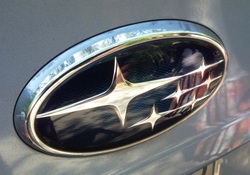
Last year, my 30-something daughter and son-in-law, who live in the Pacific Northwest, one of Subaru’s strongest markets, bought a slate gray Subaru Forester.  Their family of three fit the car’s profile to a T, and as you might suspect, they did not choose their Subaru on a whim.  They knew what they wanted and went for it, after riding for years in a blue ’78 Volvo 240 wagon (that my daughter now uses to transport her landscaping tools). 

I think people “tune-in” to Subaru, and when they buy one, it seems to be an experience-based decision – plus a dash of emotion.

“The brand has a razor-sharp understanding of its owners,” writes MediaPost automotive reporter Karl Greenberg in an article profiling a Subaru TV spot that ran last September.  You may recall the ad:  a hippie grandmother tries to explain her long-ago “Summer of Love” to a young granddaughter, both of them riding in the back of the family Outback while Mom and Dad look on quizzically in the rear view mirror.  In a single creative sweep, Subaru stretches their appeal over two-plus generations while airing a spot people enjoy – and remember.   The entire family ends up hugging a tree.

Subaru is strong on story.  No matter where you go on their Web site, you’re never far from one:
Dear Subaru,
This is the story of my wonderful parents.  After 65 years of working his whole life, my father and my ‘stay at home’ mom embarked upon a cross-country adventure with their dog Buck, a Subaru Outback and a small teardrop trailer … following their dream to travel the country.  After a lot of planning they set off from the Florida Panhandle all the way to Washington State and back.  I cannot help but think they are using their Outback for the EXACT purpose it was made.  They are wonderful people and deserve to enjoy life …”

Nikon gives cameras to ordinary people and then posts their pictures online, a story without words.  Kodak understood that a long time ago; they didn’t sell film as much as they sold pictures.  Story was at the center of their marketing strategy … and should be at yours.   Because it’s the only way to get into people hearts.  And stay there.

“What makes a Subaru a Subaru?” the company asks.   The answer, of course, is … LOVE.   

TakeAway:  Sell the experience, sell the enjoyment.  Sell the pleasure of using your product.  Then the customers you want most will want you, too.

Content © Brian E. Faulkner

0 Comments

Don't Mess With Your Brand Story.

4/29/2015

0 Comments

 
PictureImage © by Brian E. Faulkner
Tags: Microsoft, NPR, George Zimmer, Men’s Wearhouse, Joseph Abboud, Jos. A. Bank, Ford Motor Company, GM, Cadillac, Buick, Ford, Lincoln, Apple, Coca-Cola, New Coke
Every brand, company, product or service has a story – just like people.  People’s stories are a combination of image and reputation, which can be anything from well focused to wildly irresponsible.   Some businesses may be well-positioned (in a controlled, strategic sense) while others cast their reputation to the wind, allowing the marketplace to define who they are and what they represent.   Call it default positioning.   The example that most often comes to my mind is Microsoft, which hasn’t done a great positioning job.  There are many “Microsofts” out there, depending on who's doing the talking.  

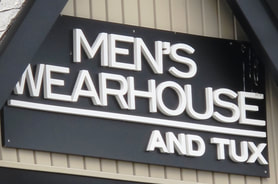
Heard an interview with George Zimmer on NPR this morning.  His topic was paying people more, even at the expense of company profits.  But what grabbed my attention was his distinctive gravelly voice, the one he used on television when he was boss of The Men’s Wearhouse – you know the one:  

“You’re going to like the way you look. “I guarantee it!”  

Every spot had a story, and as leader-spokesperson, Zimmer was deeply imbedded in the Men’s Wearhouse image -- along with that famous tagline.  I can’t help but notice that the Men’s Wearhouse strategic positioning has become less distinctive since Zimmer was forced out, supposedly because of management disagreements.  Something’s missing from their advertising, and it’s not just Zimmer.   Despite the few recent Men’s Wearhouse spots featuring signature suit designer Joseph Abboud, their marketing seems focused more on price, like their long-time competitor, Jos. A. Bank, which Men’s Wearhouse purchased early in 2014 after a turbulent takeover battle.   

The takeaway here is that a strong brand story should not be discarded so readily, although I’m sure the Men’s Warehouse board thought long and hard about the strategic consequences of dumping Zimmer.   I find it discouraging, however, that they’ve fallen back on price advertising after such success with set-apart positioning, although it must be working or they wouldn’t do it.  But I’ll bet their margins aren’t as good as when Zimmer was hawking the wares, because price was hardly mentioned in his spots and, as I recall, Wall Street liked the stock.

I have several friends and acquaintances, each with a business in the same retail category.  Two of them ride a high-price wave supported by a brand story that's more than 150 years old.  They don’t have to sell on price and, as a result, get high margins.  Another friend sells the same type of high-end merchandise at market prices, although different brands.  His business story has been established for well over 50 years; customers seek him out because of his quality reputation.  Still others I know in that same business always seem to be wrestling with price.  They don’t command the margins they could because their business stories are indistinct.  They don’t have a Marketable Truth© to stand on. 

Both Ford Motor Company and GM currently are wrestling with their image stories.  GM is in the latter stages of rebooting its Cadillac brand to compete with the best German luxury performance sedans; they've had enough success that Cadillac is no longer seen as exclusively for oldsters seeking a luxury nameplate and plush ride.   Buick, another GM brand that used to have a fuddy-duddy image, is experiencing a surprising sales renaissance driven by rising demand in China, where the brand has become a status symbol.  Different time, different story.

Ford also is into a bit of image retooling of late.  Lincoln (finally!) is thinking about abandoning its confusing alphabet soup model designations in favor of real names like Continental and possibly even Zephyr.   All while Ford grapples with a negative quality blip brought about in recent years by a dashboard communication and entertainment system that has proven troublesome and hard to use – so much so that auto enthusiast Web sites are recommending that people wait ‘til a redesigned system comes out on the 2016 models later this year to purchase their new Fords and Lincolns.   

When I think of brand image, however, I think most often about Apple.  They were an upstart at first, but gradually built a business, operating system and reputation that out-shined the king of personal computers at that time, the venerable IBM.  Will gutsy moves into new product categories like luxury watches and even automobiles sour Apple’s reputation?  Not likely, because they’ve told and retold their brand story so well – and so long – that they’re as close to invincible as any business or brand out there.

Even so, in this day of social-driven media, there are new voices everywhere, and some percentage is quick to broadcast bad news.  One exemplary misstep marketers are quick to recall is the New Coke debacle of 1985, when Coca-Cola almost lost its way -- and that was before the Internet became so widely available.  This very day, April 29, 2015, online rumblings are afoot about a second brand of listeria-laden ice cream and a major beer maker’s label that seems to make light of rape.

Reputation or image -- call it what you will -- can bite you in the backside any minute … but also can help lead you to greatness.  All the more reason to consider whether your brand, business, product or service is solidly positioned in today’s uber-competitive, uber-critical world.

 TakeAway:  Shape your strategic position carefully.  And guard your brand story for dear life.

Content © by Brian E. Faulkner        
Marketable Truth © by Brian E. Faulkner


0 Comments

Budweiser Scores With Super Bowl Ad.

2/2/2015

0 Comments

 
I’m not one for gushy ads, so when I watched Super Bowl XLIX yesterday, I looked for spots with solid strategic bite.  Not lifestyle stuff.  Not cuddly cute.  Not outrageously obscure (there was more than a few of those). I was on the lookout for ads with a clear benefits story -- although, like most everybody else on the planet, I did enjoy watching the Budweiser puppy find his way back home.

Yeah, yeah … I know it’s all about entertainment and ego, but Tom Brady and company provided enough of that to even satisfy my dad, a dedicated Patriots fan who’s been gone nearly four years now. Wherever he’s hanging out these days, I’d bet that last minute interception by Malcom Butler raised him and inch or two off his recliner! 
I didn’t see ALL the ads, no doubt, given several beverage refill breaks and more than a few old-man visits to the smallest room in the house.  But there were several spots that caught my marketer’s eye, especially Brewed the Hard Way, one of two other Bud ads that ran during the evening.

“Brewed” popped up in the third quarter as viewers were wondering which way the Tilt-A-Whirl game was going to go.  By then, we’d been served more than our share of emotionally-saturated spots, some truly inexplicable ads and a few that tried hard to sell something it was not – that means you, Toyota Camry.  And things had pretty much come back to earth after Katy Perry’s 12-minute entertainment extravaganza.

With a hard-driving fuzz guitar underlay and shots of Bud being made -- and enjoyed, flashes of text declared Budweiser a “macho beer, not brewed to be fussed over”, a brew for “drinking, not dissecting.”  Bud, the spot declared, is for “people who like to drink beer brewed the hard way.  Let them sip their pumpkin peach ale.  We’ll be brewing us some golden suds …"

“This is an affirmation of what Budweiser is, not an attack on what it isn't,” Brian Perkins, Budweiser’s VP of Marketing, told Robert Haynes-Perkins of the NY Drink Examiner.  “We're hoping to touch a chord with the person who wants the truth about how we make Budweiser and why it's great.

“We love craft beer” (and Anheuser-Busch acquires and sells some),” Perkins told the reporter.  "I think that the prevailing dialectic is that small must be better, and big must be bad.  That's the generally accepted trend. For us, big is good. It's not arrogant, it's just saying that it's great to brew a beer that so many people enjoy … it doesn't mean there's less care, less quality or less passion from the people who make it."

That’s tapping into the brand's Marketable Truth©.  And even though it scored only 5.15 (out of 10) on USA Today’s Ad Meter, I thought the ad was a strategic touchdown with its Brewed The Hard Way tagline.

There were a few other Super Bowl ads with solid positioning (of those I actually saw). 

GM’s new Colorado truck ads scored in my book by telling a story that revealed the cool truck guy vs. the less cool compact car guy.  The benefits story was subtle, but it worked -- although it only placed #39 on USA Today’s list.

I also like Sprint’s “Apology” ad (#34) because it directly called out the other carriers for being “really expensive,” offered to cut people’s wireless rates in half compared to Verizon and AT&T and gave them a way to make that happen.  They also used a whiny goat and a braying donkey to make a visual point about their competitor’s pricing.

And then there was GoDaddy’s “Working” spot (#55), which presented a direct, no-nonsense benefits story vs. the in-your-face, sexually charged approach they’ve used in previous Super Bowl ads.  It didn’t score very well with the public, however, which no doubt would like to have gazed upon Danica Patrick one more time or scored a smooch from Bar Rafaeli.  

Clearly, the ads I appreciated for their strategic punch were not favorites in the eyes of viewers who were more interested in being entertained than being convinced on the spot to change their mind about a product or buy something on the strength of product benefits.  

Fortunately for Budweiser, the public will be seeing more of “Brewed”. 

TakeAway:  In the long run, benefits-laden, positioning-driven advertising wins over creative fluff – unless, of course, a spot has both, like Apple’s famous “1984” MacIntosh ad during Super Bowl XVIII.   Little did anyone viewing that game know how much the world was about to change.


Content © by Brian E. Faulkner              
Marketable Truth © by Brian E. Faulkner

0 Comments

When Your Small Business Has a Song to Sing, Sing It!

11/28/2014

0 Comments

 
PictureImage © by Brian E. Faulkner
Thirteen years ago I was part of a small business that interviewed three marketing and public relations agencies about developing a new product launch campaign.   Each PR firm had its strengths, but one stood out. 

The principal of that firm had traveled 750 miles to make her pitch – a second agency likewise.  The third was local.   Each recognized the potential of our product, launch of which soon got snakebit by the dot com bust of 2001 and by the kind of internal struggles that all too often mark the beginning of the end for some small business start-ups.

Sorting through an old file box on this slow after-Thanksgiving day, I came upon my notes from discussions with the agency we selected and decided to see what I could learn from them.  A quick review reaffirmed my 2001 choice of this firm over the others.  Even so, something surprising jumped out at my 2014 eyes from the notes and the agency’s promotional materials: 

They did not have a tagline that communicated their competitive advantage in a succinct, strategically compelling way. Which is unfortunate, because their strengths (as I noted them at the time) were considerable:

“The only reason to hire us is to build sales and create success.”
“We are dogged, ferocious, persistent and persuasive.”
“We are scrappy and move like a gazelle.”
“We are fiercely client loyal.”
“We are fabulous at PR.”


Adding to these pluses was the fact that their product-specific and media suggestions were right-on.   They were the single source option for everything we needed (except perhaps interpersonal counseling).   But the attractive brochure they left behind didn’t clearly communicate their competitive advantage.   Like many “creative” providers, it talked about the tools they used vs. how they make a difference with those tools.

I did a rough count today of the words used in their 2001 brochure text:

us words (we, our, company name):                                           27
you words:  (you, your, client, customer)                                  10
power words (success, strengths, expectations)                        3
difference words  (difference, competitive advantage)            0

There were more than twice as many us words as you words, words that focused more on the firm's capabilities than client needs.  They didn't communicate their competitive advantage nearly as well on-paper as they did in-person.  Why?   I don’t know, although you may recall the  story about the cobbler’s children having no shoes.

Even so, their web site must have spoken of competency for us to have invited their pitch in the first place.   But their personal presentation made all the difference.  The agency principal set her company apart from competitors with similar services (without knowing which other potential providers we were interviewing) – including the local firm, whom we personally liked very much, and the New York area one that had impressive, more narrowly focused capabilities.

So here’s my two-cents worth of tagline suggestions for this agency as it presented itself to us in 2001 (keeping in mind that they position themselves as a strategic marketing firm with PR capabilities rather than only a PR specialist):

AGENCY NAME:
“Persistent, persuasive and fiercely devoted to client marketing success.”

AGENCY NAME:
 “The Great Results Marketing and PR Agency.”

AGENCY NAME:
 “Fabulously successful small business marketing.”


Please note that these words are lifted directly from my conversation with the agency principal, not from experience using their services.   I just arranged them in strategically compelling ways -- perhaps you could use the same words to come up with an even better tagline around which the firm could have built an effective positioning / capabilities presentation.

What about today?  The agency's current online pitch isn't as strong as the compelling competitive story presented to us by their leader in May of 2001.   And still ... no tagline.

TakeAway:  Sing your song to the world with a powerful tagline that arises from your Marketable Truth
©, creates belief and once and forever sets your business apart from competitors.  Then get busy telling the world about it, using your tagline as the strategic foundation for marketing communication.

Tags:  small business marketing, public relations agency, PR firm, competitive advantage, powerful tagline, Marketable Truth 
Content © by Brian E. Faulkner       Marketable Truth © by Brian E. Faulkner


0 Comments

Taglines & Brands.

11/14/2014

0 Comments

 
PictureImage © by Brian E. Faulkner
Here are some of my most popular recent posts about brands and taglines:

A Tagline for Tomorrow: How to Win Big in 2016                                               


Subject:  10 characteristics of an effective tagline. 

Despite its overwhelming success, the Republican 2014 midterm election campaign was a sorry example of strategic positioning.  Yes, the Republicans improved their ground game and voter motivation differed markedly than in 2010 and 2012.  And yes, there was considerable angst afoot about the president and his policies, his slide toward extra-Constitutional thinking and his enthusiasm for progressive social initiatives that cut deep into traditional American culture. 

But absent the “Nobama” ax the Republicans swung with such gusto, there was a clear lack of strategic underpinning to their midterm messaging ...

Read more here:
  www.brianefaulkner.com/blog/how-to-win-big-in-2016-a-tagline-for-tomorrow


PictureImage © by Brian E. Faulkner
New Whole Foods Tagline Nails It!


Subject:  Your Tagline Should Tell The Truth!

Two words at the bottom of a Whole Foods sales receipt caught my eye recently:  VALUES MATTER.

“What’s up with this?” we asked?

“You know, values – the things people believe.  They matter.  That’s what Whole Foods is all about.”

Of course.  Whole Foods Market® has hung its mostly organic hat on that for years.  A tilt toward unadulterated, unmanufactured foods has been their stock in trade ever since John Mackey and his wife started their first store in 1978.  Company “values” still encompass trust and the greater good … and attract a refreshing variety of both staff and customers.

But these days, Whole Foods Market is far from alone in offering organic fare.  Even the most mundane mainstream grocer now carries some organics, and the leaders among them have gone in heavy for it – even Walmart, for heaven’s sake!   Not to mention a plethora of “natural foods” competitors out there who would like to eat WFM’s lunch. 

So Whole Foods needs a way to stand out … again.

Read more here:  www.brianefaulkner.com//blog/new-whole-foods-tagline-nails-it


Picture
Building a Fortress Brand: Ford Possessed, Chevy Obsessed.


Subject:  Brands That Connect at the Heart.

Heard the other day about a WWII vet from New Jersey  selling his automobile collection.  Six cars, every one of them a Ford.  Not a Chevy in the bunch.  He was lifetime loyal to the Ford brand, so much so that “If you had a Chevy you didn’t come in my driveway.  You parked out on the road.”

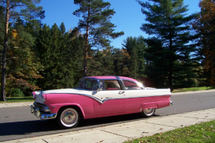
The choice used to be that simple for those of us who came of age in the automobile saturated culture of post-war America – especially the full-bore 1950s, the decade of classic cars and classic rock (neither of which were deemed classic at the time).  Ford and Chevrolet were the butter-and-bread choices of Americans 50+ years ago, before the car market got choked up with so many different brands and models – not to mention the infinite variants of those brands and models ...

Read more here:  www.brianefaulkner.com/blog/ford-possessed-chevy-obsessed-building-a-fortress-brand


PictureImage © by Brian E. Faulkner
Godiva's Alluring Words & Enduring Promise.


Subject:  Stick to your  brand's promise.


When I traveled for business more than I do now, I’d occasionally come across a Godiva boutique and add a small purchase of their memorable chocolates to my personal expenses.  It was a pleasant surprise to turn a corner in some upscale mall or market and spot the luxurious Godiva logo.   No matter where my thoughts had been, they immediately shifted to “chocolate” and the stolen moment I was about to experience.

From way back in 1926, when chocolatier Joseph Draps first opened his Brussels shop, Godiva has been superb at crafting words to describe their “extraordinary richness and design, a collection of passion and purity” (the founder's words).  Today’s wordsmiths describe Godiva as “a sought after name with the timeless quality of passion, style, sensuality and modern boldness.”  Their corporate boilerplate proclaims GODIVA Chocolatier as a brand that “consumers universally associate with prestige, elegance and quality …”


Read More Here:  www.brianefaulkner.com/blog/godivas-alluring-words-enduring-promise


Picture
Brand as Handshake:  A New Twist on an Old Problem.


Subject:  Be authentic.

How do you brand something as ordinary as fresh vegetables?  If you’re a grower who sells veggies to grocery store produce departments, how do you make your product stand out over competitors' brands?  Oddly enough, most fresh produce remains unbranded.  But not vegetables and fruit grown by D’Arrigo Bros. Company, of California, pioneers in produce branding.

Back in 1920, two Sicilian immigrant brothers discovered the fertile land of central California and thought it would be perfect for growing broccoli ...

Read more here:  www.brianefaulkner.com/blog/brand-as-handshake-a-new-twist-on-an-old-problem 


0 Comments
<<Previous


    sample blog:

    This is a sample blog  for writer Brian E. Faulkner.  It presents stories about brands that do (or don't) communicate competitive advantage effectively. Stories have been gleaned from the business press, personal experience and occasional interviews. New articles are added from time to time, and every so often there will be a post of general interest -- about things like success, passion, social trends, etc. 

    Author

    Brian Faulkner is a writer and strategic communication consultant who helps business clients explain their competitive advantage in compelling and enduring ways.
     
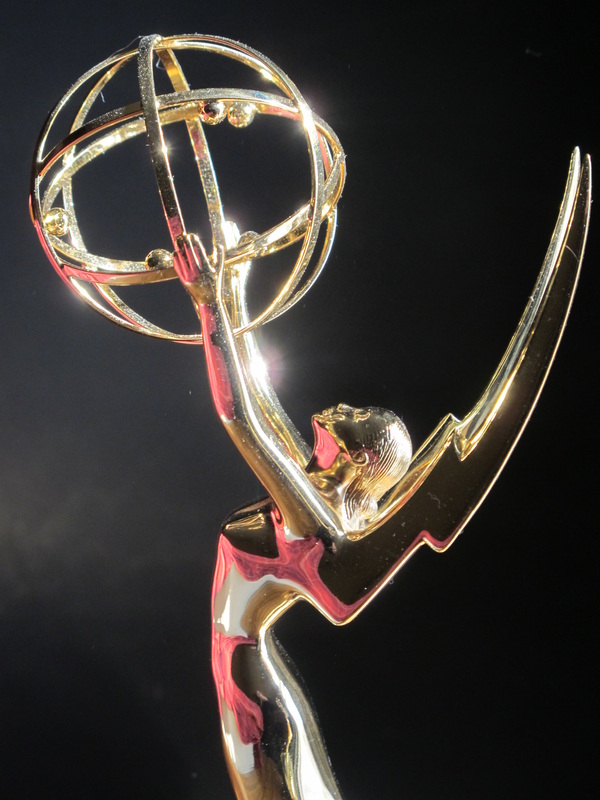
    He also is a five-time Emmy award winning Public Television writer & narrator for a highly-rated and well-loved magazine series.

    Picture
    Image © by Brian E. Faulkner

    Categories

    All
    Advertising
    Authenticity
    Brand Branding
    Brand & Branding
    Brand Names
    Business Culture
    Competitive Advantage
    Competitive Advantage
    Competitive Factors
    Content
    Creativity
    Culture
    Customer Satisfaction
    Differentiation
    Experience
    Flexibility
    Future
    Innovation
    Key Message
    Leadership
    Luxury
    Marketable Truth
    Marketing
    Passion
    Politics
    Positioning
    Price
    Quality
    Sales
    Service
    Small Business Marketing
    Story
    Strategic Thinking
    Taglines
    Team
    Technology
    Trends
    Values
    Vision

    Archives

    July 2019
    January 2019
    November 2016
    February 2016
    October 2015
    September 2015
    August 2015
    July 2015
    June 2015
    May 2015
    April 2015
    March 2015
    February 2015
    January 2015
    December 2014
    November 2014
    October 2014
    September 2014
    August 2014
    July 2014
    June 2014
    May 2014
    April 2014
    March 2014
    February 2014
    January 2014
    December 2013
    November 2013
    October 2013
    September 2012
    October 2011
    March 2011

    RSS Feed

Content © by Brian E. Faulkner.   All rights reserved.